Men playing boys playing girls, women and men, all female parts convincingly falsettoed and high musical standards as backbone: Sasha Regan's single-sex Gilbert and Sullivan has worked a special magic on Iolanthe and The Pirates of Penzance, HMS Pinafore and now The Mikado, not so much. Energetic song and dance are still in evidence. But this time a hard-worked scout-camp setting – located, as advance publicity tells us to expect, some time in the heyday of Enid Blyton – brings very little to highlight Gilbert's immortal preoccupations with class and hypothetical sadism.
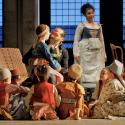
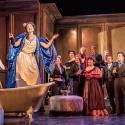
Familiar components bring some reassurance. The usually unsung hero of the Savoy spirit is music director and lone pianist Richard Baker: sprightly, rhythmically intense, supremely elegant with ornamentation, always there for his singers. The choruses especially, both masculine and feminine, truly zing, with well-trained voices throughout the company. And the miracle of femininity is also the best in the dialogue: as before, Alan Richardson in the Prima Donna role (pictured below). A beautiful sound it isn’t, but he hits the high notes full-on and his Yum-Yum actually manages to be touching as well as believable. Perhaps the one number in which the tents and the camp fire provide a trenchant context is in his/her duet with Nanki-Poo, "Were you not to Ko-Ko plighted"; the notion of kissing tenderness being “beyond the law” has a certain piquancy if you get the (early) 1950s setting.
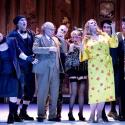
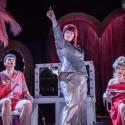
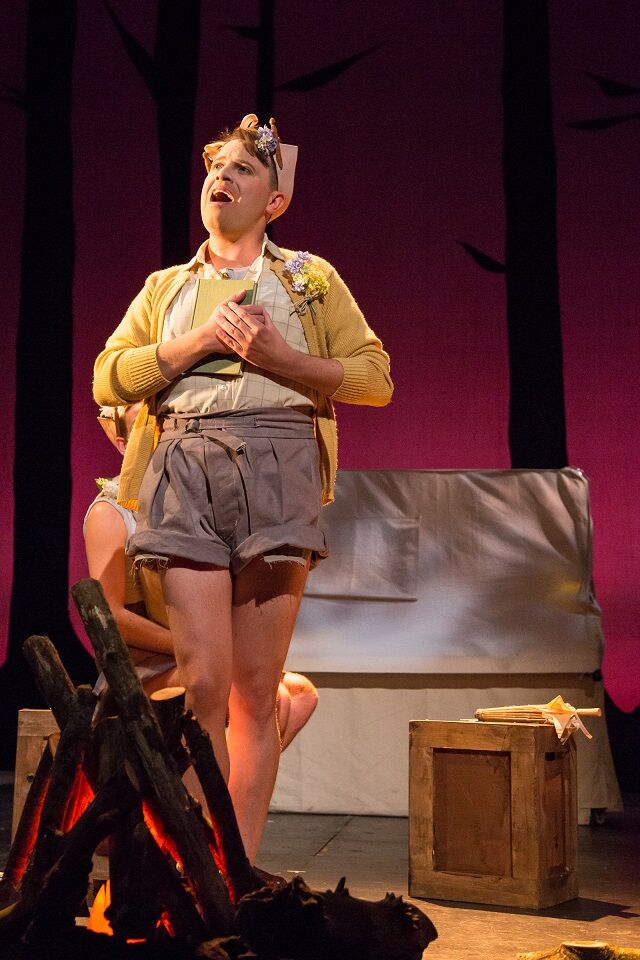 Would that this Yum-Yum’s lover of convenience, heir to the Japanese throne masquerading as second trombonist, were up to her level. It shouldn’t have been difficult to find a sweet baby tenor fresh from the music colleges; Richard Munday (pictured below with the company) doesn’t bring beauty to the sound – so essential for "A Wand'ring Minstrel I”, uglified by odd vowels – and his characterisation is weak. But then comic timing when it comes down to Gilbert’s crisp lines divorced from Sullivan’s music misfires generally. Even consummate Regan regular Alex Weatherhill doesn’t get many of the laughs Katisha deserves, however cruel. Both the ferocity and the pathos are undermined by the get-up – a headscarved Royston Vasey regular without the edge. And was it really necessary to have “Kat” pump up her bicycle at one of the few points where we might find sympathy in the music? Odd, this, because Regan is usually good at the deeper moments, supremely so in the Wilton’s Music Hall Iolanthe.
Role misfires also mar in some degree the Pooh-Bah (Ross Finnie, good Scottish accent which actually makes “Titipu” sound funny but not nearly self-aggrandising enough) and David McKechnie‘s Ko-Ko, who should drop the over-emphatic mockney but whose saturnine energy would serve him well in a different context. I actually liked the little list, reworked to suit the putative period with good dismissal of dissonance in “Bluebeard’s Castle, Carmelites, Wozzeck and Peter Grimes”. Others may miss the lack of topical references, but it was rather clever to avoid the obvious. Jamie Jukes’ Pitti-Sing, though stronger in tandem with the usually sidelined Peep-Bo (Richard Russell Edwards, a face made for comedy), doesn’t make the impact the character can.
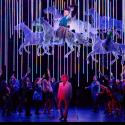
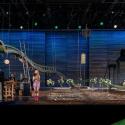
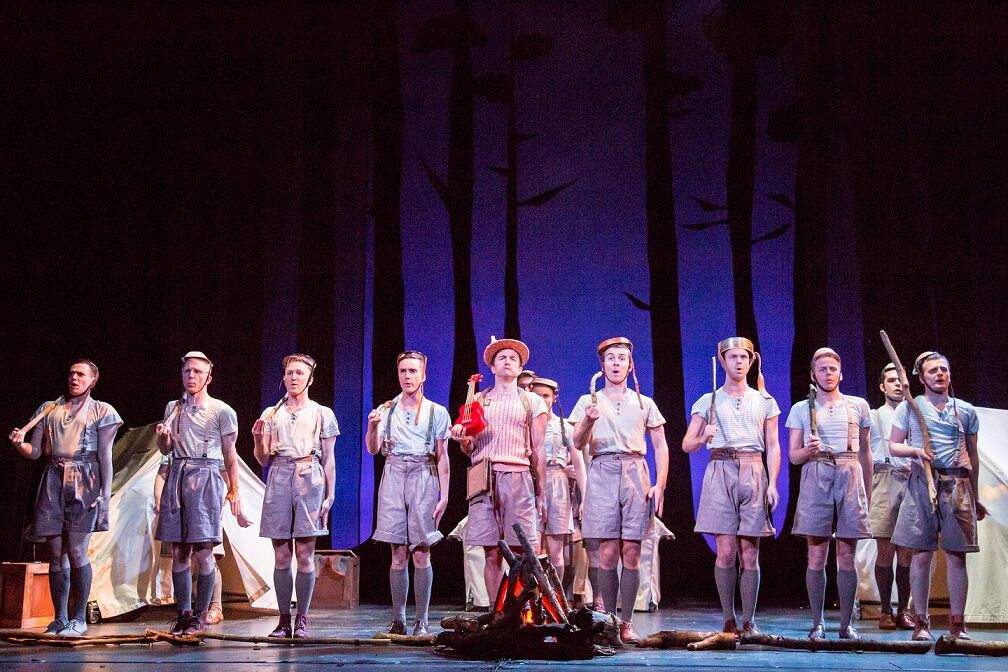 Otherwise, there are the usual pleasures in pointed mugging from individuals in the chorus, good gags involving heads in tent entrances, tennis rackets and cricket bats (doubling as snickersnee/axe) and lively choreography from Holly Hughes which turns the not entirely necessary overture into a ballet. Ryan Dawson Laight’s simple set capitalises on three tents and a stylised forest at the back through which participants flit like woodland fairies. Regan follows the camp setting through with inventive brio; it just doesn’t come anywhere near a new solution to avoiding the Japonaiserie in this evergreen Savoy masterpiece. Who knows, maybe we need to see kimonos shimmer, fans flash and white make-up applied again; perhaps it’s time for the old to become the new once more.