Sibling incest among the symbolic clutter of the Royal Opera Ring on Wednesday, last night necrophilia and a bit more incest – mother and daughter this time, courtesy of the director's imagination – in a stone-cold ENO Salome. Adena Jacobs' credentials were promising, not least her time at Sydney's cutting-edge Belvoir Theatre. That this would be a Salome unlike any other was a given. But throw out the essential interplay between the characters of Wilde's ornate play as filtered through the insidious colours of Richard Strauss's ever-amazing score, and you have to find an equally feverish alternative line.
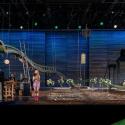
It seemed as if we might get that at first. Princess-smitten Narraboth (the clarion-toned Stuart Jackson) is in a cordon at a celebrity showing, the moon perhaps the writhing figure in the tank above, the object of his desire (the visually mesmerising Salome of Allison Cook) sidling in unnoticed at first, near-motionless, slyly implying terrible things - not least a phial for Narraboth which turns out to contain poison; this girl is death-fixated from the start. The stage opens up for the man she really wants to see, imprisoned John the Baptist (David Soar, a fine bass, but the role calls for security in the baritonal heights), under a glaring grid of lights and a sheet from which at first only two feet in pink shoes are poking out (for what? Blood? Androgyny? A set-up for the My Little Pony colours to come?). It's one of many strong stage pictures. But as Strauss begins to turn the screw with Salome's fascination for the forbidden, neither Jacobs nor conductor Martyn Brabbins meet him even half way.
The orchestra glitters, woodwind solos helpfully clear down to the heckelphone or bass oboe; but the serpentine mass never uncoils or strikes. Brabbins, no man of the theatre on this evidence in his opening gambit as ENO's Music Director, ensures perfect balances within the orchestra, if not between players and singers, while there's good co-ordination with a note-perfect cast. That isn't enough. There was a thousand times more electricity in the Prom collaboration between Donald Runnicles and Nina Stemme. Which is not to say that Salome can't triumph in its ideal form, the fusion of music and stage drama. Any of the previous London productions, above all David McVicar's at Covent Garden, has found the essential sparks at some point in the evening. 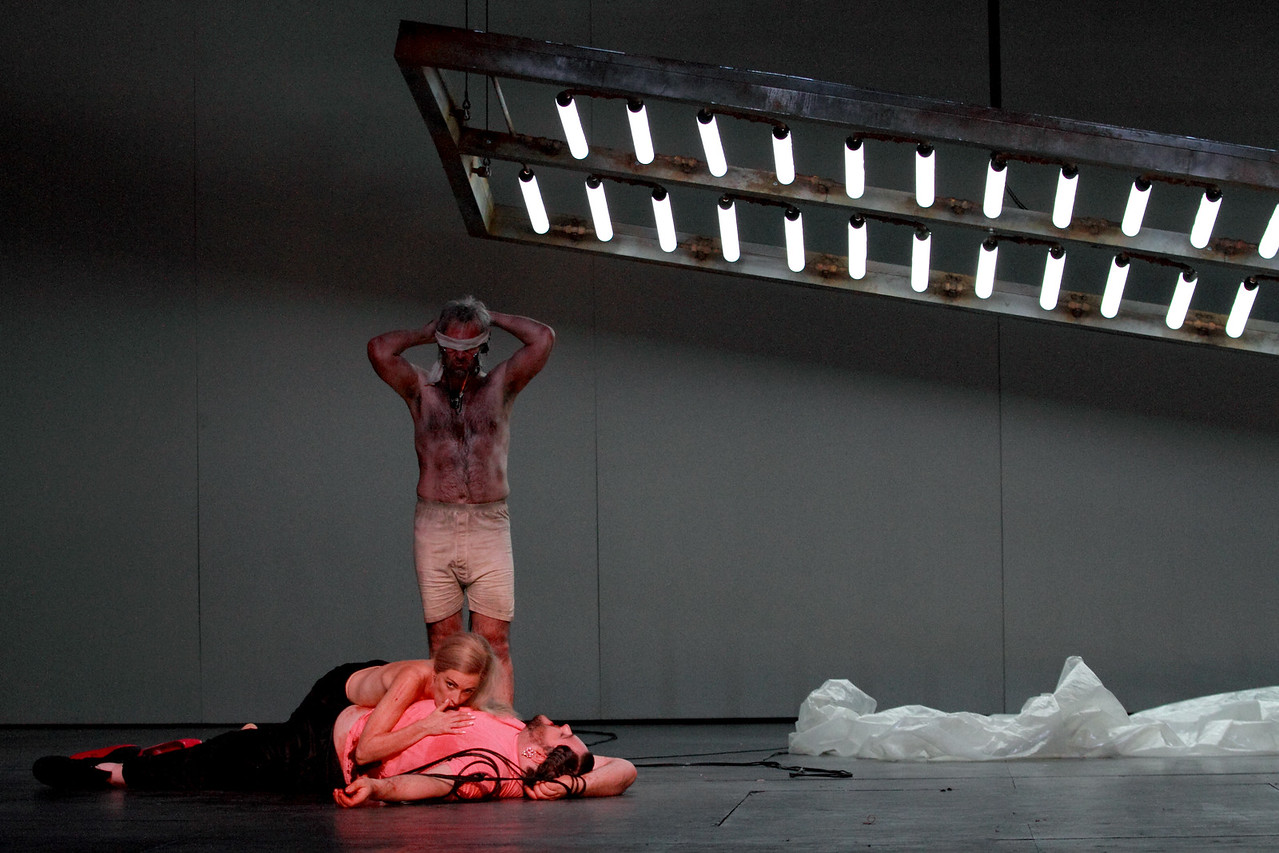 Jacobs isn't the first to suggest that Salome and Jokanaan never come close to contact or really seeing each other; Luc Bondy did that so much more theatrically in the Royal Opera production before McVicar's. It's a strong touch to have Jokanaan's mouth projected onto the wall via a kind of video muzzle attached to the prisoner, though we need to see the eyes, too, the hair, the flesh. This Salome's auto-eroticism as she apparently apostrophises her own body isn't so much compelling as chilly, and while mezzo Cook gets all the notes, there's little colour, and certainly not enough power to ride an increasingly fleshy orchestra. If her Barbie blonde ponytail suggests female objectification at Herod's court, the arrival of the dysfunctional family offers no further clues to her dysfunction. There's no progression from princess pettishness to a thwarted lust that turns deadly-obsessive. It's all concept, well enough realised through Marg Horwell's designs and Lucy Carter's lighting, but without enough physicality demanded from the singers.
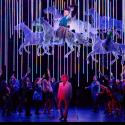
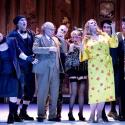
Michael Colvin's Herod and Susan Bickley's Herodias, well cast, would make more impact in a more interactive production. I see the beginnings of good ideas that could work with a bit of theatrical alchemy, not least the multiple Salome-Barbies in the dance, Cook's protagonist mostly deadly still and revealing a more powerful short haircut beneath the wig at the climax. And there's clearly intent in Jacobs' pre-empting of what should in fact happen later: the necrophilia applied early on to Narraboth's corpse (pictured above: Soar, Cook and Jackson), an unbinding of breasts in the supposed confrontation with Jokanaan and a giant headless not-so-little pony with floral entrails. 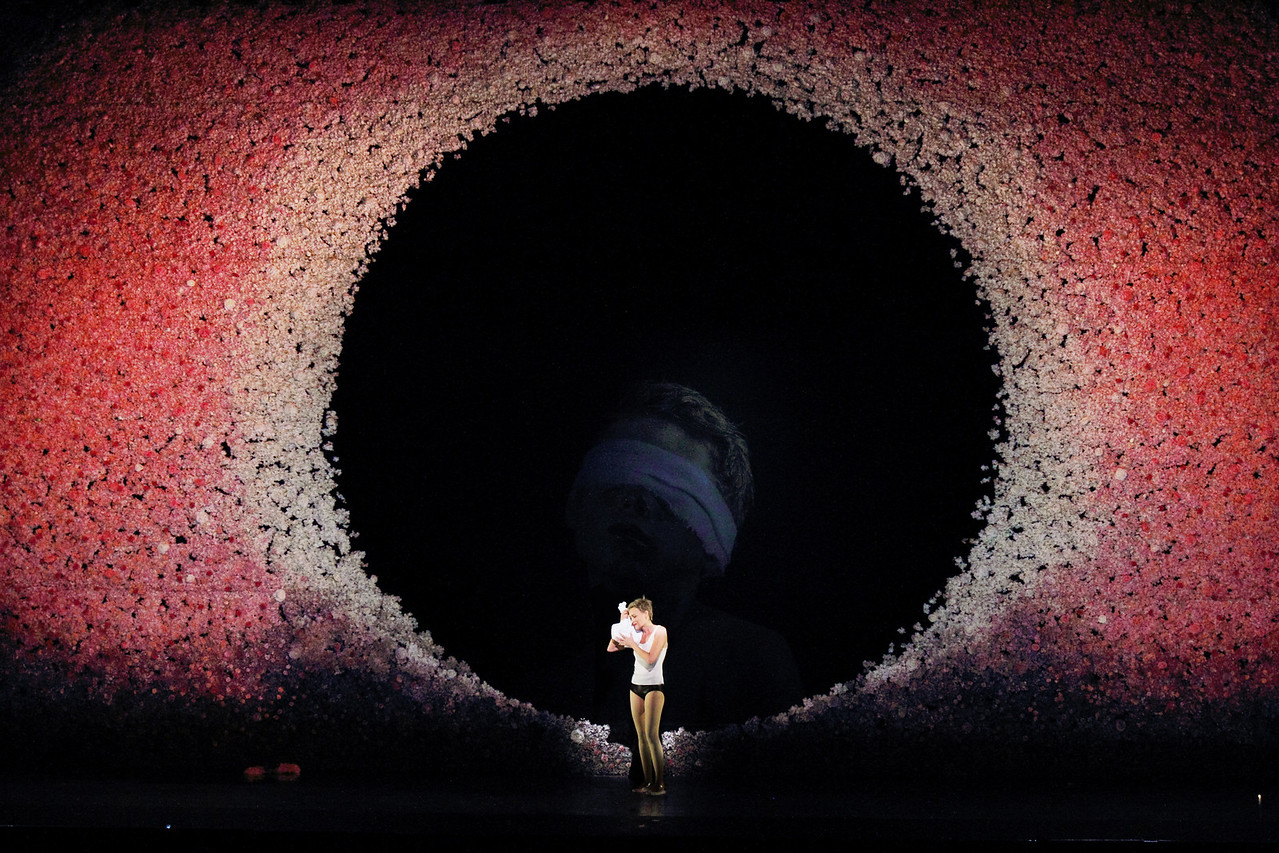 The necessary catharsis, though, the unique mixture of horror and nostalgia which is, God knows, powerful enough with Salome's kissing of a severed head dripping blood so long as it looks real enough, never happens. Richard Jones has understood how to make a head in a cardboard box or a plastic bag uniquely creepy; this is not (pictured above). And the kiss – well, I've implied it already but if you really intend to go and don't want a spoiler, I'll stop there. Cook is a compelling actor, but vocally several sizes too small for Strauss's all-important Liebestod. One hears and sees unmoved. And in a masterpiece as visceral as Salome, that's not good enough.