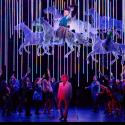
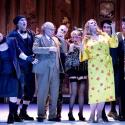
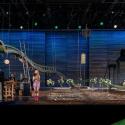
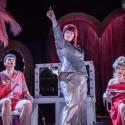
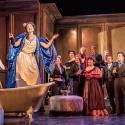
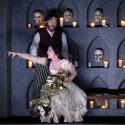
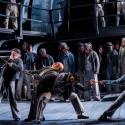
Tom Cairns’s production opens with sepia photos of happier times projected onto the curtain, which lifts to reveal a cheering, bustling 19th-century village idyll – naturalistically designed by Hildegard Bechtler. The warm yellows and oranges of this sunny opening contrast strikingly with the blackened decor of the heroine's dimly lit marital home in the third act and, as the unrequited lovers move towards their doomed tryst, the gloomy snowbound fourth act.
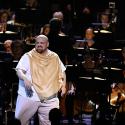
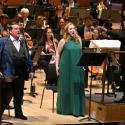
The principal roles of Werther and his unattainable beloved Charlotte are taken by Paul Nilon and Alice Coote, both long associated with Opera North. Coote’s Charlotte, initially clumsy and ill-at-ease, is a marvel. While filling the auditorium with rich sound, she never loses that sense of youth and innocence. This is especially evident in her long solo scene as, now married, she ruefully re-reads Werther’s love letters. Paul Nilon is a commanding stage presence who, from the moment of Werther’s touching moonlit declaration of love, invests a melodramatic role with a genuine sense of the tragic. You so want these two characters to give vent to their love, and the climactic moment when they finally embrace – to suitably fruity orchestral accompaniment - is a blessed relief for all round. There are also strong performances from Fflur Wyn as Sophie and Peter Savidge as Charlotte’s ill-chosen husband Albert.
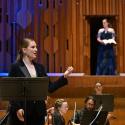
As the tragedy mounts to its climax, the surtitles have a brief unhelpful moment of unintended comedy. “I am going on a long voyage,” went Werther’s suicidal message to Charlotte. “Can I borrow your guns?” But the evening really belongs to Massenet’s marvellous score, with its beautiful filigree woodwind and violin solos, and some remarkably modern-sounding brass writing which is at times suggestive of Strauss and Puccini. It was all dazzlingly performed by the Orchestra of Opera North, characteristically conducted by Richard Farnes with close attention to detail which never interfered with the ebb and flow. Particularly striking was the Mahlerian moment in the finale where the unfortunate hero’s protracted death is accompanied by jaunty offstage carols with tinkly tuned percussion.
Werther is in rep at the Grand Theatre, Leeds until 24 October, then on tour to Belfast, Nottingham, Salford and Newcastle. Details here.