Spanning centuries, cultures and an ocean, Finn Anderson and Tania Azevedo’s new musical, Ballad Lines (say it fast and it sounds like Blood Lines) has the epic scope a big show demands. It also has an intimacy, a specificity, that may prove, for some, an issue and for others, a liberation, a chance to be seen on stage for once. One thing is for sure – it’s not like any other show I’ve reviewed.
Sarah and Alix are thirtysomething New Yorkers, career women - now there’s a gendered phrase – setting up home together in their new apartment. There’s a bit of bantz early on joking about the fact that neither can get accidently pregnant, but that doesn’t mean that these women cannot have a baby, a possibility that will later open a rift between them.
In the move, Sarah has been forced to confront a box she is reluctant to throw away and equally reluctant to open. It contains her past, the life she escaped, in conservative West Virginia, personified in her Aunt Betty, to whom she was once close, but they fell out in a blaze of insults and Sarah did not go to the funeral. Voicemails ignored, Betty has left cassette tapes – they tell the story of the women who came before them, from Ireland and from Scotland, who brought their ballads and their babies and their blood with them to the New World.
As Sarah learns of the 17th century Scottish parson’s wife, Cait, who did not want to carry her baby to term and, five generations later, of the pregnant 15 year-old Irish girl, Jean, who did and jumped on a ship to New York for a fresh start, she confronts her own (horrible expression though it is) biological clock. For Sarah, it’s now; for Alix, it’s never.
These three connected stories are largely told through a tremendous score packed with new and traditional songs that retain a thematic focus and consistency with elements of folk, country and bluegrass to the fore, thrillingly sung. The music drives the narrative and centres the swirling emotions, inviting you to find the souls of these women through our ears. With so many new musicals comprising a rickety stitching together of music, lyrics and book, to short in the er.. gestation, it’s a delight to see a show that fully understands the language of musical theatre, the sum proving so much greater than those individual parts.
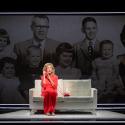
Casting is critical of course and if Rebecca Trehearn is the first voice you hear, you can be sure that element of the MT alchemy is going to work. She is Betty, the voice on the tapes and our narrator, singing of the tough self-sufficiency and trust in the old values that rural life spawns – like the 1960s never happened. I certainly caught a bit of Dolly Parton’s storytelling (as found in “To Daddy” or “Coat of Many Colors”) in “Unexpected Visitor” for example. It’s likely Dolly’s legions of fans will lap up this show and come back for more.
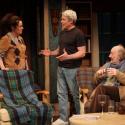
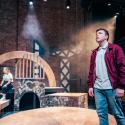
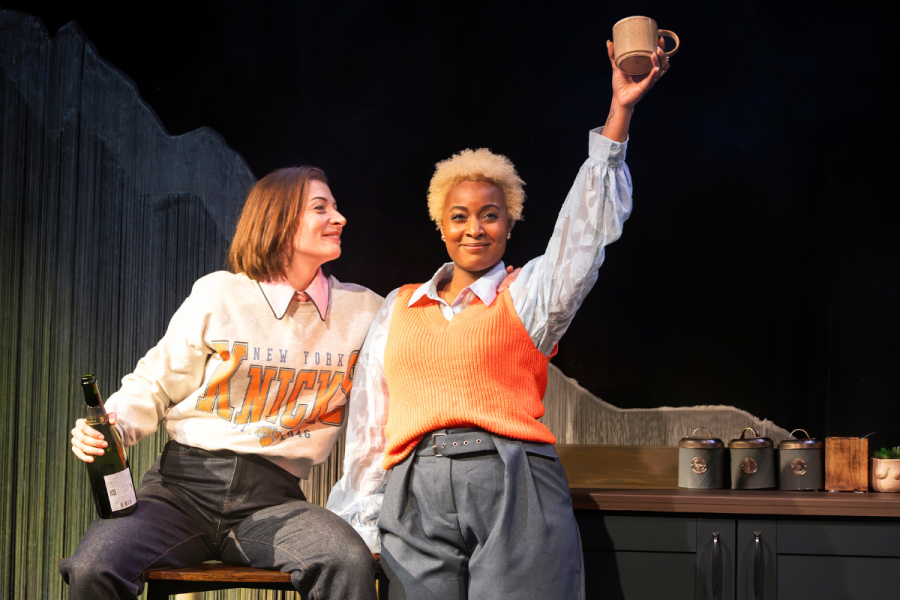
Frances McNamee (pictured above with Sydney Sainté) does much of the heavy lifting anchoring past and present in the character of Sarah, hopelessly in love with Alix (a feisty and forthright Sydney Sainté), the couple detailing their rejection of life as understood in Sarah’s old home in the Appalachian Mountains in “Chosen Family”.
Sarah becomes transfixed by the stories of her ancestors. Kirsty Findlay lends steel to Cait’s determination to abort her child, dangerous not just physically, but socially too, then as now. Yna Tresvalles’ Jean wants her child, but hovers between a widower physician grieving for his lost wife and child and the sweet release of a clean break in 18th century America.
Amongst the likes of “Words Are Not Enough” written for the show, Daniel Jarvis delivers new arrangements of half a dozen or so songs with their roots deep in the past, linking the dilemmas faced by women today with those of their sisters long gone. "A Folk Musical" may be the strapline on the playbill, but this isn’t the finger-in-the-ear and chunky jumpers folk music I recall, but hard-edged tales of hard lives told with a dazzling contemporary vibe.
For all that praise, something didn’t quite speak to me across the two and a half hour runtime. It’s a reviewer’s job to meet characters half way, to feel what they feel, to bleed when they bleed. The Rainer Maria Rilke line "Let everything happen to you: beauty and terror. Just keep going. No feeling is final" is useful to keep in mind in the stalls, one’s empathy for the likes of Vanya, Yerma and Cio-Cio-San crucial to appreciating their tragedies. You shouldn't be standing back, but few aspects of life are as inaccessible to a man as pregnancy and childbirth.
There are many reasons why women should have control over their own bodies and a big one is that men cannot begin to understand the physical and psychological havoc it wreaks – indeed, the physical and psychological transformations that even contemplating those nine months bring. Sure you can go to the antenatal classes, read the leaflets, support and support and support, but you’re never even close. Even the whole bloody mess of childbirth is not your pain, not your joy (it’s relief at best), not your rodeo. And that’s for the best really – it gives an eternal perspective that places power where it should reside – with the mother.
For all the heart and soul and technical achievement on stage, that yawning empathy gap was never bridged – at least not for me. I appreciated the show because it’s a really fine musical, but I didn’t really feel it. Many will.