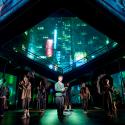
London’s latest new theatre opens with an appropriately otherworldly Halloween offering: American composer Dave Malloy’s teeming 2014 song cycle, which played at the Edinburgh Festival in 2016. It’s a superb piece for demonstrating the benefits of this intimate, flexible cabaret-esque space – played here in the round, with easy audience interaction and strict maintenance of the kind of atmosphere key to Malloy’s tender piece.
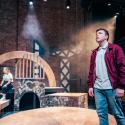
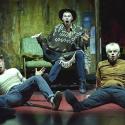
Ghost Quartet is formally a double album, with the sensational actor-musician cast (including Zubin Varla, pictured below) introducing each ‘track’ on its four sides. That’s the most certainty you have in this seven century-spanning storytelling immersion, which references everything from Edgar Allan Poe’s The Fall of the House of Usher to Scheherazade, Thelonious Monk, the Brothers Grimm, The Twilight Zone, David Bowie, Into the Woods, murder ballads, Stephen King, and Japanese Noh drama. It’s more thematic in structure, with recurring themes and tropes: love and loss, dance and desire, faith and family, pictures and stars, whiskey and honey.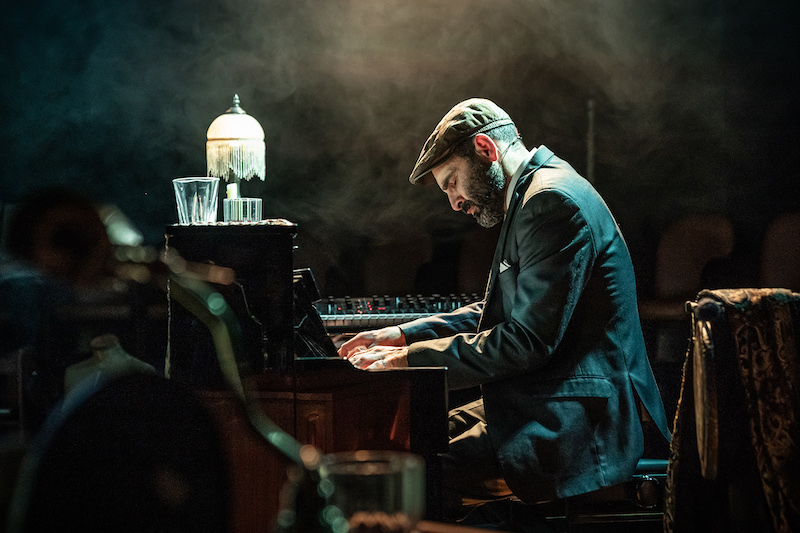 That haunting is a clever echoing of the characters’ concerns with ghosts, past lives, ancestors, slippery memories, the tales we tell and are told, and how all of these fragments contribute to our sense of self. There are some longer threads, like a quest to gather mystical items for a bear in exchange for vengeance, the doom-laden goings-on at the House of Usher, and a much more contemporary darkness in the form of a subway death; other tracks act as more isolated witty riffs or wandering laments. There’s also meta commentary on the mode of storytelling, and how we both seek out and fear ghostly apparatitions.
If perhaps too much to absorb in one viewing, it’s still hugely satisfying when connections slide into place – particularly as some materialise so gradually and delicately, like a butterfly emerging from its chrysalis – though a kinder sound balance would help here so that Malloy’s intricate lyrics aren’t lost, with both voices and some instruments overamplified. But you don’t always need a clear context to enjoy this highly original work; often, what transpires in the moment is electrifying enough.
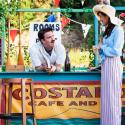
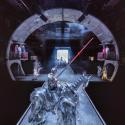
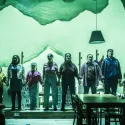
Those highlights include “Soldier & Rose”, with immense a cappella vocals and – somehow – a seduction accented with a triangle. There’s also the rousing, ghost-celebrating “Any Kind of Dead Person”, for which audience members are given tambourines and maracas to play along (as in Malloy’s Broadway hit Natasha, Pierre & the Great Comet of 1812), and “Four Friends” – that titular quartet equalling spirits of a different kind, namely Johnnie Walker, Jameson, Maker’s Mark and Lagavulin. These, too, are doled out to a receptive audience.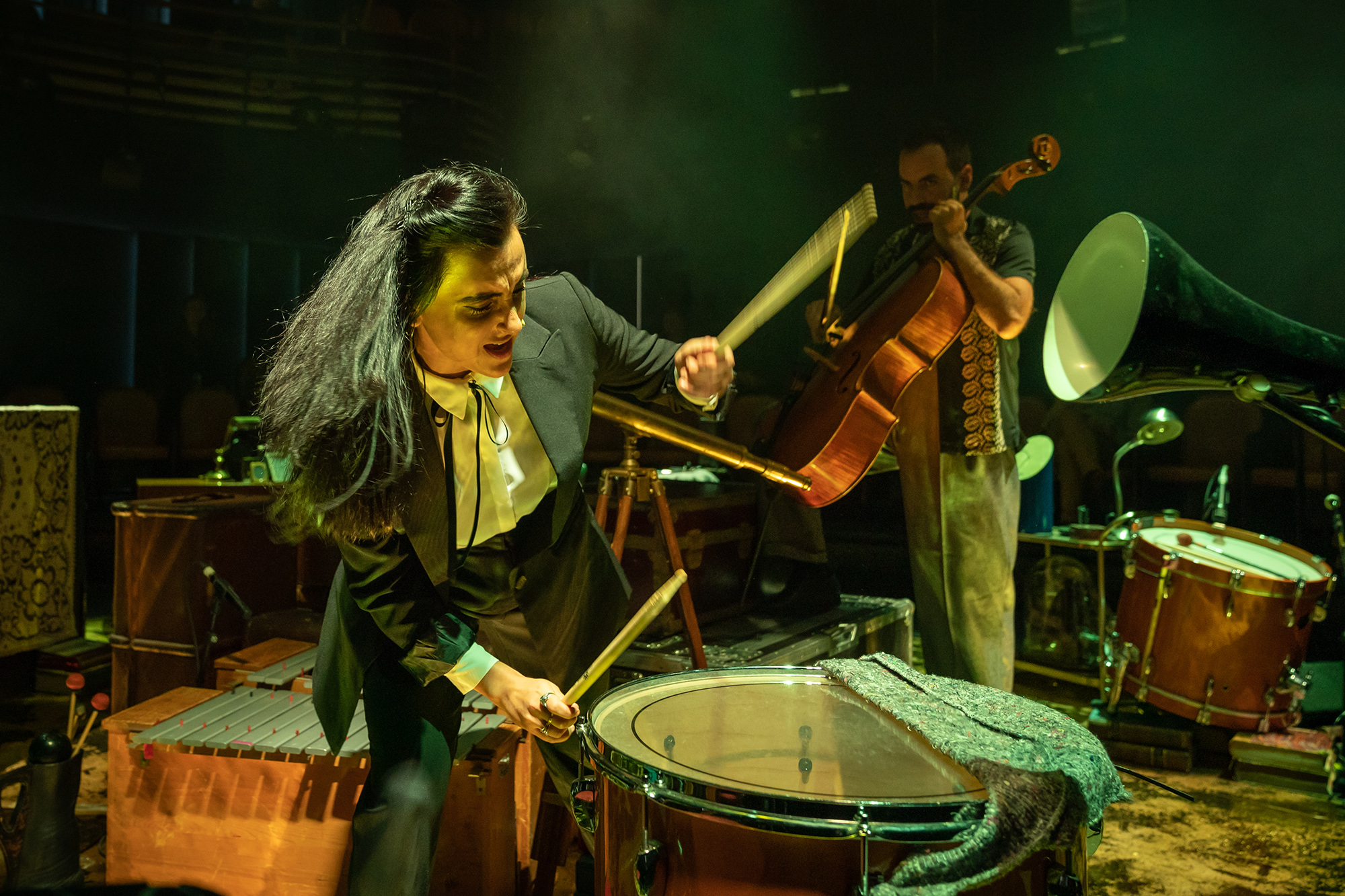 Director Bill Buckhurst, who helmed the hit Sweeney Todd in a pie shop, adds some stylish touches here to heighten the stories: a mysterious camera suspended in a glass case suddenly illuminated; a telescope rotating, just as those who look into it see the world from a different angle; and percussion accentuated with light flashes in time with the drumming (excellent lighting work throughout from Emma Chapman). Simon Kenny’s set is a treasure trove, with new items constantly emerging from steamer trunks or hidden inside books, and there’s thoughtful movement from Georgina Lamb.
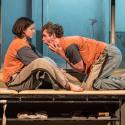
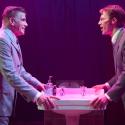
But this is primarily an incredible showcase for the four performers – perfectly cast for their balance of vocal texture and dramatic styles. Zubin Varla is a mesmerising presence and skilled pianist, Carly Bawden brings yearning and delicate strangeness, Maimuna Memon vocals as rich and complex as bitter dark chocolate, and Niccolò Curradi (pictured above with Memon) is wickedly funny and a truly impressive cellist. All also handle Malloy’s quirky variety of instruments with skill – whether a dulcimer, Celtic harp, erhu or gong – as well as his melding of musical styles: folk, electropop, doo-wop, jazz, honky-tonk, gospel.
The end result is a vivid jumble of sound, image and feeling to carry home: the indelible wound of maternal grief, the exquisite layering of voices in the dark, love laced by reproach, the sensation of grasping for something or someone just out of reach, the eerie whine of a bow descending a cello’s strings, the glow of a star, or the absolute intimacy of surrendering to another person in dance and letting the rest of the world slip away. The show also finds a wonderful climatic way to literalise its sense of us all gathering together to make music and tell tales – that age-old tradition of campfire camaraderie, using stories to keep at bay the cold, dark night, and the ghostly shadows lurking within it.
- Ghost Quartet at the Boulevard Theatre until 4 January, 2020
- Read more theatre reviews on theartsdesk