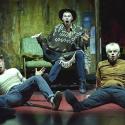
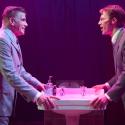
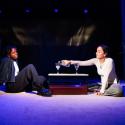
Transatlantic theatrical traffic is busier than ever, and now here at the Hampstead is not just Stephen Karam’s Tony-winning play, first seen in 2015, but director Joe Mantello and his full Broadway cast. It seems fitting that they should travel together, since Karam’s work is so dependent upon a company – as they do here – capturing the intricate rhythms of family, until the rich naturalism begins to convey something profound.
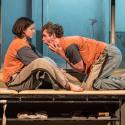
It’s Thanksgiving, and three generations of Blakes have assembled to bless the new Manhattan apartment of younger daughter Brigid (Sarah Steele) and her boyfriend – not husband, a key point of contention for this Irish Catholic clan – Richard (Arian Moayed). There’s Pennsylvania-based parents Erik and Deirdre (Reed Birney and Jayne Houdyshell, pictured below), who care for Erik’s dementia-suffering mother Momo (Lauren Klein), and Sarah’s older sister Aimee (Cassie Beck), who’s reeling from a series of setbacks.
The evening unfolds in a real-time 90 minutes that allows for both the authentic cross-talk of an opinionated family, and for moments of despairing silence that gain deeper meaning as Karam expertly releases new information. The chilly, duplex Chinatown apartment – superbly conjured by David Zinn’s two-level design – similarly works as the realistic backdrop for squabbles that often stray into real estate, money and New York itself, as well as reflecting the family’s psychological turmoil and a foray into the ghostly. In that sense, it has a lot in common with Annie Baker’s work, particularly John (recently seen at the National), and its age-old set-up – reunited family squabbling over a meal – is soon complicated in interesting ways. But that squabbling, too, contains some killer lines, as incomprehension leads to judgement. Lower-middle-class Erik can’t conceive of Richard (shortened, of course, to “Rich”) suffering from depression, particularly when he has a trust fund coming his way, nor can he really empathise with student debt-laden, aspiring composer Brigid, who cares about such luxuries as organic superfoods and mental health.
Meanwhile, the structures that have supported Erik and Deirdre – marriage, the church – have no place in their children’s lives, despite Deirdre’s stealth placement of a Virgin Mary statue. She also floods their inboxes with “interesting articles”, such as a recent scientific piece about how we’re all really just atoms in a chaotic universe. Fear of such chaos both binds and fractures this clan, with Erik haunted by the trauma of taking Aimee to a job interview in Manhattan on 9/11, and spending hours trying to find her amidst the terror and bodies. He now worries that Brigid and Rich are in a flood zone, and his fears seem to manifest as the apartment’s lights go out, and strange noises above grow louder and louder.
One striking line among many is Erik’s plaintive “Don’t you think it should cost less to be alive?”. Financially – there’s job insecurity for everyone, with even lawyer Aimee about to be forced out of her firm because of a chronic illness – but it also speaks to a bigger existential crisis and a society that feels increasingly divided and uncaring, with no promised reward for strivers. Yet all, in different ways, cling to faith: in family, in God, in traditions and rituals, lists, love, or in a survivor’s stoicism.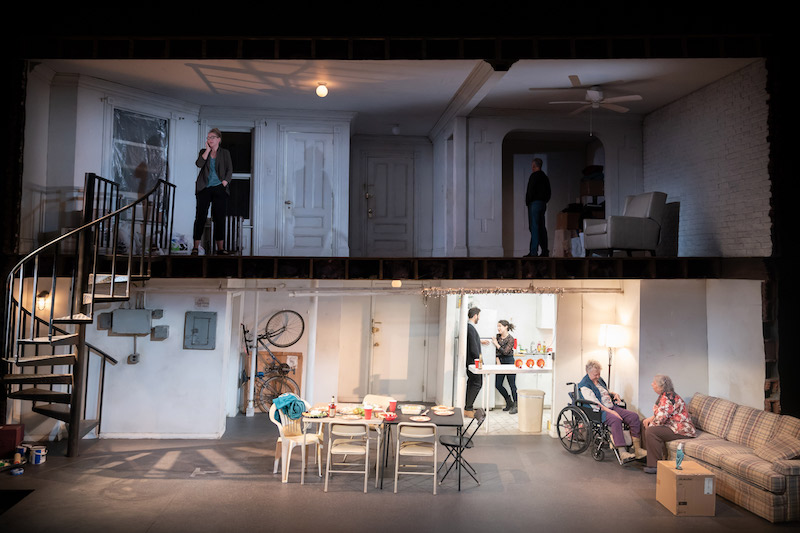 Birney and Houdyshell (both Tony winners in these roles) pull off the theatrical magic trick of total but understated sincerity – you groan at and sympathise with their well-meaning pair, until you’ve reached a level of investment that makes the latter part of the play acutely painful. A very funny Houdyshell lifts the veil of Deirdre’s stubborn certainty to show how small barbs sting, while Birney builds his textured portrait to a climax of emotional might.
There’s superb work, too, from Beck as wry Aimee, determined not to be defined by illness, and yet even more ravaged by loneliness; Steele as the assured, outspoken Brigid, whose quick mind doesn’t help her to understand or connect with her parents; Klein’s remarkably nuanced performance as Momo, scattered speech echoing the family’s miscommunications; and Moayed’s Richard, the would-be peacemaker whose kindness nevertheless tips into condescension.
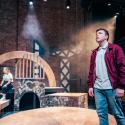
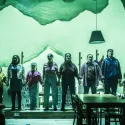
Lighting and sound from, respectively, Justin Townsend and Fitz Patton are key to shaping the action in Mantello’s impeccable production – sometimes isolating individuals or pairs in different tableaux, showing the family together but separate (pictured above), or expressing their troubles in creeping horror. Yet the latter is slightly overused, particularly in a coda where the focus doesn’t need to be on a spooky trick, but on the hopeful, frail, loving human, fighting against the encroaching darkness with all he has left.