Time has been kind to Athol Fugard's "Master Harold"...and the Boys. It's a stealth bomb of a play that I saw in its world premiere production in New Haven, Connecticut, in 1982 and that has been a regular part of my playgoing life ever since. Yes, the apartheid-era South Africa that Fugard dissects with terrifying force has been dismantled, and we live in (supposedly) more enlightened times. Yet the ongoing lesson of a play first directed by Fugard is that racism and hate start from a place of self-loathing.
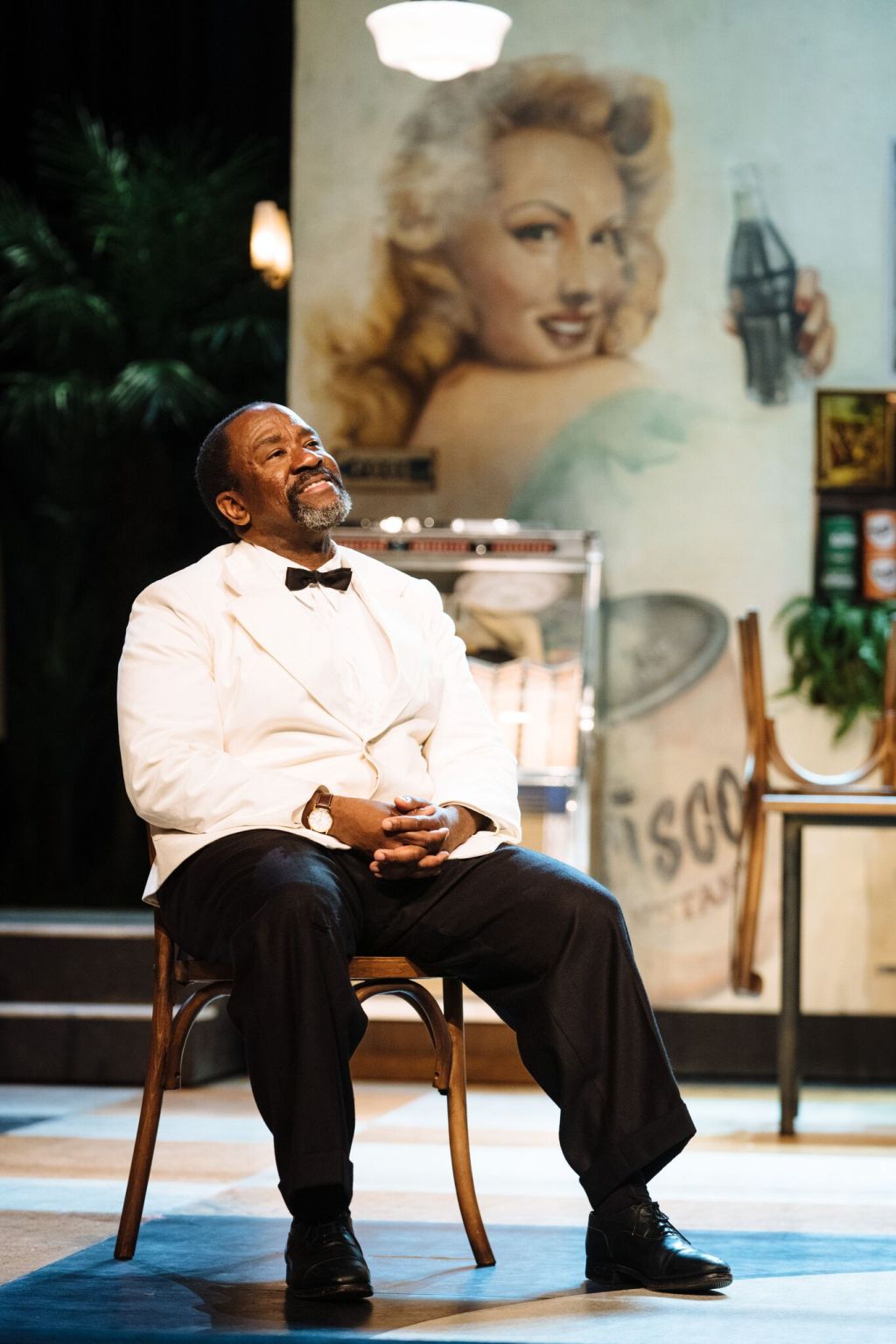
The recent star of the National's brilliantly reconceived Amadeus, Msamati (pictured below) here inherits Zakes Mokae's Tony-winning role of Sam, one of two black waiters at a deserted Port Elizabeth tearoom run by the (unseen) mother of the teenage Hally (19-year-old newcomer Anson Boon), the white "Master Harold" of the title. It's 1950 South Africa, and Hally thinks nothing of using the language of slavery and "primitives" to address two family employees, Sam and the younger Willie (Hammed Animashaun). Both men, it soon becomes clear, have been far more loving and paternal to this adolescent misfit than either of his own parents, whom we gain an acute sense of via a series of gatheringly anxious phone calls.
 It was Sam who constructed the makeshift kite that sent the young Hally's spirits soaring. In his company Hally would seek refuge from the ministrations of a demanding mother at the continual beck and call of a drunken cripple of a father: a shaming presence whom Hally calls "chum" even when the boy wishes he could be anywhere else. Across 100 uninterrupted minutes on a rainsoaked afternoon during which he seeks refuge in the two waiters' company, Hally renews the time-honoured bonds which a single action late in the play will upend, perhaps forever. The wounding results leave the Sarah Vaughan song "Little Man" to linger pregnantly in the air as the lights fade.
Weise, director of last season's much-lauded Nine Night, starts this production with a Vaughan song, "Tenderly", that sets a mood that is sometimes ironic, sometimes not. There's certainly nothing tender in Hally's dysfunctional family, nor in Willie's abuse of the partner with whom he hopes to win the local ballroom dance championship - he's learning the steps from the more seasoned Sam. The dance-off is arguably more resonant now than at the time of the play's premiere, when such competitions weren't the rage they have become. The image of a world "without collisions" informs a metaphor-heavy script that Weise navigates with supreme grace. This production is far lighter on its feet than some I have seen.
Msamati ranks among the best Sams in my experience: he adroitly sidesteps the temptation with this part to play the saint when it's clear throughout that Sam is a fallible individual who risks falling into the sandpit of ugliness that Hally opens up before him. Smaller of stature than many a Sam, Msamati communicates a preternatural grace that has its own rending effect on a landscape where bonhomie can turn on a dime. He's wittily matched, too, with the more physically imposing Animashaun, whose Willie is a manchild at odds with his own combative impulses. 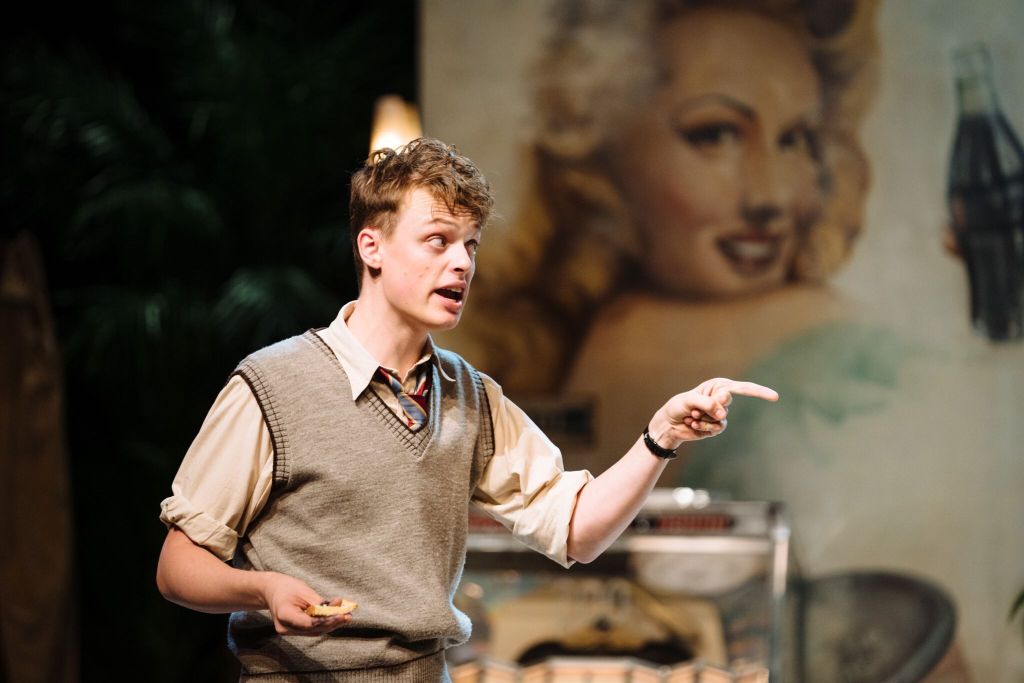 Hally is the hardest role of the three, as authorial surrogates tend to be. A portrait of the playwright as a damaged and damaging young man, Hally can't contain the impulse to displace his anger towards his parents in the direction of the two men he truly loves. One has to admire Anson Boon (pictured above), an English TV and film actor making his professional theatre debut, for jumping in the deep end - his performance will surely benefit from less signalling as the run continues.
Weise keeps the play moving across the wide expanse of Rajha Shakiry's hugely evocative set, and it helps, of course, that movement comes embedded in the text itself. And he's wrought an intriguing change to the very end by prolonging the jukebox music so as to move beyond despair to a place called hope. And why not? Isn't that where most of us wish we could live?
- Master Harold" ... and the Boys at the National Theatre until 17 December
- Read more theatre reviews on theartsdesk