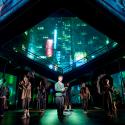
There is a distinctive look, feel, even sound to a stage production directed by Ivo van Hove, which is becoming rather familiar to London theatregoers after two cult hits, A View From the Bridge and Hedda Gabler. You know you’re in van Hovenland as soon as you see the modishly empty stage which before long one of the characters will trash, leaving everyone to wade through detritus for the rest of the play. Long stretches of dialogue will be underscored by music, looped so that the same cadence comes round and round again like toothache. You will also hear unnerving rhythmic sounds that can’t be identified. The surest thing is that there will be blood.
Alas, few of these features earn their keep in the Belgian director's staging at the Barbican of Obsession, the 1942 film by Luchino Visconti, itself a rendering of the James M Cain novel The Postman Always Rings Twice. It’s a curious choice of project given that Visconti’s film is known as the front leader of Italian neo-realism, and van Hove’s style runs counter to realism in every conceivable way.
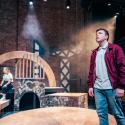
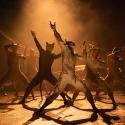
What clearly attracted him to the story, and to Visconti’s take on it, was the obsession part. A young drifter (Jude Law, showing us what a serious player he is) wanders into an isolated café and starts a coup-de-foudre affair with the proprietor’s young wife (van Hove’s regular muse, Halina Reijn). Since she finds it impossible to leave, the pair conspire to murder her husband. But the combination of guilt and the impossibility of sustaining their obsessive passion undoes them. The twist is that the man, Gino, is ultimately arrested for another death that he didn’t cause.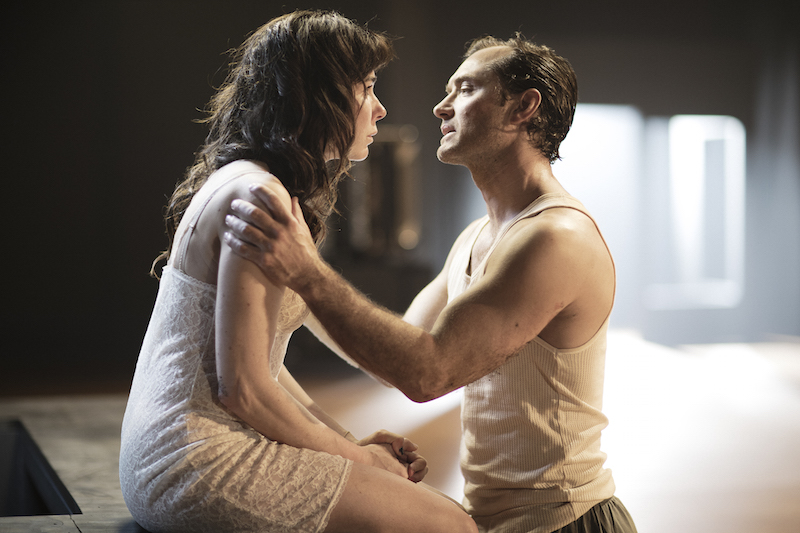 Where the film was at pains to show the shabby, messy reality of the home of the restaurant owner and his wife, the stage set (design: long-term collaborator Jan Versweyveld) is strikingly bare and shiny – a hygiene inspector’s dream. The wife, here renamed Hanna, complains of the humidity and the yowling of neighbourhood cats, just as the film’s characters do. But Van Hove’s busy score only fleetingly brings the sounds of crickets and cats to our attention, as if flagging them in a PowerPoint presentation. He rejects their usefulness in building atmosphere and tension. Cat On a Hot Tin Roof this ain’t.
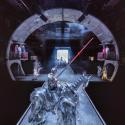
Yet the director’s anti-naturalism serves him well in delivering the plot, not only allowing his characters to burst into song, sometimes merging with the café jukebox, but compressing time extremely, if not always with narrative clarity. It’s hardly a spoiler to say that there are two car crashes to be dealt with. On stage, the easy way would be to resort to video, and indeed van Hove does use screens to project close-ups of the lovers’ faces and groping hands. But easy isn’t his way. Instead, he suspends from the ceiling a full-size working combustion engine. It’s the thing that the husband (veteran Dutch star Gijs Scholten van Aschat) is struggling to fix when Gino first appears (symbol alert: his marriage isn't working). Given the precedents for mess and gore in van Hove’s work, it’s not hard to imagine the potential for spewing liquids from a truck engine. And spew they do.
The major problem with this adaptation is the dialogue. We can, I think, cope with the light Dutch accents among the cast, though they give the whole affair a geographically untethered feel (Jude Law’s being a flat, London accent). But the delivery, or at least the spaces between utterances, gives conversations the pace of a snail. And the lines themselves are lumpen, with the result that hard-earned tension leaches away. Simon Stephens is credited with this “English Language Version” which suggests an original in Dutch. But is Jude Law mugging up his Flemish for the coming European tour? It’s a mystery.
Given the combination of Law and a zeitgeisty director, the entire run is already returns-only, and late-comers might save themselves the trouble. Yet while this is a long way off van Hove’s best form, it leaves this reviewer only the more eager to see his return to it.
- Obsession at Barbican Theatre until 20 May
- Read more theatre reviews on theartsdesk