Jack Cardiff was one of the all-time greats of cinematography, the man who shot such Powell and Pressburger classics as The Red Shoes and A Matter of Life and Death, worked on John Huston’s The African Queen with Humphrey Bogart and Katharine Hepburn, and lensed Marilyn Monroe in The Prince and the Showgirl. He was renowned as “the man who makes women look beautiful”, but despite this he didn’t shrink from shooting Sylvester Stallone in Rambo: First Blood (Part II).
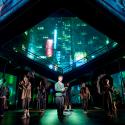
Terry Johnson’s new play for Hampstead Theatre depicts Cardiff in his twilight years, reliving chunks of his past while his family try to cope with his advancing dementia. As the play has it, Cardiff lives in Denham in Buckinghamshire (once the site of Alexander Korda’s Denham Studios), surrounded by cameras, portraits of legendary leading ladies and assorted movie-making artefacts, and is haphazardly engaged on writing an autobiography. However, this mental state is making this all but impossible.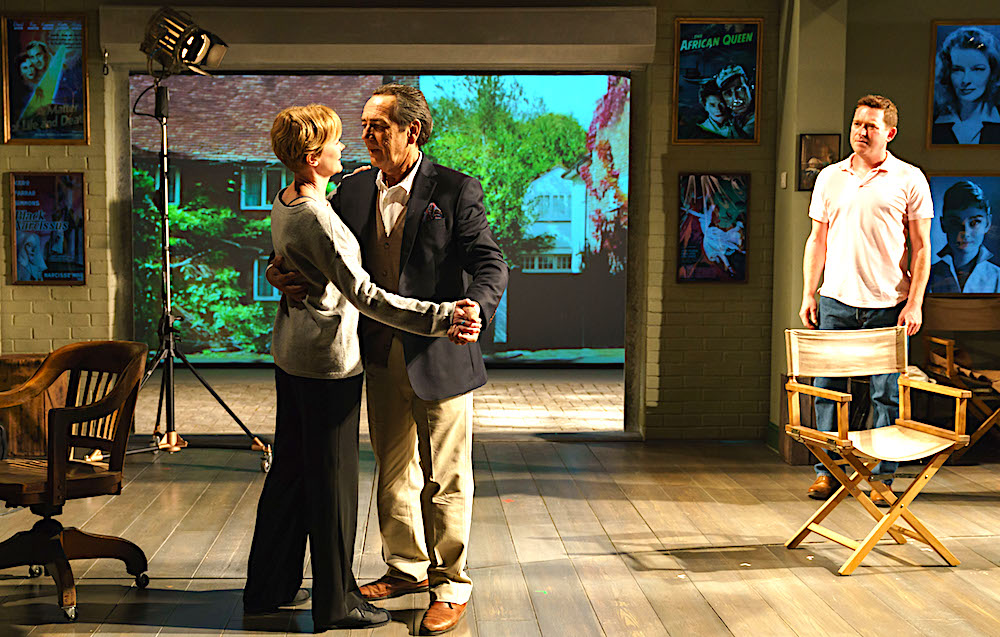 Johnson wrote Prism with Robert Lindsay in mind, Lindsay having known Cardiff and his son Mason, and his leading man has rewarded him by diving into the role with a slightly unhinged energy which keeps driving the piece forwards even if it’s not always clear where Johnson (who also directs) is trying to take it. Sometimes it seems to be more a play about the ramifications of Alzheimer’s than a portrait (or reinvention or celebration or whatever) of a legend of cinematic history. The lengthy opening act, in which Cardiff is brought into his garage full of memorabilia by Mason (Barnaby Kay) but doesn’t recognise these supposedly familiar surroundings, is a laborious comedy of errors, cognitive dissonance and malaproprisms as Cardiff’s mind spins through random images and memories and struggles to find the right words to describe them (Lindsay, Barnaby Kay and Claire Skinner pictured above).
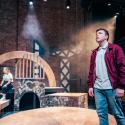
Lucy (Rebecca Night, pictured below), who’s been hired as Jack’s carer and typist, doesn’t have much of a clue about how to fulfil either role, though she does eventually prove to have a kind of natural empathy for him. In Cardiff’s mind, where layers of past and present mingle like the multi-coloured light with which he created his exquisite cinematic illusions, Lucy becomes Marilyn Monroe, and his wife Nicola (Claire Skinner) elides into his memories of Katharine Hepburn.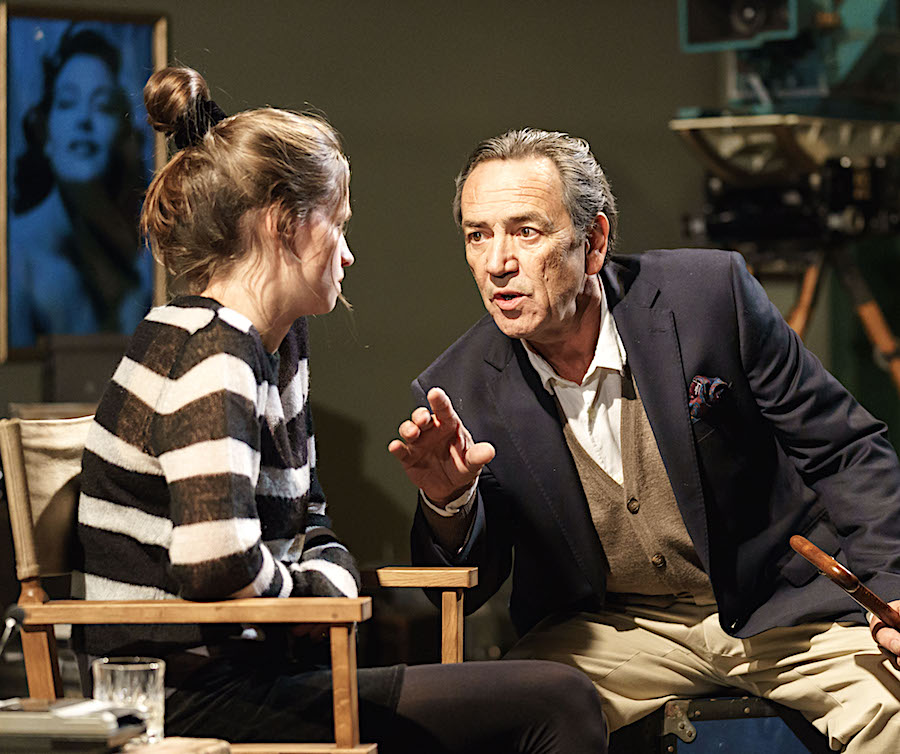 The smart part arrives after the interval, where Johnson flips the perspective so we see events through the prism (if you will) of Cardiff’s misbehaving imagination. He hustles us back to the jungle in 1951, where Bogart, Lauren Bacall (Mrs Bogart), Cardiff, and La Hepburn are on location for The African Queen. Skinner delivers a superb impression of Hepburn as she jousts teasingly with Cardiff, shooting down his possibly amorous intentions with her baroque vocabulary and forensically subtle brain. Night is also reborn as a shimmering, statuesque Marilyn Monroe, to re-enact an earlier scene she shared with Cardiff as Lucy when the ailing cinematographer imagined her as the Blonde Bombshell on his own casting couch. Kay doubles as Monroe's affronted husband Arthur Miller.
Despite its imaginative flights and the almost reckless levity which Lindsay brings to the central role, Prism’s journey darkens as the final curtain nears, with Cardiff losing himself in a reverie of that special twilight moment known as “the magic hour” (also the title of Cardiff’s real-life autobiography). But while his son insists that he wants to bring his dad’s life “to a meaningful conclusion”, Johnson’s point is perhaps that the meaning of Cardiff’s life was the process of living it, and his legacy is his art.