Lisa has lost an hour in a (somewhat contrived) temporal glitch. As a consequence, her world is always sliding off-kilter, not quite making sense, things floating in and out of memory. A watchmaker (himself somewhat loosely tethered to reality) tells her that she needs to get it back as a lost hour wields great power and can fall into the wrong hands. Lisa embraces her quest and travels to the strange land of Dissocia.
It’s a convoluted framing device, but it gets Anthony Neilson to where he wants to go in his cult hit of 2004, given a timely revival by Emma Baggott at the Theatre Royal Stratford East. Mental health has become much more prominent in public discourse in the 18 years since the play premiered, but the word used is almost always "awareness" and not "understanding" – two hours in the company of Lisa goes some way towards telling us why that is so.
Once in Dissocia, which has something of the surreal attraction underpinned by malevolence that characterises Mr Wonka’s chocolate factory, Lisa encounters friends and foes or, rather, friends who can turn into foes and foes who can turn into friends. No one can be trusted, but someone has to be and, truth be told, they’re useful to have around when the armies of the Black Dog launch their attacks.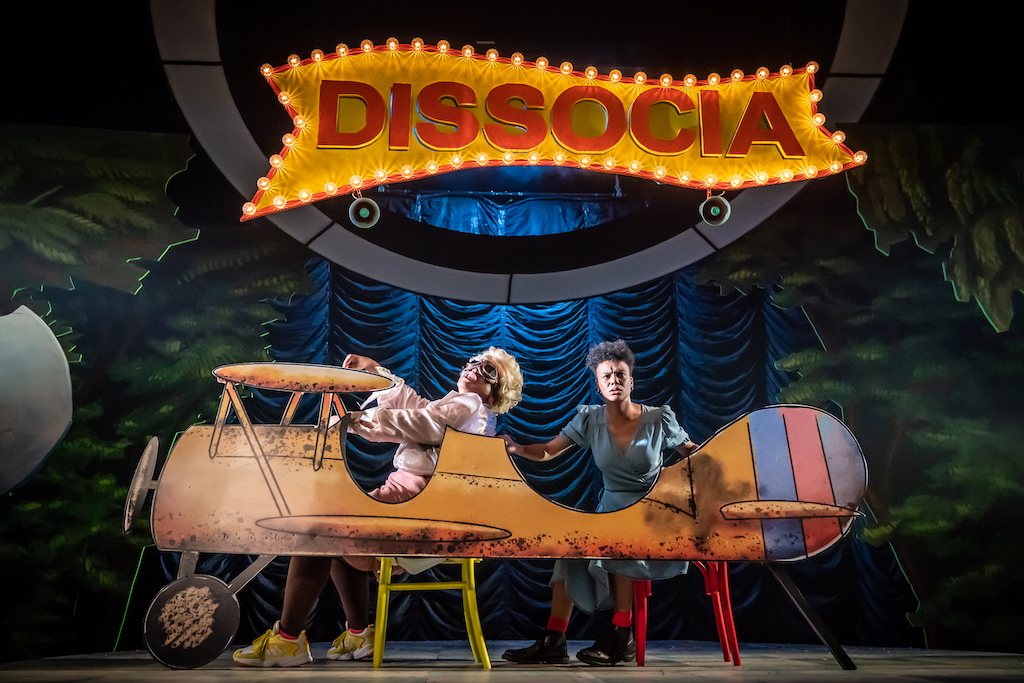 If the Insecurity Guards in Dissocia’s arrivals hall didn’t tip you the wink, then that existential enemy’s name certainly would. We’re inside Lisa’s mind, in the hall of mirrors that dissociative disorders erect to stave off depression – at least, I think that’s how it works. Depression’s black dog is fiendishly difficult to pin down if you’re fortunate enough never to hear its barking.
Soon, Lisa meets other bizarre creatures, each having characteristics of neuroses, each comforting and helping her, but also irritating and obstructing her. She oscillates between exasperation and acceptance of their chaotic disturbances in a land that she knows cannot be real, but it’s the only one she has. She needs her hour back to rebalance her life. And then everything changes...
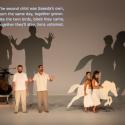
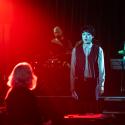
Leah Harvey (pictured above with Dominique Hamilton) is excellent as Lisa, centring her comic and distressing encounters in Dissocia in a fundamental decency that slides only when she is presented with symbols of childhood – a giant teddy bear that sings a lullaby with the portentous title of “Who’ll Hold Your Paw When You Die?” and when she goes carpet bombing women and children leaving scorched earth patterns in the shapes of fluffy animals (there’s a Catch 22 reference there for sure). Something in her childhood has been triggered in Dissocia, but she can’t find it.
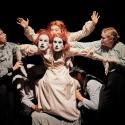
The rest of the cast rotate through a wild menagerie of characters. Archie Backhouse lends a sullen teenage amorality to his goat who desires to be blamed; Phoebe Naughton gives her Australian Hot Dog Stand / Lost Property Office manager exactly the right level of passive aggression to stop her customers getting to what they need to resolve their problems; and Dominique Hamilton is perhaps the scariest and most disturbing of all as a council worker employed to take on the responsibility and pain of being the victim of heinous crimes. More crimes but fewer victims, see?
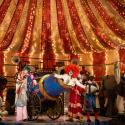
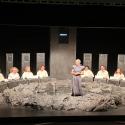
Grace Smart does a fine job in creating this unbelievable, unreal but very much present world, with a pantomime-ish set that reminds us of the childhood anxieties related to fear and fun that course through the narrative. Her best feature is the halo-like light that shines so unforgivingly down on Lisa in Act Two, its flashes marking the entrance of another medical professional, its jarring a jolt to our senses as much as Lisa's.
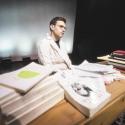
Away from Dissocia, we see a shadow of the person whom we’ve come to know, her agency limited by drugs and the bureaucratic routines of uninterested doctors and nurses. We feel the seductive pull of Dissocia, for all its horrors, a conclusion that was easier to accept when first I saw this play 12 years or so ago. That’s why it’s a timely revival.