Ken Burns is the closest American television has to David Attenborough. They may swim in different seas, but they both have an old-school commitment to an ethos that will be missed when it’s gone – the idea that television is a place to communicate information with a sober sense of wonder. Burns’s field is American history in all its breadth and depth. Last time round it was a lapidary decalogue of documentaries about the Vietnam War. That had such an impact that, for his latest, BBC Four have promoted his name to the title to create a forgivable misnomer: Country Music by Ken Burns.
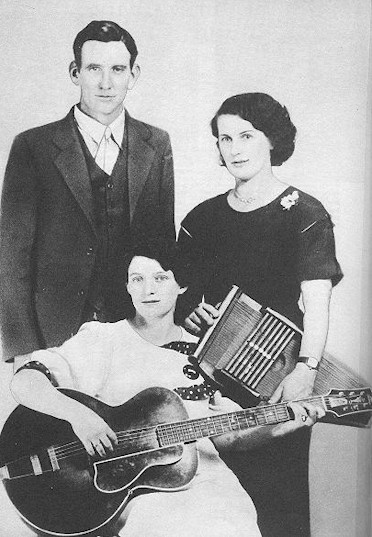
The country music in the opening episode was actually by Fiddlin’ John Carson, the Carter Family and Jimmie Rodgers (pictured below right), and took in the invention of the radio and the phonograph which, by the early 1930s, had turned all three into household names. At that point there was no such thing as country music per se. When a publisher asking one act for a handle was told, “We’re nothing but a bunch of hill billies,” the label stuck. Dolly Parton was firm that, wrongly used, the epithet is “almost like a racist remark. You’re not allowed to say it,” she insisted, “unless you know what you’re talking about.”
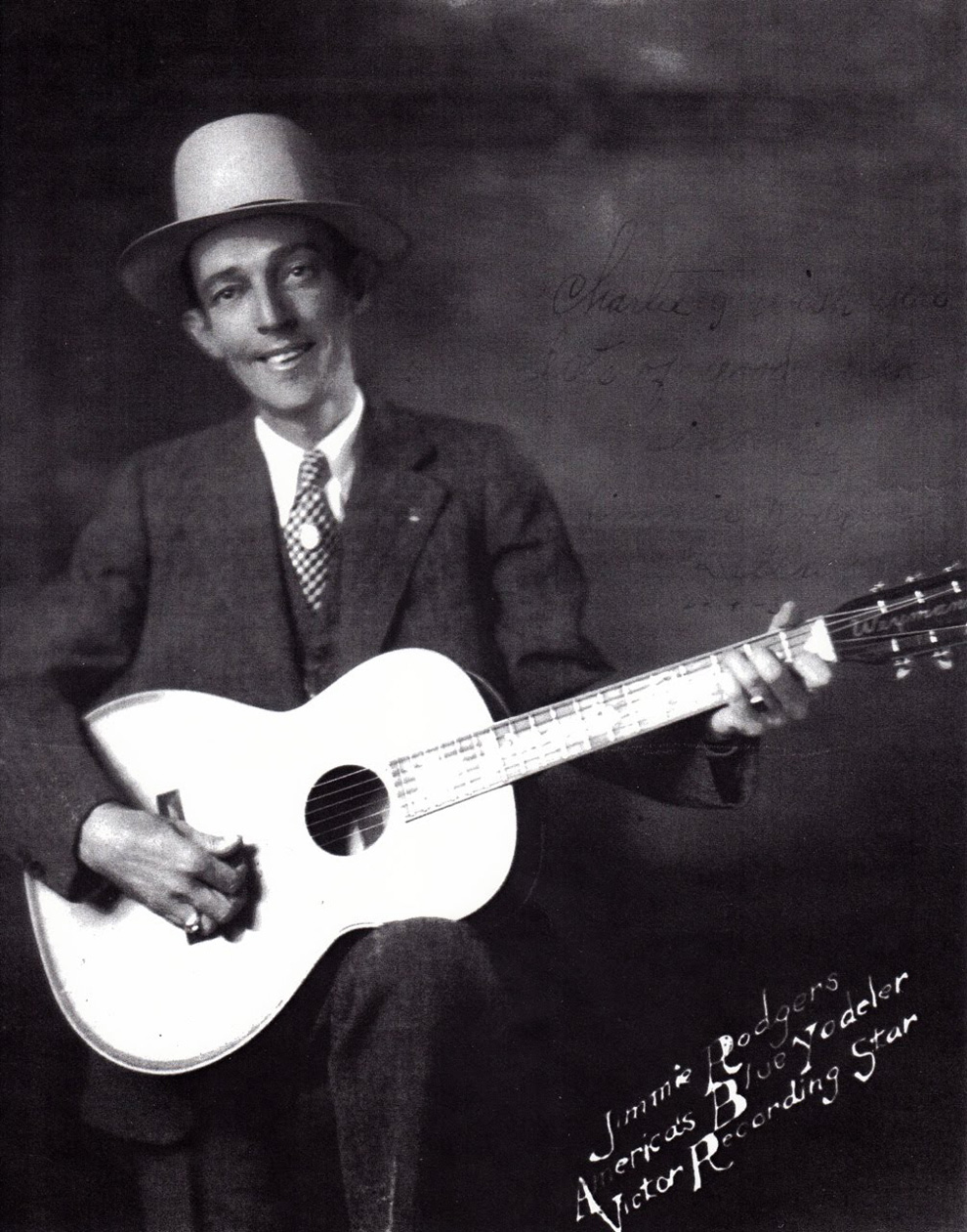 Country musicians were not always so sensitive. In the 1920s Carson worked in an Atlanta textile mill by day, and by night fiddled at any gathering that would have him – Confederate reunions, communist rallies, gatherings of the Ku Klux Klan. Rodgers, who invented the surreal concept of the yodelling cowboy, was a pioneer in the field of country’s dodgy gender politics. “I can get more women than a passenger train can haul,” he boasted in “Blue Yodel No 1 (T for Texas)”. In the next verse he planned to “shoot poor Thelma just to see her jump and fall”. If Rodgers was a Mississippi hobo, the Carter Family from Virginia (pictured below left) sang of hearth and home. The common denominator that united Rodgers and the Carters was guitars and poverty, and the fact that they both answered the summons to record their songs in Bristol, Tennessee in 1927 for producer Ralph Peer of the Victor Talking Machine Company.
The Bristol Sessions were the Year Zero for country that enabled musicians to start taking home royalties. Rodgers squandered his on fancy cars and guitars and died at 35. The Carter Family spawned a dynasty whose many scions include Roseanne Cash. She spoke eloquently of those early recordings of songs which “were captured rather than written," she said. "They were in the hills like rock formations.”
 Burns and his colleagues are clearly seduced by the romance of country as a melting pot that created a genuine musical soup together influences – among them the African banjo, the Celtic fiddle and the Germanic polka. If you’re not already sold on this music, a multi-part series may feel like a long haul across the flatter sections of America. If you’ve curious about what the Grand Old Opry actually is, and why American radio stations are known by such impenetrable acronyms, this is a persuasive primer with all the usual Burns touches: Peter Coyote’s Old Testament narration, the slow pans across ancient archive photographs, the ravishingly detailed soundscape that brings the past into the present. As ever, Burns knows what he's talking about.
Country historians like Bill C Malone and Charles Bradley bring the flavour of an encyclopaedia entry, while a parade of celebrated musicians impart ornery cowboy-booted wisdom. Harlan Howard’s celebrated definition of country was cited here: three chords and the truth. But how about the Rodney Crowell’s? “It’s truth-telling,” he twinkled, “even when it’s a big fat lie.” All together now: oh-dell-lay-ee-eh, lay-ee oh, lay-ee.