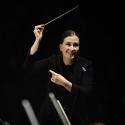
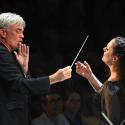
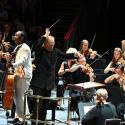
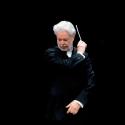
Edinburgh audiences can, it has to be said, be frustratingly unadventurous. Which no doubt accounts for the relatively light turnout for the Scottish Chamber Orchestra’s quietly fizzing Queen’s Hall concert under conductor Oliver Knussen, three quarters of whose music was written after 1945. What any absentees missed, however, was a gloriously passionate evening of crisp, energetic music making. And also one that showcased the versatility of the SCO as far more than a band that just plays Mozart and Haydn, but a very persuasive contemporary music outfit too. Even if it all ended a bit strangely.
Knussen’s opener – hardly a crowd-pleaser, admittedly – was Hans Werner Henze’s brief First Symphony, but it also proved the evening’s real discovery, a very early work from just two years after the end of the Second World War, when Henze was coming to terms with his experiences fighting for the German army. It’s a bewilderingly bright and breezy piece for those times, kind of Tippett meets neo-classical Stravinsky, and it felt just right for Knussen and the SCO – graceful, elegant, with a kind of clockwork precision that also marks out Knussen’s own music, and which also played to the exquisite craftsmanship of his conducting. It felt, too, like a constant struggle to suppress the music’s increasingly assertive dark, violent elements, which burst to the surface in its final movement, but Knussen charted its journey from blithe cheeriness to torment and disintegration with sincerity, and without undue sentimentality.
Glasgow-born Martin Suckling is the SCO’s composer in association, and the Orchestra boldly commissioned his set of miniatures Six Speechless Songs for its 40th anniversary concert in 2014. It was good to re-hear the work on its own terms outside the pomp of that event – and good, too, that this likeable, provocative piece was getting a repeat performance so soon after its high-profile premiere. And like Henze’s, it feels in Suckling’s music that every note counts and has its rightful place, something Knussen’s incisive direction served to highlight. It’s exquisitely orchestrated – from chattering, Messiaen-like birdsong in the opener, to the mournful bells tolling across the orchestra in the fourth piece, to the shrill piping of two piccolos that closes the work – for a relatively small band, and covers a remarkable range of moods and emotions, intimate and engaging. Knussen’s account felt more sparkling and extrovert than Robin Ticciati’s careful craftsmanship at the premiere performance, but no less vividly detailed.
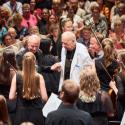
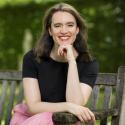
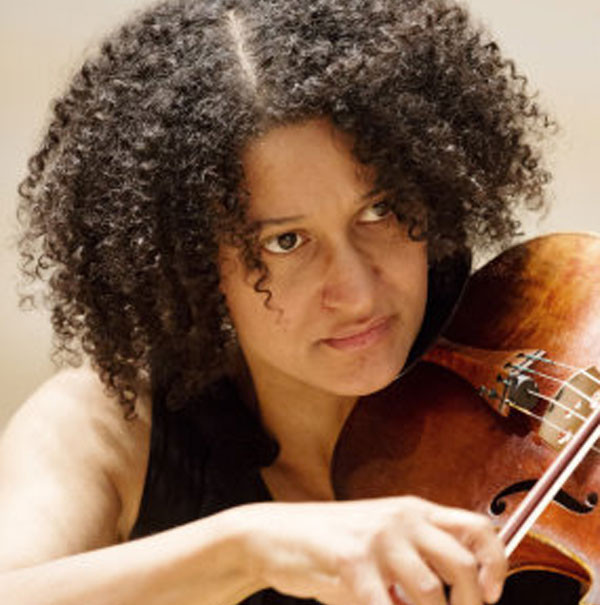 SCO principal violist Jane Atkins (pictured right) had been in her usual seat at the front of the violas before the interval – and indeed stepped back into it, to a ripple of applause, for the concert’s final number – but stood out front as soloist just after the break for Britten’s Lachrymae. And though her playing was distinctive and demonstrative, she felt, too, like first among equals, sharing the limelight with the SCO strings in an appropriately melancholy account that felt like a study in greys, supple with rubato and shaped thoughtfully.
Knussen’s closing number, however, brought the concert to a slightly baffling end. There was no lack of bite, energy or vigour in his account of Mendelssohn’s teenage First Symphony – from his wonderfully overblown Sturm und Drang of the opening movement to a nimble, spirited finale – but ultimately, it all felt rather lightweight. Perhaps some light relief after the more demanding music earlier on, or there to reassure concert-goers nervous of all this modernism – or, maybe, simply a bit of a missed opportunity.