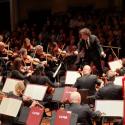
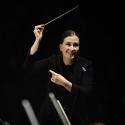
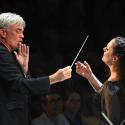
It is a rare treat for Londoners to have the CBSO with Andris Nelsons in town, and the Albert Hall was, if not fully sold out, then certainly well stocked. It would be fair to assume that the main draw was Shostakovich’s giant and much-debated Leningrad symphony after the interval; but first up was Glinka’s Ruslan and Lyudmila overture and the UK premiere of Emily Howard’s Calculus of the Nervous System. Both together they added up to a mere 20 minutes and we were out in the interval in the blink of an eye: such are the challenges of programming around a 75-minute symphony.
In its short span, the Glinka gives most of the orchestra a share of the spotlight, with frenetic string runs at the opening, plenty of wind ensemble work, and both cellos and violas having a separate taste of the lush, romantic theme. It’s a great showpiece – and has featured as an encore twice before at the Proms, the programme helpfully informs. It certainly showed off a dazzling CBSO, which boded well for further Russian challenges ahead.
A number of exceptional soloists rose from the ranks to deliver Shostakovich’s melodies
Emily Howard’s piece, a meditation on memories as electrical impulses flashing through the brain, offered a curious and opaque listening experience. Mostly tentative, quiet and with frequent silences, it was punctuated with stabs and jabs and floaty harmonics from the strings. The composer’s description gives a sense of the layout: ‘The “memories” occur and recur in different ways: sometimes clear, partially remembered or very distant; sometimes in succession and sometimes punctured by silence.’ No dramatic arc intended, therefore, and none present. The rather tepid response from the audience summed it up: perhaps this wasn’t the right occasion for it.
One barely earned interval later, the main event – and right from the off, the symphony makes demands of the winds especially, both exposed and in ensemble. Ferocious fortissimos notwithstanding, it deals mostly in sparse textures and gradual build-ups, so there is nowhere to hide when your turn comes. The CBSO was more than equal to the task, and a number of exceptional soloists rose from the ranks to deliver Shostakovich’s sometimes winding, sometimes impish and angular melodies. Whether piccolo, bassoon or cor anglais, and from a screeching E flat clarinet to its rasping bass cousin, a vast orchestral and expressive palette emerged with tremendous surety. Not to leave the strings out – the leader’s aerial solo in the first movement set the tone, and the extended strings-only sections later in the work showed what a rich core this orchestra has.
There is plenty of down time in this symphony – moments where you’re waiting for the next thing to happen but a direction has yet to emerge. Andris Nelsons kept the intensity throughout, and richly deserved the audience’s cheers.