What a difference a piano can make. Boris Giltburg, like Angela Hewitt, prefers a very special Fazioli over the Steinways which dominate the concert scene at the Wigmore Hall and elsewhere. While those may yield a greater depth of field, more appropriate for a 2000 seater venue, few pianists have wrought sound magic on them anything like the kind we heard throughout last night’s rich recital.
I’d better explain where a slight resistance kicked in across the wonders of the Chopin Ballades, which Giltburg presented as a sequence: like Schubert’s D899 Impromptus, the result came over as a kind of symphonic suite, with correspondences in both second “movements” doing that rare thing of starting in the major and ending in the minor, though Giltburg took well-deserved applause at the end of each Ballade. Having spent the afternoon reviewing Nikolai Lugansky’s new CD of Rachmaninov’s Études-Tableaux, I’d adjusted to that pianist’s special kind of objectivity – not cold, as some think, but meticulous in space and detail – and the younger Moscow-born pianist’s romantic subjectivity in recital wasn’t so easy to take: a response, of course, subjective in itself.
Giltburg tends to charge at climaxes, though that’s not necessarily a fault since he so obviously feels it that way, and he never muddies the flurry of notes; articulation is always impressive, slight pauses for air keeping it just about sane. The sense of improvisation which made well-known ideas come as a surprise, though, was impressive throughout, while the tenderness of the F minor Ballade’s opening and the A flat Ballade’s initially heavenly second theme certainly gained from the personal way Giltburg engages with “his” Fazioli. 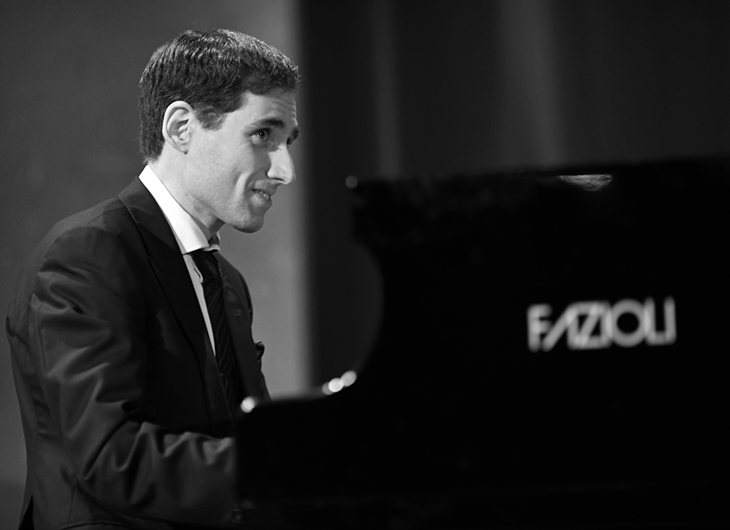 If Chopin’s divided soul didn’t quite hit the emotional heights, the diverse character studies of the second half were vividly negotiated. Giltburg showed full sensitivity in the four pieces he chose from Prokofiev’s 10 Romeo and Juliet transcriptions – the drama of Juliet’s development from alternatingly capricious and wistful young girl to tragic heroine framing the violent strides of the knights at the Capulet ball and the sarcastic wit of Mercutio. The orchestral original was clearly in the pianist’s mind, from the exquisite way he rendered what in the full score are the tender flutes of Juliet’s paler cast of thought to the brassy poundings of “Montagues and Capulets”. Ravel’s “Ondine” in Gaspard de la nuit took up where Juliet’s death-simulating potion had left off, same key included: a watery after-life transformation, perhaps, with the sudden surges fully vivid. Keening human response to the hanged man of “Le gibet” balanced well with the tolling repeated note, and “Scarbo” made us wonder at the sophisticated means Ravel lavishes on a malicious goblin.
The creature does overstay its welcome, though – Ravel’s fault, if anyone’s – and in his second encore, Giltburg gave us a more succinct demonic manifestation in the young Prokofiev’s near-contemporary Suggestion diabolique. Taking it as fast as possible without losing articulated clarity, the pianist wowed us most of all, perhaps, at the last minute, an encore balance to Debussy’s “Clair de lune”, a happier response to the melancholy moonshine of “Ondine”. The full rainbow was certainly coloured in last night.