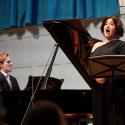
This recital of love songs by Robert Schumann and Johannes Brahms, devised by the pianist Helmut Deutsch and sung by the megastar duo of soprano Diana Damrau and tenor Jonas Kaufmann, looked on paper like the Lieder event of the year. In practice, it left a good deal to unpick.
Deutsch had pulled together 40 songs – yes, 40 – by the two composers, exploring aspects of love from myriad angles. Each half was arranged in three groups of songs (six by Schumann, seven by Brahms, etc), the idea being to build a narrative of sorts from number to number.
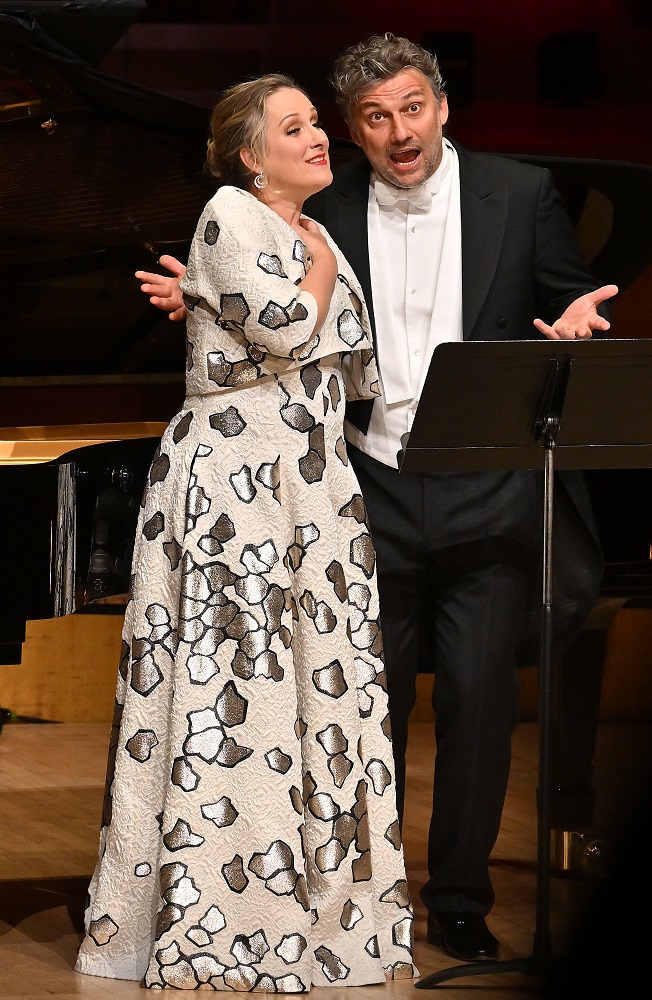
The first half was the darker (Damrau wearing black and coral), the second half lighter and brighter (Damrau in white and gold), and the songs were a mix of favourites such as Schumann’s "Widmung" and "Der Nussbaum" (not listed, but sung exquisitely by Damrau) and Brahms’s "Meine Liebe ist grün" alongside less familiar but no less gorgeous offerings. These brought opportunities galore, if one wanted them, to consider how influenced Wagner was by Schumann, or to notice synergies between some of Brahms’s songs and his other works; a memory of one in a late piano piece, or of another in the Piano Concerto No. 2. Best of all was the chance to hear duets by both composers, rare since two-singer recitals remain relatively unusual.
 On the other hand, the programming raised a gentle question over whether it’s possible to have too much of a good thing. With the narrative extras seeming sometimes a little contrived – for instance, the tenor realising that the soprano is singing about somebody other than him – and the songs essentially divorced from any other contexts, the contrasts began to dim, and the magic too. The addition of some songs by Clara Schumann could perhaps have offered a valuable extra dimension. She was, after all, the third person in this love triangle, but tonight she became an elephant in the room.
Kaufmann unfortunately had a bad cough and in general seemed to be flying one engine short. Glimpses emerged of the oak-dark tone that his fans know and love, but some of the technical aims were not quite working and he should probably have been at home getting some rest. Damrau, meanwhile, was soaring along effortlessly, oozing charisma, her voice offering radiant platinum arcs of brightness; perhaps she occasionally overcompensated for Kaufmann in her acting. The chemistry between them existed, but only caught fire intermittently.
The duets, nevertheless, were the chief highlight: Damrau and Kaufmann’s tones complement each other well, the high, shining edge of hers to some extent offering an opposite reflection of his "baritenor" lower range, and jointly they blended and balanced their sounds to an expert degree. The Schumann duet that closed the first half, "An den Abendstern", was a slice of the German song heaven we’d hoped for. Brahms’s "Von ewiger Liebe" became, unusually, a duet too, the characters apportioned as appropriate between tenor and soprano. Deutsch remained a magisterial and unflappable support at the piano from first note to last, and drew the biggest quotient of applause at the end.
Surtitles proved a welcome addition to the warmly lit stage, especially as the hall’s digital-only programme policy appeared to have bypassed many audience members (and reading Lieder texts on a tiny mobile phone screen during a concert feels less than ideal in any case).
So, while the evening fell short of expectations in several ways, it did offer much food for thought – and, at its best, a seriously good wallow factor.