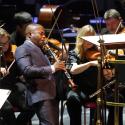
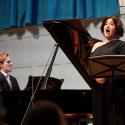
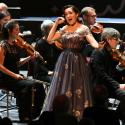
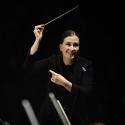
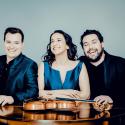
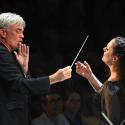
“Songs of Vienna” by the Britten Sinfonia turned out to be a concert of chamber works, with never more than six performers on the stage at any time. It was built around two appearances by the Canadian soprano Barbara Hannigan, who performed pieces with voice by Chausson and Schoenberg. They are clearly part of her core repertoire, and she sings them with passion and from memory.
The rest was something of a rag-bag: curiosities from the juvenilia of Mahler, Schoenberg and Richard Strauss, plus a couple of the pieces from the Second Viennese School's music for private performances: a Schoenberg-arranged Strauss waltz and a chamber arrangement of an early Berg song. All in all, it felt like rather less than a full meal.
In Chausson's Chanson Perpétuelle, there was no doubting the depth of emotion in Hannigan's performance, but the fast vibrato she deployed is an acquired taste. She was also let down by the pallor of some of the instrumental playing. For example, just after the moment the protagonist wants it to be known that she is dying, “que je meurs”, the piano part is marked “expressif”, which is surely an unambiguous invitation to allow the melody in the piano part to sing out for dear life. The text, the presence of death demand it, but Iain Farrington held back, he remained far too benign. A moment like that needs to be seized, or it is gone forever.
The evening needed more paprika, more portamento, more bite
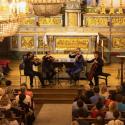
Similar problems beset Schoenberg's String Quartet No 2. The range of textural variety was too narrow, the pointers to structural shifts which these four orchestral principals were able to give were not clear enough. It is perhaps inevitable that an established string quartet which has the work really under its skin and its fingers would be able to give it more shape. And again there were moments skated over. There are more tears and more pain in the viola subject at the end of the first movement than we heard last night. And when the protagonist is singing about the vast ravines she has to bestride, from what I heard, the invitation in the score to the viola to “stand out decisively” and to be heard properly was politely declined.
The curiosities and fillers did not produce anything of real heft or substance. They included the single-movement torso of Mahler's Piano Quartet, written when the composer was 16, some early short Schoenberg four-hand piano pieces from 1896, which veered from sub-Brahms to sub-Schubert, and the Strauss "Ständchen" of 1882 for piano quartet, which was meekly Mendelssohnian.
The Viennese are not known for their politeness and these performances were simply too well-behaved. The evening needed more paprika, more portamento, more bite, more Wiener Schmäh, more digging into the strings, more passion. And why not some stronger repertoire too?
- The same programme will be performed at Milton Court in London on 7 May