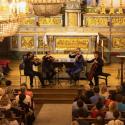
The Edinburgh International Festival’s Queen’s Hall series ended with two very impressive debuts. Thursday morning brought the Isidore Quartet, who winningly, if slightly naively, told us that Edinburgh had a similar energy to their native New York.
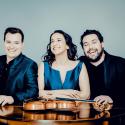
These four young men – the oldest member is 24 – were charm personified in the second of Haydn’s “Sun” Quartets, combining easy grace with carefree beauty, and using vibrato only discreetly to colour the sound carefully. Similarly, their take on the third of Mendelssohn’s Op 44 Quartets combined delicacy with warmth and terrific clarity of textures. The most interesting thing on their programme, however, was the Second Quartet by Billy Childs, a composer much better known as a jazz pianist. Calling it Awakening, Childs wrote the quartet as a reflection on a period of his wife’s serious illness, and it’s a terrific tone poem as well as proof that Childs is impressively proficient in writing for the genre. (Pictured below: Phoenix Avalon, Adrian Steele, Devin Moore and Joshua McClendon taking a bow).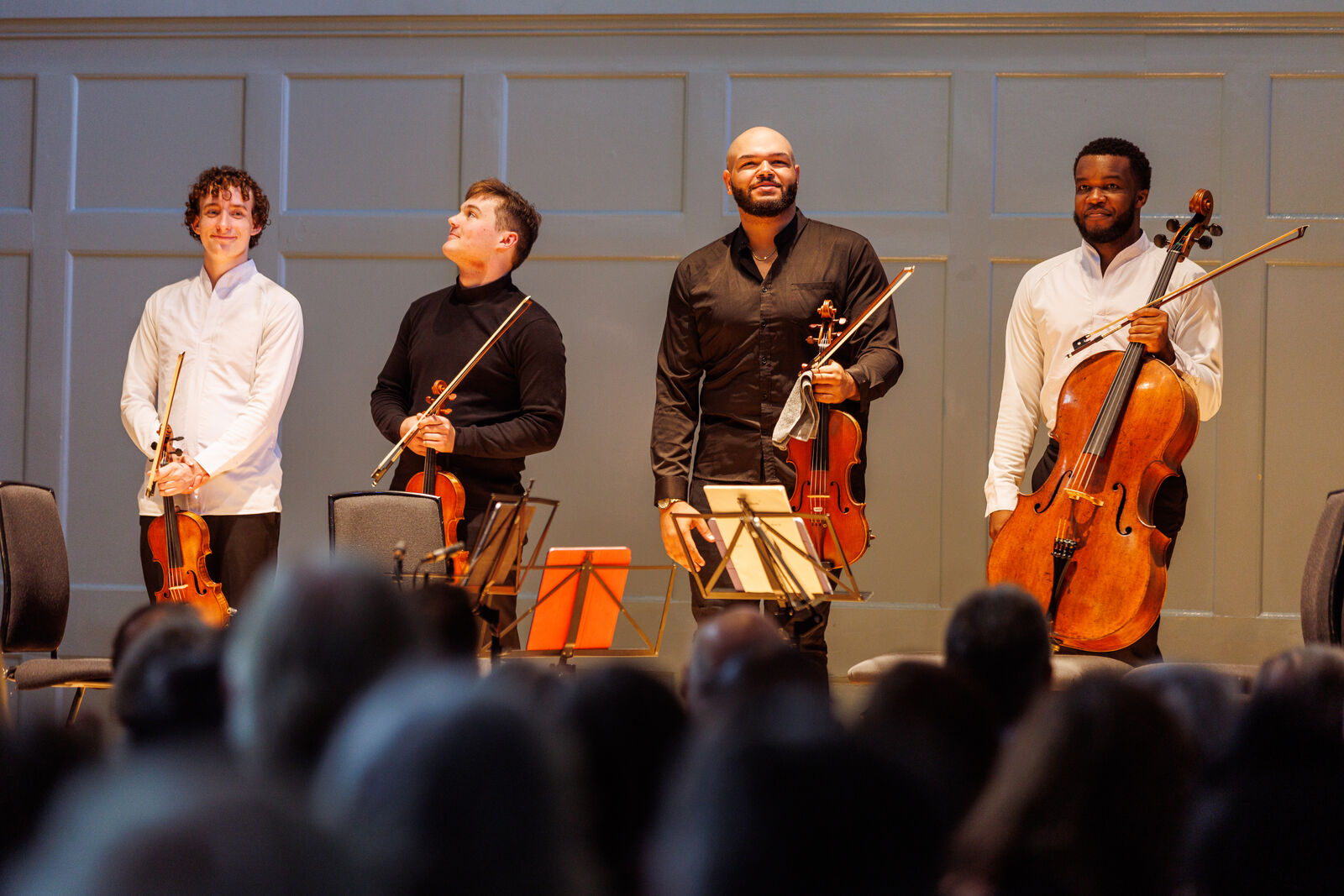 The first movement is full of anguished figurations and frenzied effects like buzzing ponticelli to evoke the terror of hearing of her illness, while the second movement contains eerie harmonic glissandi to represent the whirr of the hospital machinery. The final movement moves forwards, though, to chart her recovery and their moving into a new phase of their relationship with soft textures, gorgeous harmonies and soaring melodies. It’s an enormously impressive piece, played with conviction and clarity by these musicians.
Japanese pianist Mao Fujita (pictured below by Dovile Sermokas) took the Queen’s Hall stage in the final solo recital of the festival. A bit like violinist Clara-Jumi Kang, he cuts a slight, almost fragile figure when he appears on stage… until he starts to play, and he attacked Liszt’s B minor Sonata with athletic strength and, much more importantly, a convincing sense of the piece’s overall architecture, without which no pianist should even begin. Even at the end, for example, he could read beyond the notes to undermine the apparent resolution of the final bars: it’s clear to him that there’s a reason why that persistent bottom B never really goes away. He played with wonderful nobility of tone and with plenty of light and shade, too: the climaxes sounded impassioned, but he was unafraid to shade his tone and slow right down for the nobility of the lyrical major key themes.  He preceded the Liszt with a series of Fantasias and Rondos by Mozart that were designed to illustrate the composer’s skill as an improviser, though he was a little too bound by the page in several of these: you could hear the bar lines in lots of places, despite playing of lovely delicacy. He was on much stronger ground in the C minor Sonata K457, which was urgent and dynamic in its outer movements, with a beautifully expressive central Adagio which, ironically, often sounded more free-spirited and relaxed than did the pieces designed to sound improvisatory.