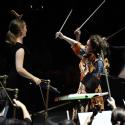
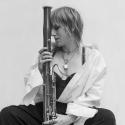
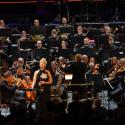
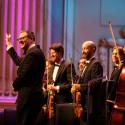
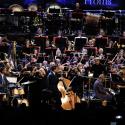
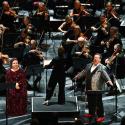
With Riccardo Chailly's Leipzig Beethoven series well into its capacious stride, another cycle of symphonies keeping unusual company begins. This one featuring the BBC Symphony Orchestra will take longer and features six conductors, four of them known masters of their subject, chimerical Sibelius. The only problem last night was that Sakari Oramo, in tandem with his charismatic soprano wife Anu Komsi, took us to such strange and wonderful places in the first concert that I want them both back for the next five.
The format was a BBC Symphony speciality, a four-work programme, which hasn't always emerged so well in practice. This one did. Three-quarters fluid - oceanic, amniotic - before returning to equally mysterious earth for the Sibelius symphony, it had no weak or under-characterised link. The riveting centre of the water music was Komsi: part voice, part instrument or, if you're more fancifully inclined - and it was hard not to be - half human, half element, she must have been the soprano of composer Kaija Saariaho's dreams.
Who else could dematerialise so peculiarly into the fastidious, typically selective fabrics of Saariaho's four songs setting Finnish poet Eino Leino, making it hard sometimes to sense which was singer and which clarinet or tuned percussion? There was more to these vivid poetic responses than Saariaho's usual shifting textures; the visceral heartbeats of the second song provoking haunting rhythms, the orchestral wrappings of the third's supernatural peace taking us to the outer limits of the composer's vision.
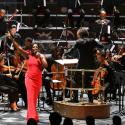
 Komsi (pictured right by Maarit Kytöharja) also became Luonnotar, the nature maiden in Sibelius's Tardis-like creation myth, holding the silences, stretching her arms beseechingly, finally - and stunningly - blending into the irradiated string-chord benediction as the egg-specks of the Finnish in-the-beginning legend become the stars in the sky.
In any other context, the singularity of Luonnotar might have eclipsed its companions. Oramo made an original start with a disciplined but spacious argument for Bax's symphonic poem Tintagel. It can seem to sprawl, but the Finnish conductor held the Sibelian sea swell and magical orchestral perspectives perfectly in balance with the film-fanfare-ish yet impeccably crafted themes. Nothing too brash or noisy here; one only wished that Bax had decided to end with the time-suspending hushed calm that was the most impressive feature of Oramo's layered interpretation.
So, finally, to the beacon of Sibelius's Third, the work in which the cutback of forces and length, as well as the famous conversation Sibelius had at the time with Mahler opposing his notions of the symphony embracing the world, leads one to expect modesty. But these never-still waters run deep with a conductor who understands the necessary inscaping. What could have been a pretty but opaque central intermezzo took on a dynamic glow of mesmerising unpredictability in cross-rhythms, irregular, short-lived melody and gravity-defying structure. Woodwind and brass were unassumingly, organically handsome throughout, but it was the strings who were called upon to go most whole-heartedly with Oramo's interior vision, from the cellos' first gambit sowing the seeds of a bracing journey through to the violas sounding voices through a cloud as Sibelius's trump-card hymn steers the finale in a new and decisive direction.
- BBC Symphony Orchestra's Sibelius series continues with Jukka-Pekka Saraste conducting the Sixth and Seventh Symphonies on 16 December
- David Nice weighs up new research around Sibelius's Third Symphony discussed by Sakari Oramo on his blog