Amen. The end – of a prayer, a service, even the Bible itself. But what, asks Leonard Bernstein’s Symphony No 3, Kaddish, if “Amen” is the beginning and not the end, the start of a conversation that hears the divine word and doesn’t say “So be it” and accept, but instead answers back?
The result is the composer’s least-performed symphony, a puzzling piece, torn between moods, even genres. As the centrepiece for the opening of the LSO’s Bernstein 100 celebrations it was problematic, but as the musical epilogue to a weekend marked by yet another American atrocity, to a year haunted by the same fears of nuclear war that first animated it back in the 1960s, it felt uncomfortably apt.
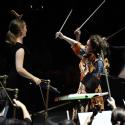
Marin Alsop, Bernstein’s protegée and former assistant, is the champion of this series, pathfinding her way through the composer’s repertoire to create a four-concert homage to the work of the LSO’s former President. Her love for this music is well-documented, but there’s nothing sentimental about her approach, which is all brisk, incisive clarity and efficiency. Without it (even with it, at times) Kaddish feels blowsy, overstuffed with ideas and musical identities – a hotchpotch of styles all represented better elsewhere in the composer’s output. Here you get the syncopated dances of the Chichester Psalms, there the uncomplicated, all-American melodies of Mass and West Side Story, the brutal dissonance of the First Symphony, even some 12-tone episodes.
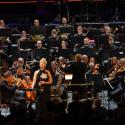
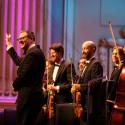
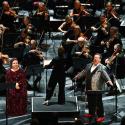
Alsop’s vision was clear, and beautifully shaped by the musicians of the LSO
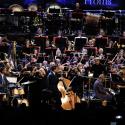
Add to this a spoken narration (delivered here by actress Claire Bloom), a soprano soloist (Laura Claycomb), some fiendishly tricky writing for chorus and a boys’ choir, and you have a bewildering amount packed into a mere 45-minutes of symphony. Alsop’s vision may have been clear, and beautifully shaped by the musicians of the LSO – strings luxuriating in the lovely melody of "Kaddish II", tuned percussion adding watery translucence to a texture blackened by sooty smudges of brass – but couldn’t quite bring the LSO Chorus, who struggled audibly with much of the music, along with them.
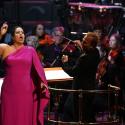
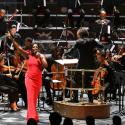
Bloom too, although she brought a wonderful querulousness and peevishness to her dialogue with the “angry, wrinkled old majesty” of a God, appeared uncertain, unfamiliar with the text, and her doubts seemed to communicate themselves to the musicians around her. Soprano Laura Claycomb failed to make much of a mark, and only the Tiffin Boys’ Choir, impeccably angelic and precise, really seemed at ease.
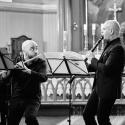
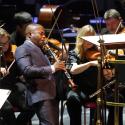
What a contrast both to the luminous, persuasive urgency of the opener – Bernstein’s Halil for flute and orchestra, with the LSO’s own Adam Walker as a wonderfully rhetorical, expressive soloist – and to the Adagio from Mahler’s Symphony No 10 that came after. Dense and conflicted, torn between two contrasting urges, the opening movement of Mahler’s incomplete, final symphony nevertheless finds a clarity to its argument that Kaddish does not.
The musical wrestling match between the ferocious nihilism of the brass (horrifyingly, atomically destructive here in their climactic shriek of a chord) and the softer urgings of strings and flute was vividly staged by Alsop and her players, the conflict growing out of a more exploratory opening than we heard this summer from Dausgaard and the BBC SSO at the Proms – its tenderness, hopefulness even, startled by the later glance into the abyss. Bernstein may have been the focus here, but this concert never quite saw him emerge from his beloved Mahler’s shadow.