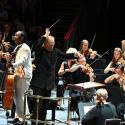
The Wigmore Hall, the high church of Beethoven and Brahms, hosted something less elevated last night: a programme called “Hey for Christmas” presented by vocal ensemble Siglo de Oro and period instrument band Spinacino. The conceit was of recreating a mid-17th century English family’s musical diet through the Christmas season. And it was a whole lot of fun.
As director Patrick Allies explained in his witty introduction, the scenario has traditional music as demanded by the older members of the family, while the teenage daughter is into contemporary dance music – and there is also a starchy uncle demanding some old-fashioned sacred polyphony. (“We all have one.”)
The art of the programming was in blending these different registers in a way that showed them all to their best advantage. The opening instrumental knees-up – the delightfully named “Granny’s Delight”, from John Playford’s celebrated collection The Dancing Master – segued into the traditional “As I rode out this enderes night”. Then a stunning solo number, the Irish tune “The darkest night in December” sung by Hannah Ely with only the lightest of accompaniment from violin and viol (Aarono McGregor and Claire Horáček). Ely’s subtly-inflected tuning and discreet embellishments developed as the piece progressed, warming from a chilly start and then going full circle back to bleak coldness. It was a beautifully judged performance and the highlight of the night.
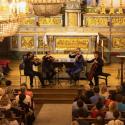
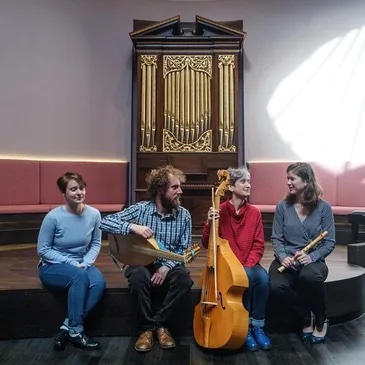 Other effective juxtapositions were going from a rich Byrd O Magnum Mysterium to Playford’s “Drive the cold winter away”, one of the handful of items that combined the full instrumental and vocal forces. The instruments of Spinacino (pictured left) formed a so-called “broken” consort, combining bowed strings with theorbo, recorder, percussion and – the wild-card – Callum Armstrong on bagpipes. These were used with judicious restraint, but added a reedy edge to the full-ensemble numbers, and in a promenaded solo spot near the end Armstrong showed the instrument off as capable of generating melodic grace. Also notable was percussionist Tom Hollister, whose sensitive drum and tambourine playing belied his rugby front-row forward appearance.
Of the singers, several had solo spots – Rebekah Jones’s “The truth sent from above” saw her in full storytelling mode, accompanied by Eric Thomas’s eloquent lute – and the men combined for a lusty “Sir Christemas”. Patrick Allies directed while singing, with evident enjoyment and collegiality.
Nowhere was this more apparent than in uproarious final ballad, “Hey for Christmas”, where everyone combined in a tale of Christmas debauchery with more “bums” and “buttocks” than perhaps any piece previously heard at the Wigmore Hall. It was a chaotic pantomime that all the players threw themselves into – then brought the house to order with a poised and moving “Auld Lang Syne”.