You seldom expect to feel the breath of apocalypse and the terror of the grave amid the modestly rationalist architecture and passion-killer acoustics of the Royal Festival Hall. In fact, before Edward Gardner and the London Philharmonic Orchestra set to work on the Verdi Requiem, I wondered whether – on a gloomy, rain-swept autumn night – any echoey, cobwebby, run-down Victorian church in south London might have suited the spirit of the piece better than this antiseptically clean, well-lighted place.
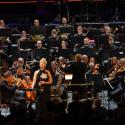
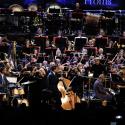
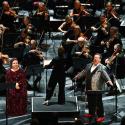
In addition, the season of sniffles and coughs had felled 50 per cent of the solo line-up: Romanian soprano Iulia Maria Dan took over from Elza van den Heever, and ENO/Royal Opera stalwart Robert Murray from Armenian tenor Arsen Soghomonyan. Only Russian mezzo Ekaterina Gubanova and Hungarian bass-baritone Gábor Bretz survived unscathed. Despite the late replacements, the quartet gelled when they had to with remarkable fluency, with the see-sawing, give-and-take intimacy of a section such as the “Lux aeterna” trio finely blended and balanced. I sensed a few moments of under-rehearsed disarticulation, but nothing to dispel the sombre magic of the score.  Gardner, currently in charge at the Bergen Philharmonic but due to succeed the wonder-working Vladimir Jurowski at the LPO in 2021(the orchestra pictured above by Benjamin Ealovega), knows what a precious gift has landed in his hands. He took care not to allow the evening to sound like just another routine Verdi Requiem. Strong and generally close-knit, as the soloists were, Gardner’s interpretation let the suspenseful drama of the work emerge in every pinpointed orchestral part. Yes, he accentuated the dynamic leaps between pianissimo and fortissimo with the full-blooded relish you might expect: a theatre of sudden contrasts audible right from the blistering “Te decet hymnus” after the opening “Requiem”. But, just as Jurowski does, he also gives many distinctive voices in the LPO their chance to speak and to be heard. Which meant that – more than usually – you heard the great emotional arc of Verdi’s 1874 tribute to his departed friend and inspiration Alessandro Manzoni pass expressively not just among the four singers and choir but from instrument to instrument. The charge moved from the brooding basses led by Kevin Rundell to Juliette Bausor’s questing flute; while leader Pieter Schoeman headed string desks whose impassioned refinement lent the LPO a sheen and lustre worthy of the passions of this piece.
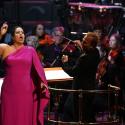
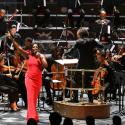
Up above the band, the London Philharmonic Choir (directed by Neville Creed) impressed when they thundered but – even more so – when they almost-whispered; and, most of all, in the breath-stopping transitions from hush to roar and back again. Orchestra and choir together ensured that the later reprises of the “Dies irae” (awestruck salutations to Simon Carrington, Henry Baldwin and Andrew Barclay on the heavy drum artillery) would have shaken hell, or stormed heaven, even more thoroughly than its first blast. So much in the Requiem rest on knife-sharp breaks and shifts that communicate its terrifying mood-swings. Gardner made sure the choir and players shunned blurry ecclesiastical solemnity in favour of one fiercely articulated crisis of the soul after another, from the heavenly shock-and-awe of the offstage brass in “Tuba mirum” to the unearthly string shimmer in the “Hostias” and the heart-clutching massed choral attack of the “Sanctus”.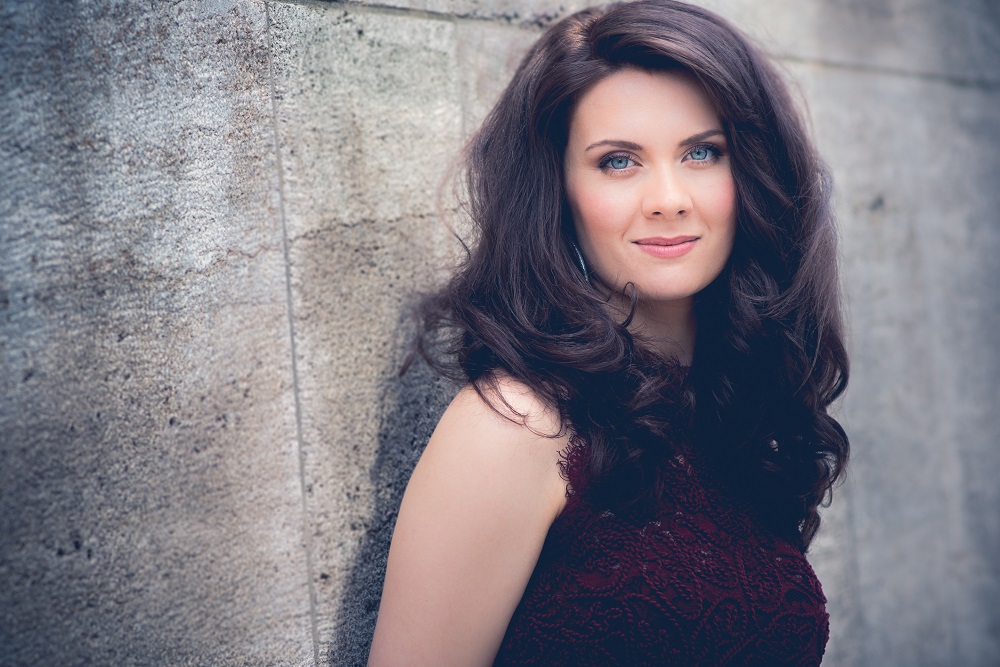 Among the quartet of soloists, Iulia Maria Dan (pictured above by Kartal Karaderik) sang with a warm authority and sense of quiet command that made it hard to credit her stand-in status. If her “Recordare” had a sumptuous fruitiness, then the final monologue of the “Libera me” spanned the plaintive, the tender, the fearful and the joyful. And if she seemed to climb a bit strenuously up to its famous topmost peaks; well, this whole work tells of desperate striving towards eternal bliss rather than its smug possession. The mezzo soloist, Ekaterina Gubanova, had some ravishing moments, from a rapt duet with Dan in the “Agnus dei” to a star turn in the “Lacrimosa” quartet, beautifully paced by Gardner.
Tenor Robert Murray felt uncertain at times, and his “Ingemisco” never quite gnawed and wrenched as it can. By the time of the “Offertorio” sections though (above all the “Hostias”), the voice truly glowed. As for Gábor Bretz, from the solo “Confutatis” to his role in “Lux aeterna” he displayed an unfussy control allied to varied colour and deep inwardness; a sense of the words and their feelings being fully inhabited rather than simply worn for the occasion. After Iulia Maria Dan had uttered her farewell pleas for liberation from eternal death, we streamed out into the Thames-side drizzle not just overwhelmed (a mediocre Requiem may do that) but revitalised. In Gardner’s hands, Verdi’s veering, lurching progress of the soul felt more like stimulus than sedative, a tonic injection, not a soupy bath. Such vehement lucidity promises much for his tenure with the LPO.