Adaptations of Henry James have often failed to click over the years. The author’s private, introspective works – sightseeing trips around people’s souls – seem hard to transpose into a crowded gathering where someone keeps yelling “Action!”.
So it’s a bit surprising that three reworkings of his ever-so-subtle 1903 story, The Beast in the Jungle – by Brazilian, Dutch and Austrian directors – have reached the screen since 2017, one of them last year. You might think this proves that buses always arrive in threes, but you’d be wrong. For here comes a fourth version of the story from France’s Bertrand Bonello – a loose baggy monster of a movie that nevertheless captures, at moments, the essence of James.
The original story told of two upscale soul-mates caught in endless emotional calculation about one another that, tragically, never quite adds up to passion – the “beast” that one of them is deeply phobic about. Bonello has several goes, across three time periods, at dramatising James’s effusions about repression, with Léa Seydoux and George MacKay as the almost-lovers.
His framing device is a futuristic head-scratcher worthy of some over-determined Netflix fabulation: in 2044 Paris, Seydoux asks an all-powerful AI employment agency for a better job, only to be told she has to be rid of all her “affect” (i.e. emotions) to get the gig. She needs to “explore her past lives” in order to “clean her DNA”. She accepts the Matrix-like procedure that plunges her into other existences in other time-frames, despite having embarked on some promising 2044 chat-ups with MacKay.
The film’s mix of sci-fi and woo-woo takes us back to the gilded Henry James era and a fairly faithful re-enactment of the early stages of the original tale, in which Seydoux’s past self dallies with a previous MacKay (should that make any sense). Seydoux and MacKay are nowhere more excellent than in these encounters, delivered in a mix of French and English, in which they talk their way around the emotional elephant in the room. Caged here in endless self-examination that always misses the point, Seydoux is establishing herself as a prodigious talent, both spontaneous and withholding.
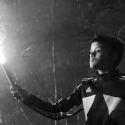
Later at this calendar point, Bonello leads the duo into some neatly handled Edwardian eroticism (hand-massaging and soulful breathing) before they reach a reckoning in both a fire and a flood. The pair pop up again in 2014 America as rather different figures. Seydoux is a failing actress holed up as a house-sitter in a fancy mansion, and MacKay is a celibate sociopath parked outside as he internet-rants against women.
This new angle on people failing to connect is set in a less-than-zero Los Angeles that is less than convincing, and over-stays its past life before a final totting up between our couple back in the “present” of 2044. Audiences may need a Brodie’s Notes on Henry James to get their heads around the movie’s final mic-drop moment.
The Beast failed to win entry into competition at Cannes last year, which seems a bit harsh, but it’s true that the film is a little low on the visual panache you might expect from such a descent into the psychic and the in-between. The AI-run Paris of 2044 looks less futuristic than London’s Elizabeth Line. There’s a steadiness and staidness where there should be more madness and disorientation of the kind that, say, Darren Aronofsky might have gone in for.
Nevertheless, Bonello isn’t doing time-travelling and body-leapfrogging without a modicum of showy stuff, so he chucks in strange David Lynchian nightclubs, references to pigeons as the Holy Spirit, out-to-lunch fortune-tellers, multiverse togglings – and caps off the 146-minute movie with a big QR code in place of the end credits. So no more bumping of knees in the dark or politely sitting through scrolls of names of assistant pigeon-wranglers at festivals and awards screenings. The film ends, lights come on, you just get up and go!