With some films it’s all about the editing, a brisk parade of striking images accompanied by a kinetic score. And then there are films like Hamaguchi Ryusuke’s Wheel of Fortune and Fantasy and the Oscar-nominated Drive My Car, where the camera stays still and watches the performers watching each other talk.
Long, mainly static dialogue scenes mean that every small zoom, edit, or pan draws attention to the moment, highlighting the shift in the director’s gaze. Movies like this bring the essential voyeurism of cinema to the fore; in real life you don’t get to stare at people for hours without being observed yourself.
Wheel of Fortune and Fantasy is a portmanteau film made up of three episodes with different characters in each story. But there are overlapping themes – the imaginative notions men and women create about each other and the randomness of chance encounters. In the first episode, entitled "Magic or Something Less Assuring", two beautiful young women share a long taxi ride after a fashion shoot on the streets of Tokyo. As the sky darkens outside, Meiko encourages Gumi to tell her all about her new crush, a man she has yet to sleep with. As she rapturously describes how "they caressed each other with our conversation", Meiko realises that she knows this man, and sets off to confront him.
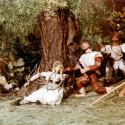
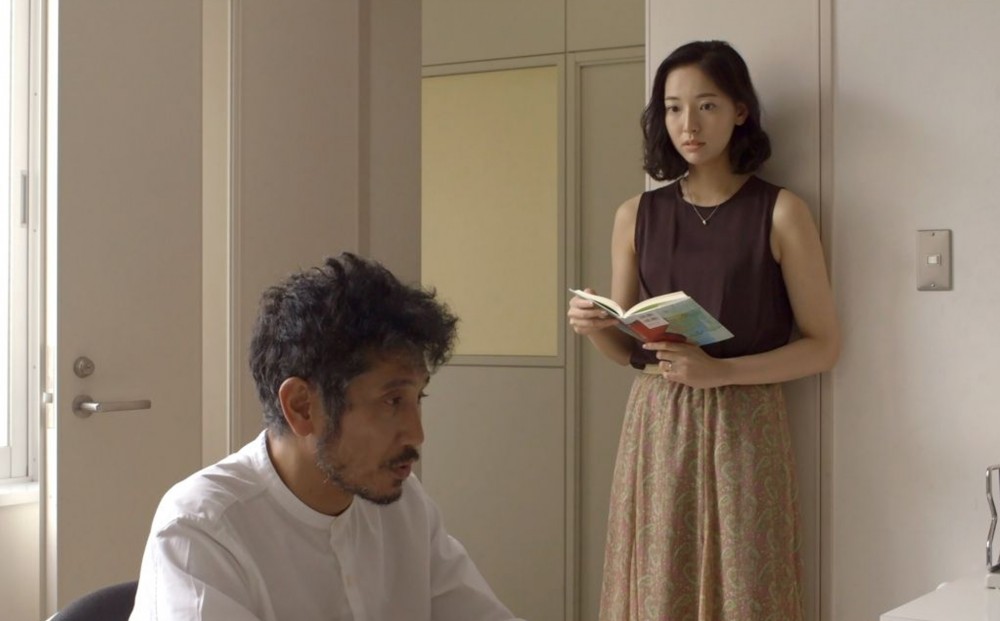 The second episode, "Door Wide Open", focuses on a married student (Katsuki Mori) who doesn’t quite fit in among the undergraduates. Embroiled in a carnal relationship with a younger man who has been failed by their cerebral literature professor (Kiyohiko Shibukawa), she agrees to her lover’s plan to exact revenge with a honey trap. It’s the longest story in the film and how it unrolls is both mesmerising and brutal (pictured left, Kiyohiko Shibukawa and Katsuki Mori).
Fortuitously, we’re soothed by the final story, cryptically titled "Once Again". Ryusuke set the action in a not-too-distant future, when a computer virus has exposed everyone’s data to the world. With online secrets revealed, people are forced to reassess their relationships and retreat to paper and pen. Two women catch each other’s eye as they pass each other travelling in different directions on escalators. Are they old high school friends meeting by chance? Or is there some other force behind this seemingly random encounter?
Ryusuke has cited John Cassavetes and Wong Kar-wai as key influences, but there were times watching his films when I was reminded more of European directors like Eric Rohmer and Michael Haneke. The focus on dialogue and performance, the everyday locations that convey a subtle backstory to the characters – these are the hallmarks of a writer-director who has really given time to his craft. The respect given to the audience is demonstrated in the absence of clunky exposition. We sit down in the dark and, once there, make what we will of these elliptical tales.