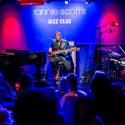
A gig with Tricky remains a trip to the Underworld: forever shrouded in almost total darkness, his haunting voice barely audible, he’s an artist who’s always shunned the spotlight, seen through the charade of celebrity fame, and made a virtue out being a shade rather than a hero.
He’s never been shy of plumbing the depths – drawing, with tons of originality and creative energy, from a family and community background steeped in violence, the curse of suicide, and a super-sensitivity that prejudiced his breath and skin. His preference for a darkened stage might suggest a parallel with fellow Bristolian iconoclast Banksy, who hides from view, but while close to invisible, Tricky bares his soul with a passion that makes him one of the most personal and confessional artists around. His vulnerability, combined with the violence that comes through so much of the music – clattering drums, potent bass lines from the synths, and metal power chords from the lead guitar must surely be one of the reasons he’s so loved: the crowd at the Troxy responded like devotees, attuned to the parade of doubt, pain, rancour that run through his new material as much as the old hits that he has revamped with something of the energy of hisfirst ground-breaking performances: a voice that touched raw nerves more palpably than his former cohorts in Massive Attack.
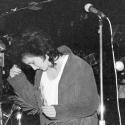
Over the decades, Tricky has run through a number of female vocalists, all of them vehicles for the conjuring of his poet-mother Maxine Quaye’s ghost, as well as his own feminine side. On the current tour he has two alter egos: the Polish singer Marta Złakowska, who opened the show with her own set. Her soulful voice – reminiscent at times of Beth Gibbons – has the mournful touch of melancholy that characterised the Bristol sound of the 90s. She is upstaged by the other vocalist, South Bristolian Mitch Sanders, with a voice that gently reaches from high tenor to soulful falsetto, and offers a major new tone to Tricky’s most recent album Different When It's Silent, and upstages the Polish singer’s more predictable vocals. The featured singers give voice to Tricky’s more wounded side, as well as mask for the shadowy presence standing next to them, or roving around the stage like a night mammal on the hunt, sometimes caught in dancing silhouette, against the small areas of illumination on the stage.
Tricky has always worked as a channel for the spirit world, the demons that torment his soul: not least the mother who departed from this world when he was 4 years old. There’s something of a vodun ceremony in his music: he becomes as if possessed, summoning energies from the other side, and making the set as much of a ceremony as a performance. While there were moments at the Troxy when the magic worked and the music transcended time and space, the set felt at times a little tired and on the edge of predictable. There was too little of the show-stopping quality of gigs I saw in the early days, in London and Paris. Could it be that the present chaos in the culture demands something different from the very original path that Tricky trod in his early solo days?
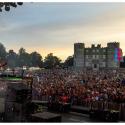
And yet the audience in Limehouse were very clearly roused, delighted when he returned to some his most memorable tracks – including his adrenalin-fuelled rendition of Public Enemy's "Black Steel in the Hour of Chaos". The fans cheered and raised phones at the mere sound of an eerie intro that they recognised. He closed the encore section of the show with the classic and trance-like rant “Vent” – a rousing piece of pain, which rises to a frenetic climax that transcends the deep suffering that has run, as a returning theme throughout his tumultuous life. It's a wonder, and testimony to this great British artist’s originality that he can transform such pain into something of a dark celebration.