

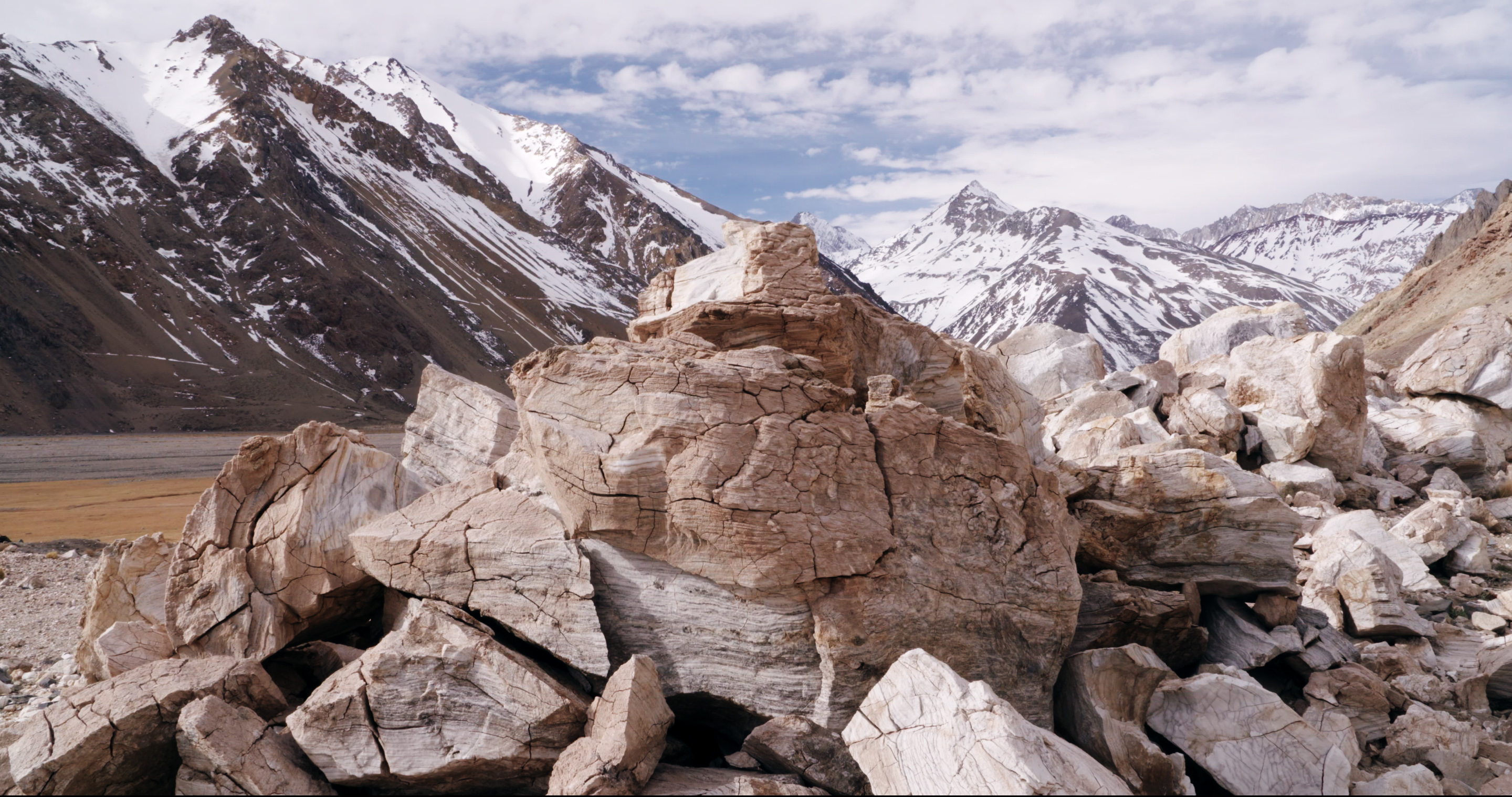
Santiago materialises through white clouds like a secret city, concealed by the elements. In this conclusion to Patricio Guzmán’s trilogy documenting the long nightmare of Chile’s coup through its landscape, the Cordillera – the country’s Andes spine – is an impassive, monumental witness to the Pinochet regime’s buried acts, and victims’ graveyard. The land, Guzmán suspects, can remember.
Guzmán endured mock executions then entered exile after Pinochet’s fatal, CIA-backed 1973 ousting of left-wing President Allende. In The Cordillera of Dreams and its predecessors, the boy lover of science-fiction favours metaphysical leaps and cosmic perspective over dry documentary, investigating geography and geology, memory and time. Attenborough-level nature footage combines with rigorous reportage and poetic incisions into cruelty and suffering. The crimes always take time to surface at the heart of these broader investigations, like the calcified toe of a “disappeared” corpse which shockingly pokes through Nostalgia for the Light’s southern desert, and The Pearl Button’s naked Indian corpse in a 19th century photo of Patagonian genocide.
 Pablo Salas’s ceiling-high archive of bravely videotaped, brutally suppressed protests is this film’s awful treasure. Filmed from the 1980s on, the hard swing and crack of truncheons, the boots into fallen bodies and the police impassively swivelling like fumigators to hose crowds are windingly real. From Iran to Russia right now, this is how it is. There’s a swaggering certainty to these brown-shirted goons, who mostly escaped even private guilt. Writer Jorge Baradit empathetically describes their mindset, believing left-wingers were “tumours” and “demons” in the civic body, so “making them explode, making them disappear”. Salas mourns his archive’s missing reel. “There’s no film of torture,” he notes. The regime’s ultimate essence stays unwitnessed by cinema.
Compared to exiled Guzmán, Salas is the filmmaker who stayed. “This is where I’m from,” he says, words Guzmán perhaps leaves in as a rebuke to himself.
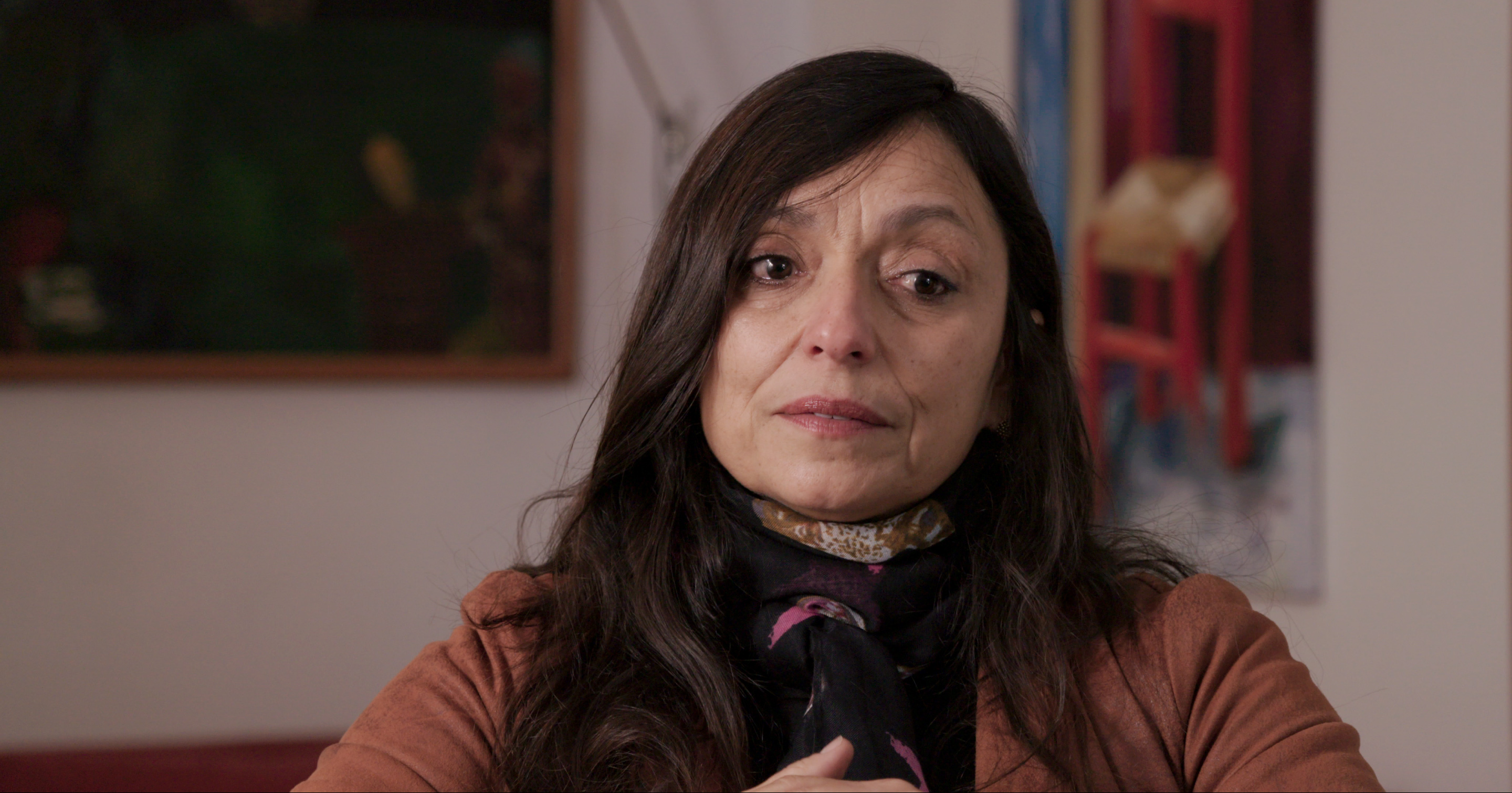
The left-wing intellectuals warmly able to discuss ideas again here (singer Javiera Parra pictured below) still feel they lost. Guzmán’s camera navigates neoliberal Santiago’s narrow glass and concrete canyons, while ghost trains traffic copper through nameless wasteland villages, and cobwebbed junkyards moulder. In the capital, inward-looking lives turn their back on the mountains, and the new society the young Guzmán worked for. The Chilean air he breathes isn’t the same now, time passing faster and slower too, warped by the coup and Cordillera.
 Guzmán the soft-spoken, enraptured narrator gives a sense of bardic reverie to these masterfully edited, lustrously beautiful films. The coup surely displaced him as a director, forcing engagement with lingering horrors. The trilogy recalls his childhood with an elegiac ache, “the innocence of Chile when I was a child” concluding Nostalgia for the Light. Here this idyll is another “country” he’s exiled from, provoking his most personal melancholy at “the loneliness that has stayed with me”, and “anxiety” after the coup wiped out his past. It’s as if Pinochet orphaned him.
Guzmán is confessing the need behind his long, questing witness. His last wish is for Chile’s lost joy to return, for the innocence he imagines before 1973 to somehow be reclaimed. This confirms Guzmán’s lightly worn status as Chile’s national cinematic poet, remembering the disappeared, and the beloved, benighted country they disappeared into.










Add comment