Many of us have perhaps grown too accustomed to the friendly face of My Fair Lady. George Bernard Shaw’s very original play is sharper, less sentimental yet ultimately more profoundly human. Its wit and wisdom zip along in Richard Jones’s symmetrical, perfectly calibrated production, with three astonishing performances and two climactic scenes, one in each half, which respectively make you (me) cry with laughter and bring a tear to the eye at choice moments.
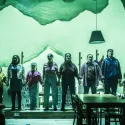
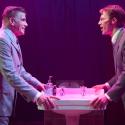
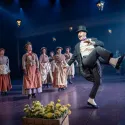
This isn’t the Cinderella story of the musical. There’s never any doubt that the huge emotional intelligence, spirit and quick learning of Patsy Ferran’s Eliza Doolittle will win Henry Higgins’ bet with Colonel Pickering (Michael Gould as a fine foil) that he’ll “make a duchess of this draggletailed guttersnipe… in six months – in three if she has a good ear and a quick tongue”. Those this Liza (as Shaw settles to calling her) has beyond anyone’s imagining. In one of the constant asides with which Shaw interrupts the dialogue, he offers to give a sample of the first lesson. Jones does more than that: he takes the musical’s (or is it the 1938 film’s?) well-known, drawn-out attempts to make Liza enunciate properly, and shows her getting “the rain in Spain stays mainly on the plain” and “in Hertford, Hereford and Hampshire, hurricanes hardly ever happen” right first time. 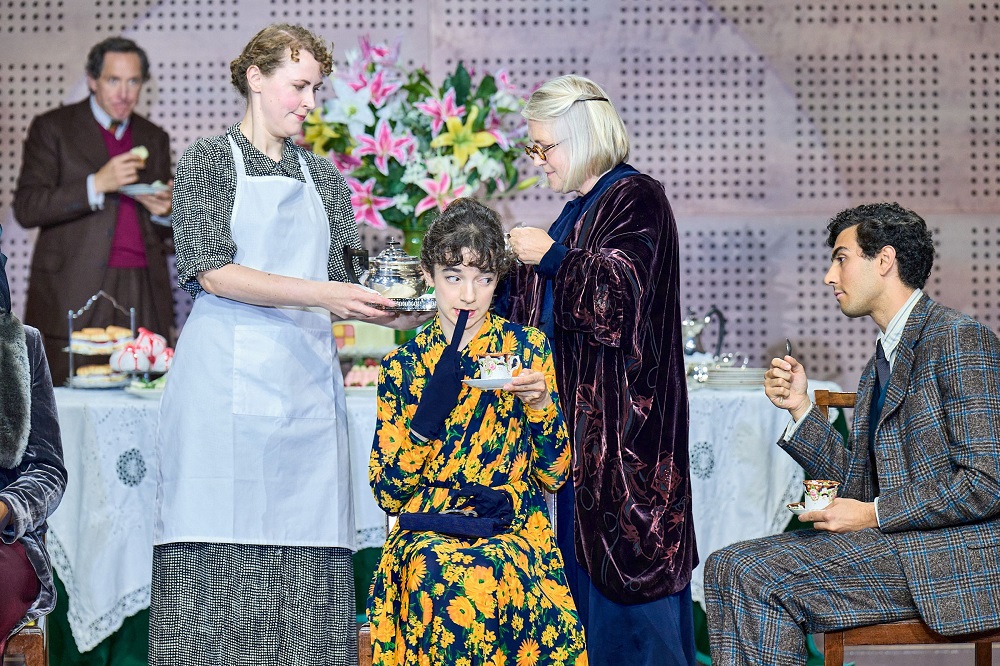 Most of these successful attempts take place in front of a drop curtain, enhanced by Will Stuart’s frenetic, whole-tone-crazy score and choreographed to it with imaginative work as ever from Jones’ regular colleague Sarah Fahie. She’s surely also responsible for physical comedy like Liza’s hovering on one leg at the Wimpole Street door when Higgins offers her a chocolate. Ferrin only has to roll her big eyes and remove one glove at a time with her teeth in the test social tea at the home of Higgins’ mother – Sylvestra Le Touzel excellent as the voice of common sense – to keep us on the brink of hysterical laughter (pictured above, Ferran's Liza centre, with Bertie Carvel's Higgins looking on, Taheen Modak's Freddy rapt, Caroline Moroney's maid serving tea to Le Touzel's Mrs Higgins). The brightish if goofy young people who love Liza's novel small talk and turn up their noses at “early Victorian prudery”, siblings Clara (Lizzy Connolly) and guffawing Freddy (Modak, charming), fit the vaguely 1920s setting rather well.
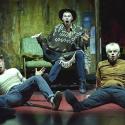
A lurking streetwalker underlines the fate in store for a less sassy former flower-seller, but if anyone remains an outsider, it’s Bertie Carvel’s Higgins – a brilliant and obsessive phonetics professor who’s clearly on the spectrum when it comes to human nature at an individual rather than an idealized general level. The strangulated high-tenor tones and the s-shaped bend posture make one wonder if it’s ever going to be possible to warm to this characterization, but as he’s roused to baritonal explosions in the face of Liza’s confrontational style, we begin to see the point, and the silences as well as the long gazes that show the compassionate truth dawning in Jones’s second half are beautifully, movingly done. The second great scene, the final confrontation between now-emancipated pupil and still-constricted tutor, is a real cliff-hanger. We know there can never be any conventional romance between these two, but his constant obstructions of her moves towards realizing a fuller sympathy make this one of the most original not-quite-love-scenes ever rendered on stage. 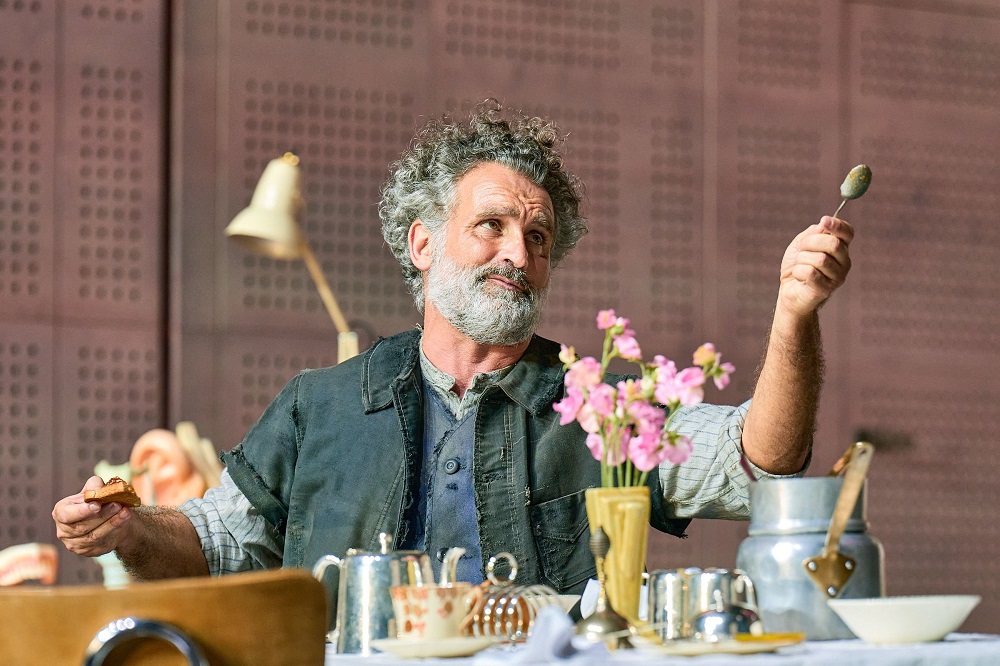 The third great performance comes from a brilliant Jones regular, John Marquez, as Alfred Doolittle (pictured above). Confidently owning the most resonant and musical voice of the evening, this Cockney makes the most of the Welsh roots Higgins detects as an eloquent orator, to which Marquez adds a dash of Spike Millgan-esque lunacy. The father who’s never really looked after his resourceful daughter shows where her natural talents come from: these are clever birds of a feather.
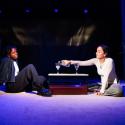
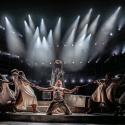
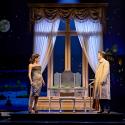
It all knits together beautifully in the official final scene (Shaw’s Act Five) set in Mrs Higgins’ drawing-room, now stripped of all the flowers which have offset the symmetrical severity of Stewart Laing’s sets. After Liza’s triumph at the embassy reception, she stood in her Grecian garb as the original Greek Pygmalion’s Galatea on a pedestal (pictured below). Now a long banquette is used for the newly-enriched Alfred to step up and down on, an amusing running gag – like Freddy’s pop-ups with flowers – that has its proper context when Liza rampages along the sofa at the back. She’ll marry Freddy. "Can he make anything of you?" wonders the ever-misogynistic Higgins. "Perhaps I could make something of him," retorts Liza in a line which must have been quite a thing in 1914. . 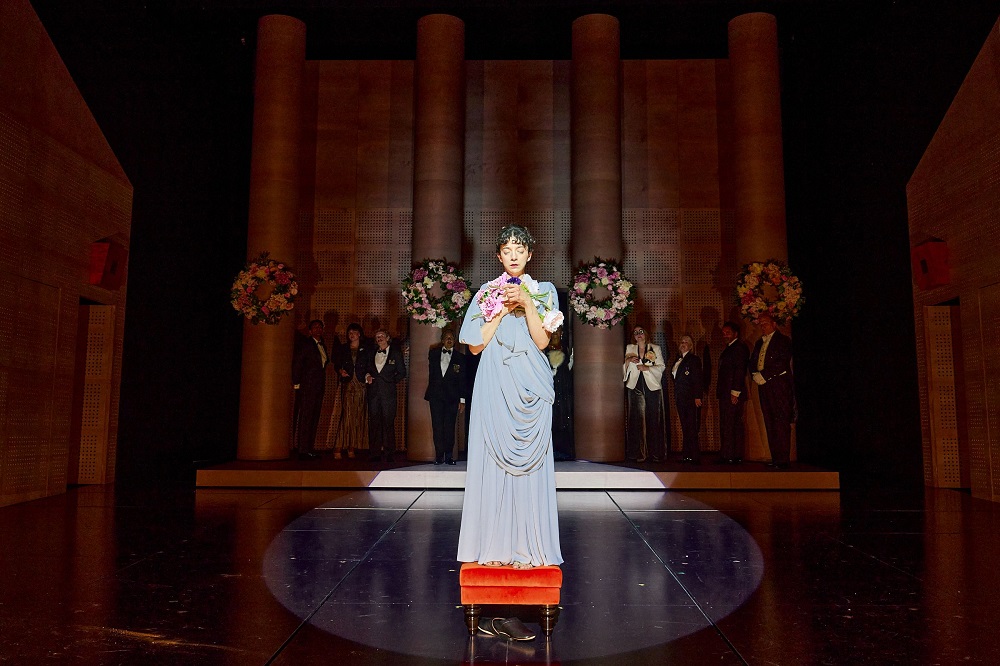 Higgins’ last line, which officially ends the play, shows terse “amusement” at the threat, but in Shaw’s 13-page sequel-essay we learn that Liza does marry Freddy, and all about what they do afterwards. Jones’s and Fahie’s less-than-a-minute choreographed coda shows a different wholesome fate to the one of the flower shop that’s run as a successful business, with a paternal place for Higgins alongside the young Eynsford Hills. I won’t make a final spoiler there. Just go see it, as I intend to do again before the run's over.