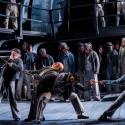
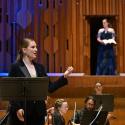
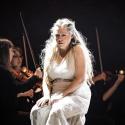
It’s always tempting, at curtain-up in La Traviata, to settle back, half-close one’s eyes, and soak up the familiar without the anxiety of the new. Not this time you won’t. David McVicar’s lavish 2009 text-true staging is being revived with a generally strong, stylish and dependable cast.
But one particular performance will have you sitting bolt upright in your seat, hardly able to believe that this is the third or fourth or whatever revival of an elderly production of a repertory standard in (many Welsh believe) Verdi’s native town.
I’ve seen and heard some fine Violettas in my time, and some rather less than fine; but Stacey Alleaume’s performance here, her UK début, is by a distance the most inspiring I can remember. A young soprano from Australia (but half Mauritian, it seems), she has sung the role in her home country and elsewhere, and she is already completely on top of its vocal difficulties and its psychological and dramatic intricacies. Above all she displays from the start an astonishing feeling for the stage, an ability to move and respond, to exist, so to speak, as the person in the music and the story. She generates electricity, but not too much; she doesn’t say, watch me, listen to me, though of course one does. She is a natural.
Presence is one thing, but a great voice helps. Verdi makes stupendous demands on this singer, who must be a dazzling coloratura soprano for much of the first act, but alternating with a more inward, intense, lyrical mode which then takes over as Violetta changes in the second act from a demi-mondaine to a tragic, passionate, profoundly human, loving young woman. In the first act Alleaume is both vibrant and frail, but in the second act she acquires the dignity to confront Germont and, by yielding, win. These are subtle matters, Verdi’s treatment of which elevates Traviata into one of the greatest and most moving operatic masterpieces. I can give Stacey Alleaume no higher praise than to say that, from here to her extraordinary death scene, she is equal, vocally and dramatically, to everything the composer throws at her.
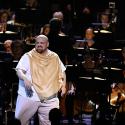
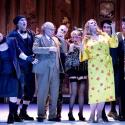
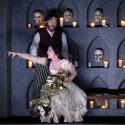
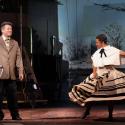
It says a good deal for the revival in general that the rest of the cast, though inevitably subordinate, do not pale in any comparison. The Alfredo, David Junghoon Kim (pictured below with Stacey Alleaume), an excellent Duke in Rigoletto here a few years back, is not the best pairing with Alleaume; his voice, though Italianate, is too big and blustery, his technique too swoopy beside her immaculate placings. But there is a terrific voice there all the same, perhaps needing more focus, and a strong stage presence that comes out best at Flora’s party in the shocking denunciation of Violetta, a scene that can be excessive, but here is merely overwhelming.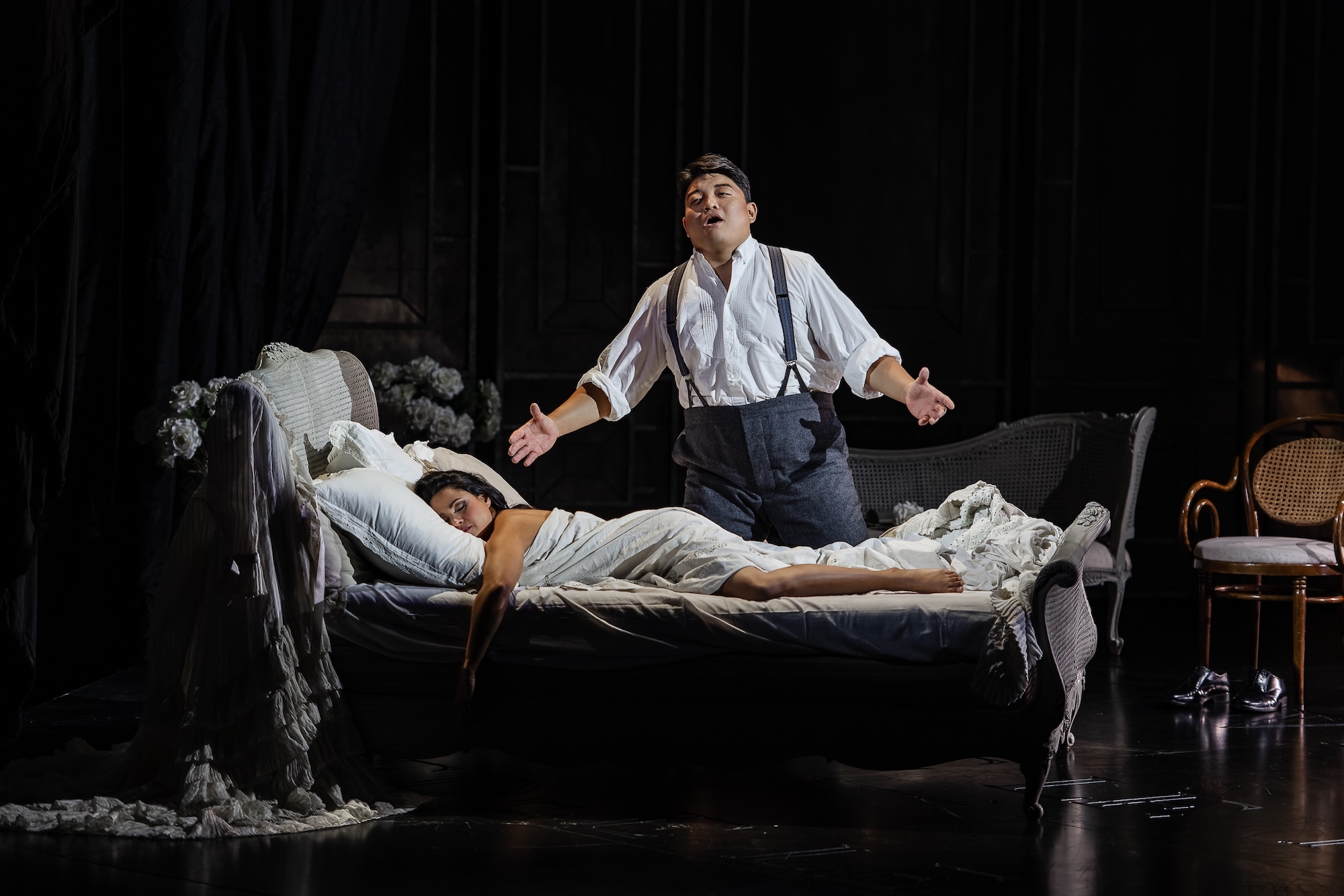 Also far from disgraced is Mark S Doss’s Germont. There’s a rasp in his voice that doesn’t always please, but there are also beautiful soft tones and an acute feeling for situation. I like the touch of his only removing his hat in Violetta’s drawing-room when he recognises her true nature: no doubt a director’s idea, but part of a portrait very well drawn by the singer. Minor parts are all beautifully taken, especially by Sian Meinir as an Annina who does not conceal her resentment of the Germonts’ treatment of her mistress, and Francesca Saracino as a suitably flighty, unregenerate Flora.
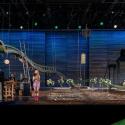
It’s too long since I saw this production for me to report any detailed changes by the revival director, Sarah Crisp. But it comes up as fresh as a spring camellia under her hand, and with Tanya McCallin’s unashamedly sumptuous and – heavens! – realistic designs reeking of deuxième Empire decadence. Alexander Joel’s conducting is not wholly without mishaps, notably a few ensemble problems in the outer acts and some errors of orchestral balance. First night blips. This is a marvellous revival for which he takes due credit: vaut le voyage.