This latest revival of the Royal Opera’s Nabucco production has suffered more than most from COVID disruptions. At the first night, on 20 December, the chorus were obliged to wear masks, news that was greeted by boos from the audience. Then the next two performances were cancelled.
This one did take place, but without conductor Daniel Oren or star soprano Anna Netrebko, the latter grounded by travel restrictions. But we got a performance, no doubt a relief in some quarters, as the occasion marked the 75th anniversary of the company.
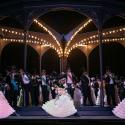
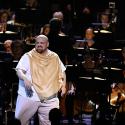
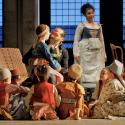
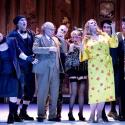
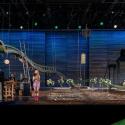
The production, directed by Daniele Abbado, first appeared in 2013 (a co-production with La Scala), and this is its second revival. The setting is atmospheric but frustratingly ambiguous. The costumes could date from anywhere between the mid-19th century and the mid-20th. Tangential references are made to the Holocaust, the brutal treatment of the Jewish prisoners, bare redbrick walls around the stage. The Jerusalem set (designs by Alison Chitty) features grey standing stones, echoing the Holocaust memorial in Berlin, but as a photograph in the programme makes clear, the visual reference is to the tombs on the Mount of Olives.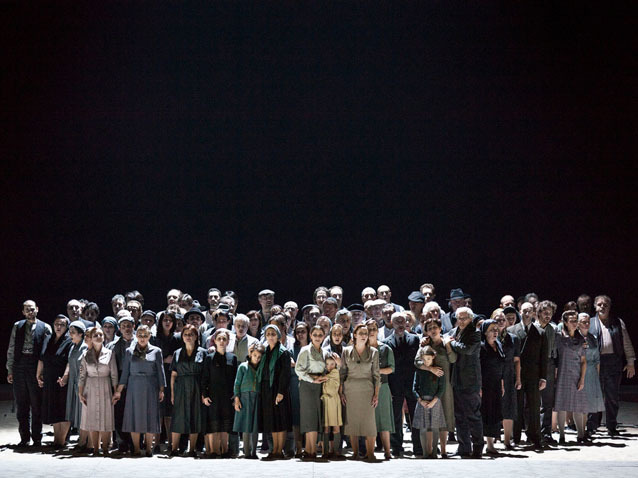 This suggestive setting provides atmosphere, but is no substitute for the action and dramaturgy required. When Nabucco (Amartuvshin Enkhbat) makes his entrance in the first act, Verdi gives him grand and lengthy processional music. But here he just walks on in a drab suit, and then has to shuffle around mid-stage waiting for the music to end. The chorus is choreographed more effectively, although the drab costumes make it difficult to distinguish Jews from Assyrians, and the sophisticated crowd movement highlights the more primitive Personenregie of the principals. The setting changes for the second half, as we move from Jerusalem to Babylon. The temple setting there is dominated by the idol of Baal, which takes the form of a huge figure in metal gauze, brought on in procession and assembled onstage. Again, the simple stage furniture complements the more sophisticated chorus movements.
With or without Netrebko this was a predominantly Slavic cast, and so the singing was weighty and solid. The standout performance of the first act was Alexander Vinogradov as the prophet Zaccaria. He has a huge, deep voice and rich, velvety tone. The three main leads were less impressive. As Abigaille, Liudmyla Monastyrska is bright and clear, rich and secure in her low register, but thin and wobbly at the top. And her ornamented runs often sounded approximate. As her love rival, Fenena, Vasilisa Berzhanskaya brings a softer, more intimate tone, attractive but lacking in dramatic weight. So too Najmiddin Mavlyanov as her lover Ismaele, who sounds more Italian than most of the cast, but has too nasal a tone for this heroic tenor role.
Amartuvshin Enkhbat gives a slow-burn performance as Nabucco. In the first act, he is stiff and unconvincing. That is as much a fault of the production as the singer. His mad scene is underplayed and lacks credibility. But he saves the best for last: his fourth act aria, “Dio di Giuda”, as he releases the Jews and begs their forgiveness, was delivered with real passion and intensity.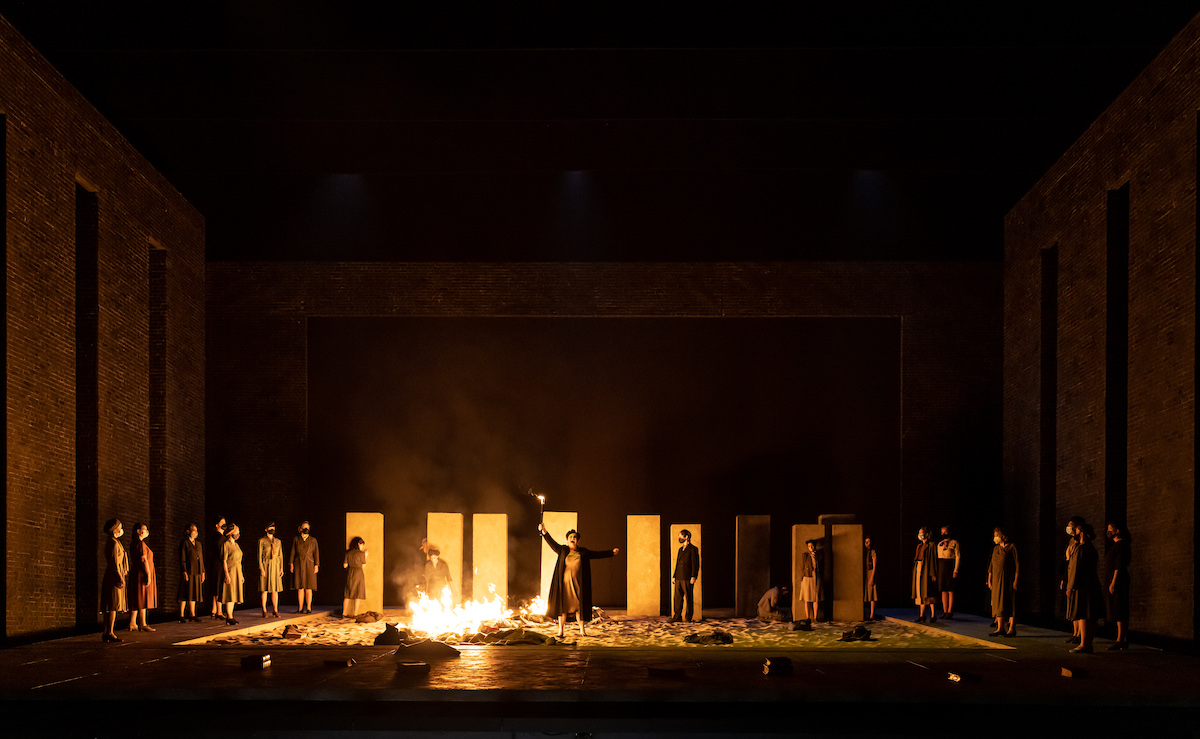 Standing in at short notice for Daniel Oren, conductor Renato Balsadonna gave a sprightly and energetic account of the score, and the late substitution didn’t occasion any excessive caution from him, the orchestra or singers. The chorus (now unmasked) sometimes sounded like they were expecting more detailed guidance, including in “Va Pensiero”, but otherwise shone, bringing richness of tone and valuable suppleness to the many tuttis. A serviceable, but not exceptional outing, then, for Verdi’s Nabucco, and, under the circumstances, a performance that we should be grateful happened at all.
- Nabucco at the Royal Opera until 23 January. A live stream is also scheduled for 20 January.
- More opera reviews on theartsdesk