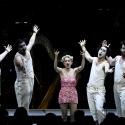
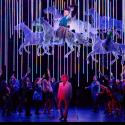
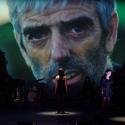
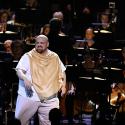
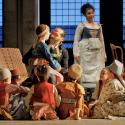
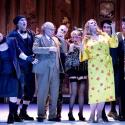
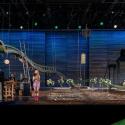
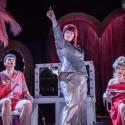
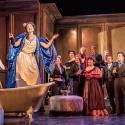
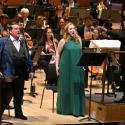
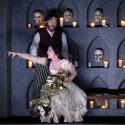
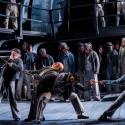
I reviewed excerpts of Will Gregory's new opera, Piccard in Space, last year. His funky, plushly Moog-ed, concerto-like suite struck me as rather tasty. I even said that I couldn't wait for last night's fully worked-out operatic world premiere at the Queen Elizabeth Hall. How wrong I was.
I've seen plenty of bad opera in my time. I've seen things that have offended my ears. Things that have offended my eyes. Things so nauseatingly rubbishy they panzer-attacked my nasal cavities and asphyxiated my soul. But nothing has made me want to pick out my cochlea with a blunt 50-page electronica guide or bash in my retina with the edges of a signed Goldfrapp CD case more than Piccard in Space.
Of course there are many types of bad opera. The sort that tries but fails. The sort that has already failed but tries. The sort that neither fails nor tries. This was much worse than those. Piccard is a flawlessly bad opera. It doesn't try to fail. It doesn't fail to fail. It doesn't even just fail. It succeeds triumphantly in its failure. Piccard is the patron saint of bad opera. Name a possible criticism and this opera will be found guilty of it. Patronising to the core, witless to its very end, musically muddled and dramatically adrift, Piccard limps through its mostly pilfered routine and its nauseating attempts at interaction like a kiddy-party clown with bad breath. Worst of all, it raided (without creative licence) both Dr Atomic and Anna Nicole for both its half-baked playschool production and its execrable libretto. And how Gregory has converted a perfectly decent suite of music into musical mess is a mystery.
One flicker of inventiveness (though diffusely delivered) was to be found when, in a jokily (and I use that word very lightly) turbulent scene, the choruses weave fugues in the manner of the turba from Bach's passions. But this was a fleeting and feeble ray of light amid a vast downpour of crap. I shan't name the participants. Most of them are far better than this. I will simply mention that the director of all this gaucherie was the head of the Southbank, Jude Kelly. That she expended her time and judgment on this work proves that the Arts Council were very wise to stem the flow of funds to her pot and reminds us how strange it is that she is at the head of one of the world's finest classical music venues.
- Piccard in Space at the Southbank Centre ends Friday 1 April
- See what else is on at the Southbank Centre
 Find Goldfrapp on Amazon