“The bands came in 1933.” So begins C P Taylor’s Good, a play that tries its hardest to resist being Googled. It was first performed by the RSC in 1981; this production, starring David Tennant as a mild-mannered German professor who gradually becomes a paid-up Nazi, has been delayed several times by the pandemic. Director Dominic Cooke has crafted a punchy first act, but he can’t save the second from Taylor’s stodgy script.
“The bands” play constantly in the head of Tennant's John Halder, their repertoire ranging from Bavarian oompah to American jazz. Halder is a professor of literature in Frankfurt, an expert in Goethe. Perhaps his choice to throw in his lot with the regime is meant to remind us of Faust’s fateful pact. But Taylor doesn’t give us a real point of no return, unless it’s the moment at which Halder joins the Nazi Party. He spends a few scenes agonising over that, and then signs up happily enough: That's to protect his wife Helen and their three children, of course.
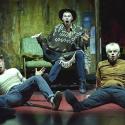
The first half is like an extended therapy session, with scenes threaded together by Halder narrating his feelings to his Jewish friend Maurice (Elliot Levey, pictured below right, wonderfully full of gesture and verve). Maurice is a psychoanalyst, and he and Halder are endlessly diagnosing themselves. At this early stage, Halder’s worst crime is talking about himself too much. Tennant’s performance is genius, affable and slightly bumbling, his natural Scottish accent promoting the air of incongruous sincerity around Halder. 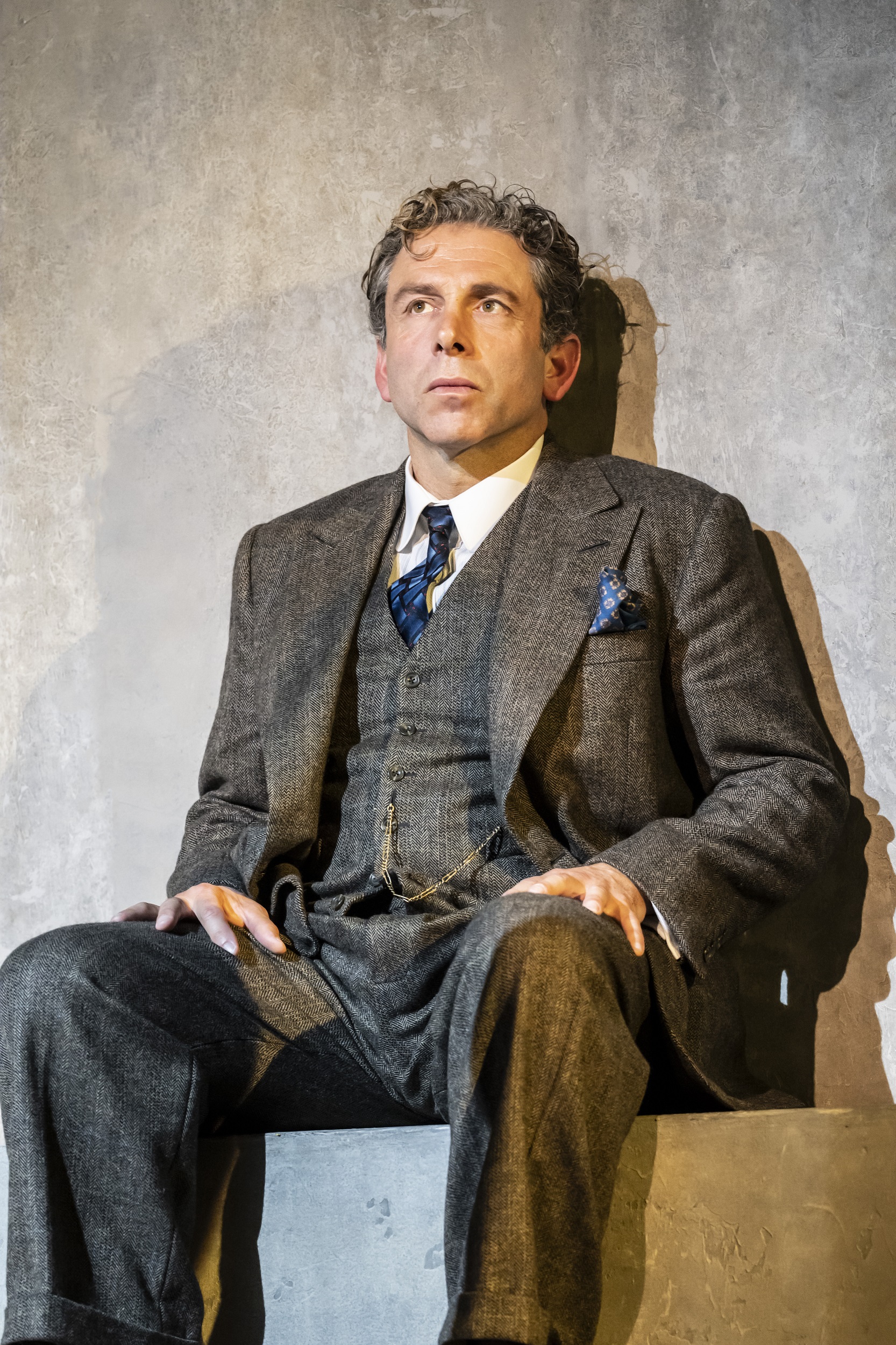 That self-centredness doesn’t go away and grows, indeed, to abject evil (or maybe it always was). During the Night of Broken Glass, when hundreds of Jewish people were killed and thousands of Jewish businesses and synagogues razed, all Halder can talk about is how he wants to go home and embrace his wife. No matter that Maurice is weeping, his genitals mutilated by a mob of Nazis, his own wife raped in front of him. Halder could have bought Maurice and his family train tickets to Switzerland before 1938; he didn’t.
The undercooked second act lets the first down. The narrative is uneven, skipping directly from the Night of the Long Knives (1934) to the Night of Broken Glass (1938) to Eichmann and the Final Solution (1944), as if the script is a set of flashcards a GCSE student is using to revise. The point of the action also becomes muddled: is it meant to be about one man’s seduction to the dark side? Or how people who seem incredibly well-meaning can justify any action to themselves, even objectively evil ones?
Taylor doesn’t seem to know what to do with his female characters, either. Helen is comically useless, soon replaced by Anne, one of Halder’s students, who has no personality beyond an alleged disinterest in politics. The fact that they are both played, however sympathetically, by Small doesn’t help to flesh them out. Halder grows so frustrated by his elderly mother (also Small), who is blind and has dementia, that he helps devise the Nazis’ euthanasia programme for the disabled. His focus is, as ever, on himself: he says that there should be an end to the “pain” families have experienced caring for their disabled relatives. And what of the disabled people themselves?
It’s depressingly easy to see why Cooke would want to revive Good now - the number of antisemitic incidents reported in the UK reached an all-time high in 2021, undoubtedly fuelled by the rise of far-right internet groups luring in supporters through memes and so-called edgy humour. Killing Jewish people is obviously a bad thing, Halder says to us in the aftermath of the Night of Broken Glass. But Taylor doesn’t make enough of these asides for us to have any real connection with Halder. We’re given nothing to latch on to.
There’s a point to be made here about the banality of evil, the sheer boringness of watching somebody we already know is a Nazi do the things Nazis did (and do to this day, tragically). Whether Halder is as much of a Nazi as the officers and higher-ups he interacts with could be an interesting line of inquiry, if we hadn’t watched Anne help him into a black uniform with a swastika on the arm. If the death’s head cap fits …
Good has been heading towards one conclusion, the same one the real-life historical events did. But the realities of history don’t always make for great drama. Taylor wrote a brilliant one-act play – if only he’d quit while he was ahead.