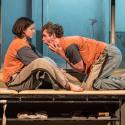
It’s hard to pinpoint exactly what’s so very different about Belfast and Glasgow, both of which I have visited in the last few weeks, compared to, say, Manchester or Birmingham. Sure, there’s the architecture and the accents, but it’s more than that.
To find Glasgow's Citizen’s Theatre, I typed "Gorbals Street" into Google Maps. I looked down for a minute on a bus in Belfast, and when I looked up, the Falls Road had become the Shankhill Road, the (in)famous murals rather contrasting. For an Englishman, these places come freighted with a history of transgression, even insurrection, and, though very different now from when they were bywords for violence, there’s something that lingers in the air, mere reality no competition for deep-seated anxiety.
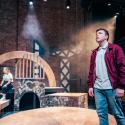
Perhaps Daniel Raggett, though too young to have lived through the same news broadcasts that fostered such a frisson in me, sought to plug into that vibe with his Macbeth, set in a Glasgow boozer run by Lady Macbeth as a safe house for the local Godfather and his Capos. That decision comes with plenty of pluses and a few minuses, but it shows, were we in need of another demonstration, that Shakespeare was always writing about the infinite frailties of human psychology, whether his immediate subject was 11th century warlords in Scotland or two blokes in Verona. That gives a handy leeway for liberties to be taken, and they are in this production but never to the detriment of those scalpel-like dissections of the soul.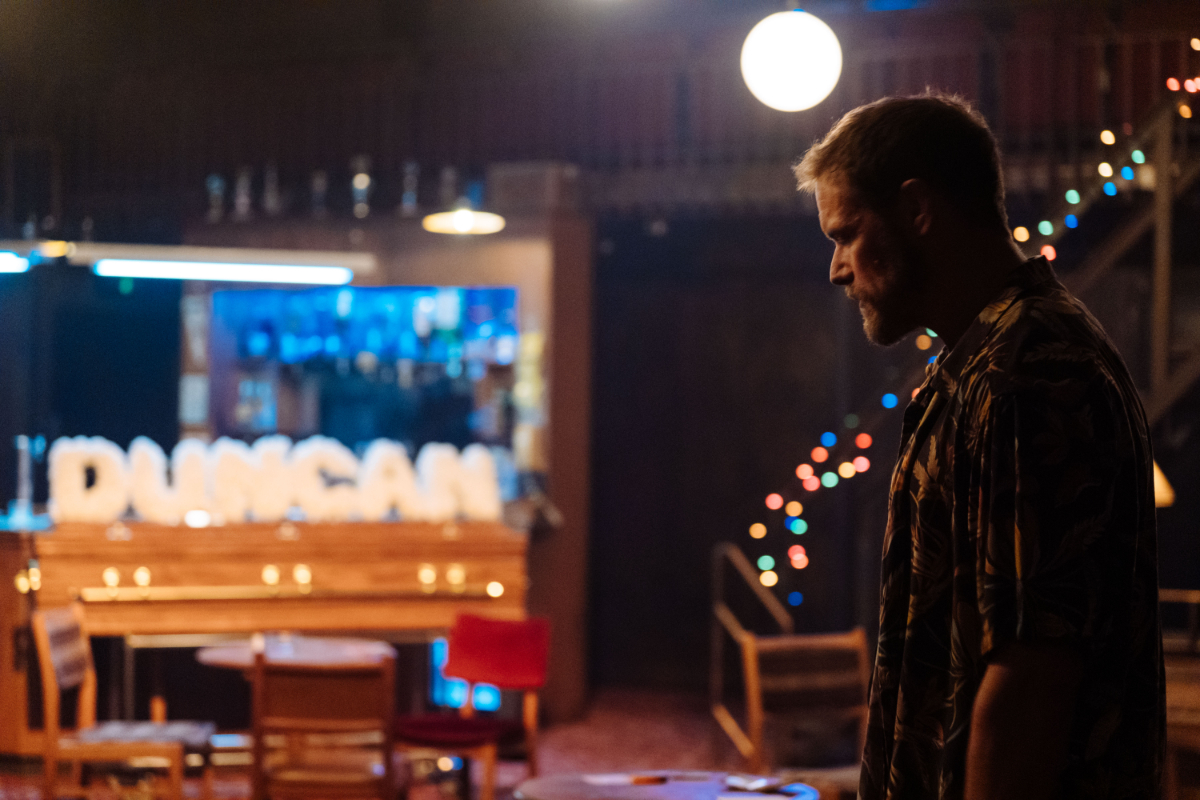 In high concept stuff like this, detail is crucial and Anna Reid’s set is perfect, the smallest of the RSC’s three spaces transformed with a bar in one corner and tables, almost certainly not quite level, filling the thrust stage. I had to stop myself looking up to see if the ceiling still bore the yellowish tint of nicotine as, I suppose, some still do. Like all pubs, even the sanitised, chain versions (which might be all we have left soon), there are doors front and back and, a mysterious upper floor and less mysterious cellar and an almost continual clanging of barrels being moved about, unseen. Public houses are as public as that name suggests, but shield their secrets – one can easily imagine chilly rooms above us where toughened, ruthless men could go to the mattresses.
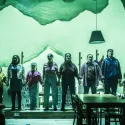
A blood-splattered Macbeth and his fellow capo, Banquo, have seen off challengers in an internal gang feud and burst into the pub only to be met by three women of three generations who deliver their gnomic prophecy to set Macbeth on the road to ruinous ambition and violence. Apparitions on a misty Scottish heath are one thing, but in a Gorbals boozer? It’s the first, but not last, piece of shoehorning that jars, as does “Thane of Cawdor” etc, which comes off as a bit of an affectation, as if gangsters are cosplaying Celtic warriors for shits and giggles.
Gulp that down, and much else works very well indeed. Gilly Gilchrist, camel hair coat, regal ring and ancient scar, his King Duncan a man who made his bones many years ago, has the vulnerability of a man getting too old to control his blinged-up alpha male apparatchiks. Macbeth, spurred on by the Weird Sisters’ words and his not so weird wife’s bolstering of his failing resolve, usurps the Boss, but regicide only unleashes mayhem.
The cast look fantastic, Charlotte Sutton finding hard, angular faces to top muscled torsos, testosterone suffusing the air. In contrast, Lia Williams is a sparrow-like Lady, dwarfed by these fighting men, but, through years of experience in using her wit to winkle out what she wants from them, an arch manipulator of masculine insecurities. Her grief for the child she lost – a key theme of so many recent Macbeths – is still sharply felt and, one surmises, her grab for the crown is her last chance at a legacy for a life that has disappointed her. It is her sliver of motherly sentimentality that has sustained in a man's world that leads her to bundle Fleance out the back door and to look on with genuine horror as Macbeth, hammer in hand, retreats to the snug to see off Young Macduff.
Nicholas Karimi’s Banquo looks uncannily like the leader of the IRA hunger strikers, Brendan Hughes, and Christopher Patrick Nolan may have the voice and demeanour of a Craggy Island priest, but soon becomes the conscience of the play, looking on with barely concealed disdain and ineffective disapproval as the blood-shedding spirals out of control. Michael Abubakar has a lot of fun with the kind of man – fixer, barman, er… assassin – that you always find in pubs like these.
It’s Sam Heughan’s Macbeth himself (pictured above) that doesn’t quite ring true. We believe in the hardman, of course, but Macbeth has to be a charismatic leader too, a man who has, and could again soon, inspire love as well as fear. Sure he has moments of introspection, but he’s dressed for street battles, and he’s sitting in a pub, disastrously misreading the room. We never quite catch the backstory that makes the madness so tragic, the fall so far. It’s one crucial bit of shoehorning that the conceit can’t quite sustain.
Offsetting that, there’s plenty of crowdpleasing gore, the supernatural evoked the night after Halloween itself in my case and a useful reminder that buildings used by Wetherspoons and Brewdog aren’t really pubs at all. Real pubs tend to be more like bleak Scottish castles – or they were.