

As bio-musicals continue to have their heyday, it makes sense for the Young Vic to throw its hat in the ring and champion a work about the hugely influential Nelson Mandela. But this new musical about the South African anti-apartheid activist and statesman is such a baffling hodgepodge that it actually risks being a disservice to Mandela’s legacy.
Mandela covers the period in the eponymous figure’s life from his militant activities and subsequent imprisonment in the early 1960s to his release from prison in 1990. Perhaps because the piece is chiefly focused on Mandela’s imprisonment on Robben Island, it fails to convey a clear sense of either his many accomplishments or the true extent of his influence on others. Indeed, over the course of its two-hour run, Mandela never succeeds in presenting its central character as a distinctive individual. Michael Luwoye’s rigid and monochromatic rendering of the part doesn’t help, either.
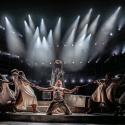
Laiona Michelle’s plodding, cliché-ridden book skitters across a range of ill-defined characters and settings to portray an eclectic picture of South African resistance to apartheid. Greg Dean Borowsky and Shaun Borowsky’s prosaic lyrics make overexplicit the motivations guiding these figures, including Mandela’s close collaborators and his wife Winnie. Danielle Fiamanya (pictured below with ensemble) delivers a deeply felt performance in the latter role, singing several solo numbers with a conviction that flirts with sentimentality. Mandela’s daughters Zeni and Zindzi are brought to life in sympathetic, if slightly affected, performances by Nomfusi Ngonyama and Leanne Robinson, respectively.
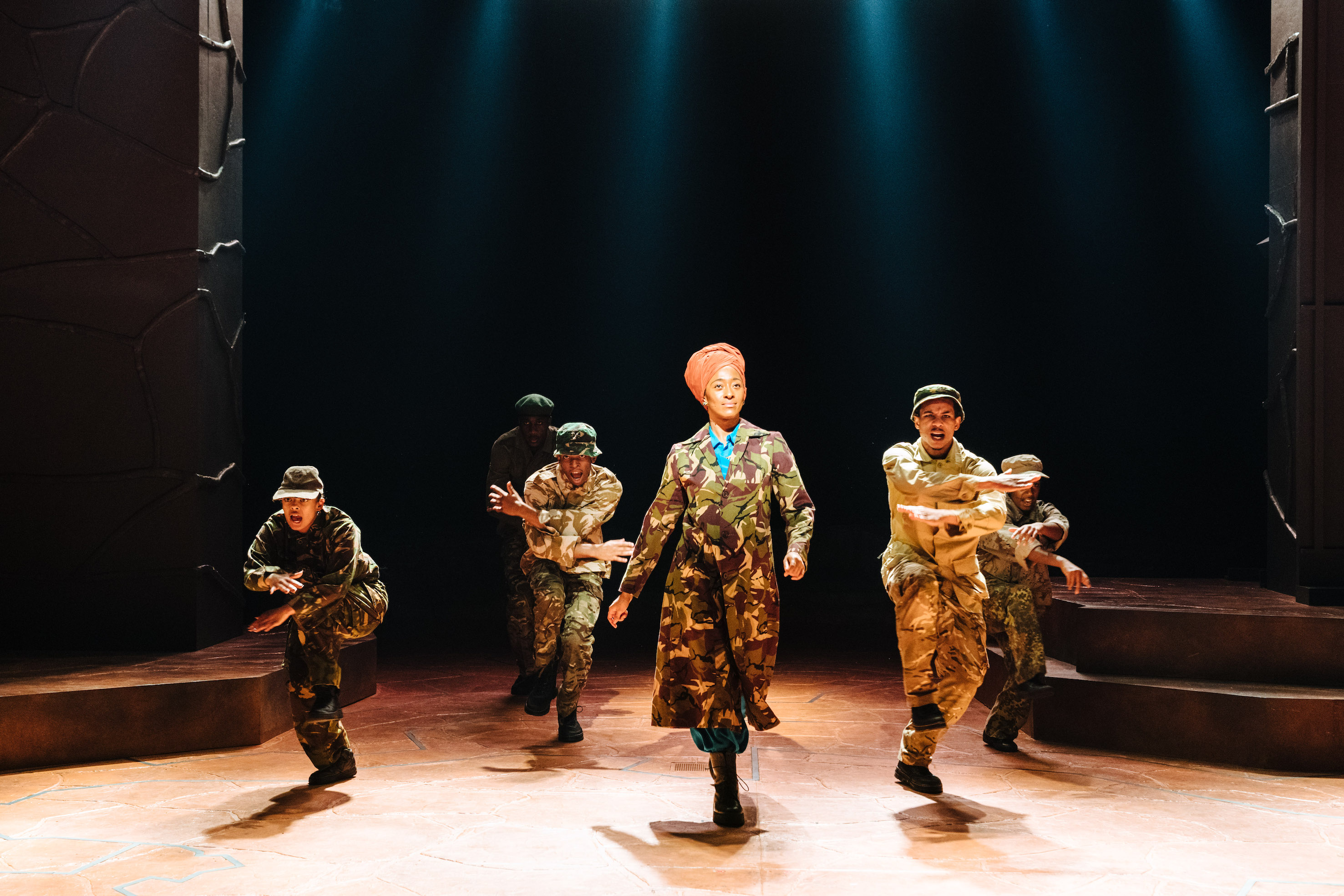 Schele Williams’s loose direction doesn’t do much to smooth over the work’s tonal and narrative jerkiness: not only do many scene transitions feel contrived, but the overall progression of the story becomes oddly difficult to follow. Even as Gregory Maqoma’s dynamic choreography, infused with the rhythms of African dance styles, animates a spirited ensemble in occasionally engaging ways, it falters in more intimate scenes. The show feels most at home when anonymous protesters and civilians express their demands for the end of racial segregation and oppression through the collective force of their bodies. Stomping their feet, raising their fists, and linking their arms, they offer, at times, moving images of solidarity.
But these fleeting moments of choreographic zest, supported by Jon Clark’s densely coloured lighting and Paul Gatehouse’s rousing sound design, are not enough to salvage this deeply puzzling piece. Virtually all is caricature here, and nothing that happens on stage lands with any real force. Take, for example, the nearly parodic figuration of white characters, which include Earl Carpenter’s hazy Prime Minister and Stewart Clarke’s Warden, with whom Mandela develops an unlikely—and unexplained—friendship in prison. By the time this latter figure has experienced a complete change of heart about Mandela, conveyed in an awkward song about his white guilt, we have learned nothing about him to make this reversal either credible or even remotely moving.
At first glance, Hannah Beachler’s minimalist set, marked by its cracked-earth texture and some barbed wires, seems well-suited for this expansive piece that travels through thirty years and numerous locations. Much of the action, however, seems in need of more evocative scenic accompaniment, and the cast’s navigation of the playing space becomes increasingly erratic. With no real substance to be found in either the dialogue or the lyrics, the performances register as unmoored and inconsistent, especially when scenes of familial intimacy are abruptly juxtaposed with those that try to give some sense of the international reach of the anti-apartheid movement.
Mandela’s vibrant choral force aspires to combine with its often anthemic songs (musical direction by Sean Mayes) to present an upbeat portrayal of the historic struggle to end South African apartheid. Yet it all culminates in a mawkish misfire. Neither the titular man himself nor the movement he was associated with comes across with any sophistication. Instead, we get a troublingly two-dimensional sketch of an otherwise complex history, both collective and personal. This rich material surely deserved a more grounded and compelling treatment on stage.






Add comment