From his sickbed, after a nervous breakdown during basic training for the army, the 18-year-old Noel Coward started churning out plays, many of which were never staged. The Rat Trap, finished in 1918, had a 12-night run in 1926 at the Everyman in Hampstead, but Coward was in the US at the time and never saw the production. You wonder what his older self would have made of it.
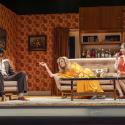
This is Coward gnawing with his baby teeth on a topic that clearly preoccupied him from the outset and would become a prime target of his sharper-toothed dramas: how to sustain a serious relationship, especially a marriage. Here the focal couple are writers, Sheila (Lily Nichol) wrestling with a novel, Keld (Ewan Miller) showing a talent for commercially successful plays. Sheila’s closest relationship up to this point has been with her flatmate Olive (Gina Bramhill, pictured below), another writer, though one who can’t get published until she finds a niche in “hack work”, reporting for a newspaper on the private lives of celebrities on holiday.
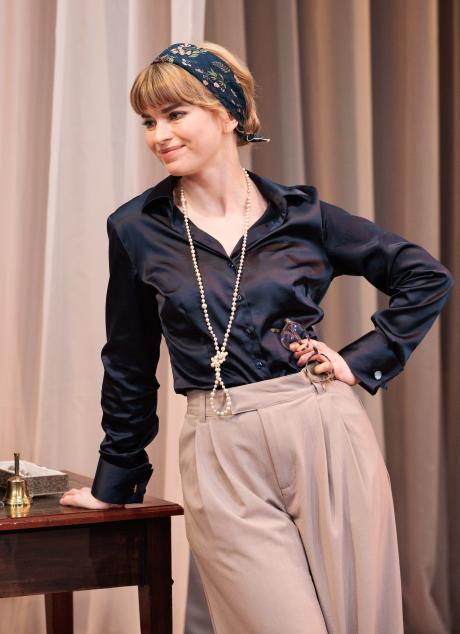
Olive is the sage of the group, a divorcee who foresees trouble ahead for Sheila and Keld when their egos inevitably clash and their nest turns into a trap. One of them will have to compromise, put their career aside and give the other the freedom to work, she says. As the more talented and intelligent of the two, Sheila will be the self-sacrificer, Olive predicts.
How this forecast plays out for the newlyweds then occupies the three acts that follow, with another literary couple, Naomi (a crisp comic turn by Ailsa Joy) and Edmund (Daniel Abbott), and a deliciously conniving actress, Ruby (Zoe Goriely, pictured below), adding more patterning to the central design. Naomi is a writer of “fiercely sensuous novels”, her lover Edmund an arty poet, which immediately relegates him to minor literary status for Olive and Sheila. He and Naomi are self-styled bohemians who see marriage as fetters and believe love should be free. “Like the National Gallery?” Keld mischievously suggests. Even at 18, the wit is there.
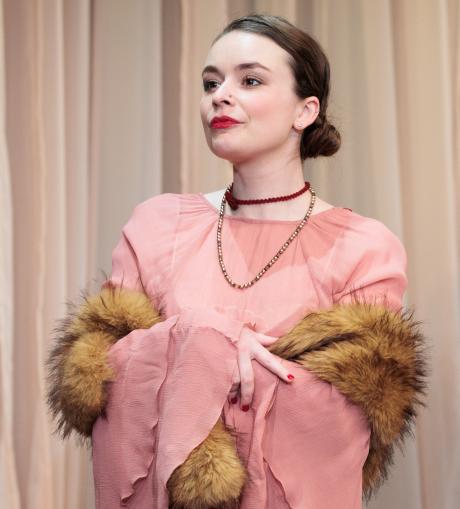
Ruby is, by contrast, a more hard-boiled free agent, a grafter swathed in furs who has a married lover and serious ambitions. She is the most intriguing character in the piece, and Goriely does her proud. Her face lights up with a sly smile as she gossips shamelessly about her co-stars, giving a wicked waggle of her behind as she sashays around, her voice sounding like Eliza Doolittle after only half her assigned elocution lessons.
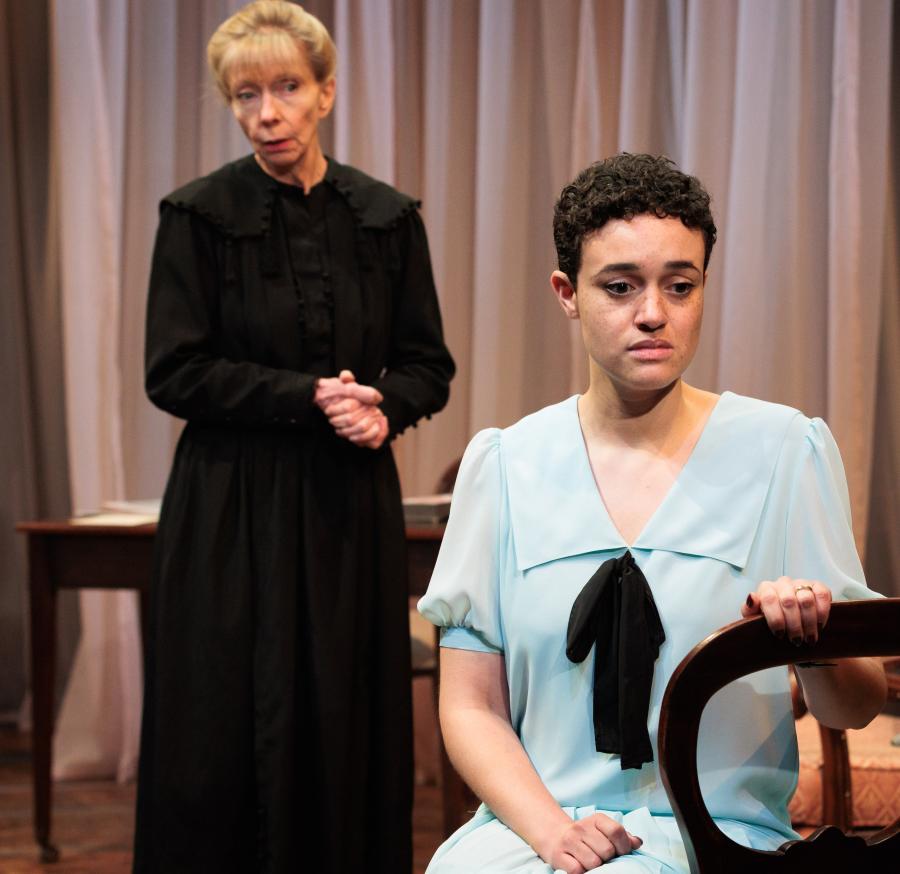
Funniest of them all is Angela Sims’s Burrage (pictured below with Lily Nichol), Sheila and Keld’s housekeeper-cook, a woman of sound experience and understated wisdom, who by her own admission has “had her moments” and who has seen from the outset exactly what Olive outlined in Act 1, that marriage is a trap for those who endure it on unequal terms. Sims has impeccable comic timing and can freight a line such as ”Lunch?” with serious comic ballast by knowing exactly how many seconds to wait before delivering it.
This is actually something of a drawback, the cook exacting more interest than the leads. However hard the actors playing Burrage’s employers try to humanise their characters and render them engaging, they are just a touch too unlikeable. Miller’s Keld has a lively boyishness and a physicality, especially his extravagant hand gestures, that evokes Billy Connolly in full flight, but he is immature and self-centred; and Nichol’s Sheila is so bound up in her performative love for him, and blinded by her insistence that she and Keld are “different”, that it’s hard to find the winning, tender side to her that Olive loves. Today’s independent women will also find it hard to stomach a heroine complaining of the “nauseating drudgery” she has suffered, looking after household affairs, new servants and the like, with a full-time housekeeper-cook to assist her.
Even so, the Troupe company delivers an entertaining evening, in the same vein as their two-part The Forsyte Saga, previously staged at the same address and then transferred to the RSC. Libby Watson’s setting is simple but handsome, with long gauze curtains reaching to the flies and just a few items of furniture setting the scene. The Cornish thunderstorm in Act 4 is especially effective, achieved with just a large screenshot of a wet landscape as a backdrop, illuminated by flashes of the lighting. The cast silently move props and furniture around, as needed, but with minimum fuss.
Similarly simple but effective are Watson’s costumes for Olive and Sheila — quite mannish, wide-legged pleated trousers — that signal the androgyny the Bright Young Things aspired to, whereas the dropped-waist tunic with a pussycat bow she gives Sheila to wear as a married woman indicates a distinct shift in her status.
It’s hard to know exactly how Bill Rosenfield’s “re-imagining” of the play has changed the original text, but a programme essay by Coward biographer Oliver Soden refers to his “sensitive revisions” and “tightening” of the dialogue and structure. It’s still more a radio play than a stage drama, its cut-glass voices indicating its age, however contemporary its concerns seem. But it's a must-see for Coward completists, ably directed by Kirsty Patrick Ward.