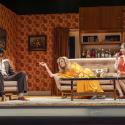
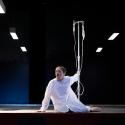
Anyone who's imbibed the common wisdom that Russians play Chekhov for the comedy - one eye wet, the other dry and smiling - might have been alarmed to find the Moscow Sovremennik Theatre's second London offering so doomy and subdued. And the more subdued it got, the more the majority of the company went in for what's become its trademark mumbling. Not even the apocalyptic waltzes and marches of Mieczysław Weinberg's pre-recorded score nor an outstanding joint characterisation of the illicit central love affair could stop the rest of the voices, and ultimately what sympathy we had, from evaporating.
Anyone who's imbibed the common wisdom that Russians play Chekhov for the comedy - one eye wet, the other dry and smiling - might have been alarmed to find the Moscow Sovremennik Theatre's second London offering so doomy and subdued. And the more subdued it got, the more the majority of the company went in for what's become its trademark mumbling. Not even the apocalyptic waltzes and marches of Mieczysław Weinberg's pre-recorded score nor an outstanding joint characterisation of the illicit central love affair could stop the rest of the voices, and ultimately what sympathy we had, from evaporating.
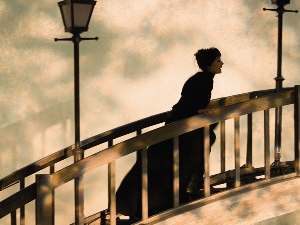 There's certainly nothing wrong with an introspective approach to Chekhov, even if zip and zest are more commonplace nowadays. And last night no one was going to feel especially extrovert after a brief pre-performance silence for the victims of the Domodedovo airport bombing. Nor did director Galina Volchek's third Three Sisters come across as national navel-gazing: given Chekhov's clear language and/or the near-flawless rolling side-titles, we few non-Russians in the audience felt very much the anguished perspectives on a winter without end and an elegy for lost youth. The scene-setting by Pyotr Kirillov and Vyacheslav Zaitsev helps with the atmosphere: an arching wooden bridge both bears down on the ill-fated drawing-room scenes and provides an exposed location for liberation or despair.
Very much at the heart of the interpretation are two outstanding performances which help you feel, rather than merely observe, the unstoppable folly of married lovers. There's the impassioned but limpid, fragile Masha of the beautiful Chulpan Khamatova (Alyona Babenko takes over for the second of the two London performances). Khamatova's is a voice of liquid gold, familiar to me from her Tatyana and Cleopatra monologues on several Prokofiev recordings, which meshes perfectly with exquisite, supple body language. Not the least memorable of which is the way this Masha unconsciously mirrors the gestures of her beloved Vershinin - Vladislav Vetrov, transformed from the grinning sadist of Into the Whirlwind.
Vetrov's quiet charisma helps you believe in the philosophising grandeur of Chekhov's half-ironic belief in human progress. There are calmly well-etched portrayals of Masha's hapless husband from Sergey Yushkevich and of a quietly whimsical Tuzenbach, caught in an unreciprocated love for the youngest sister, from Ivan Stebunov.The old servants are clearly projected by Gennady Frolov and Tamara Degtyareva.
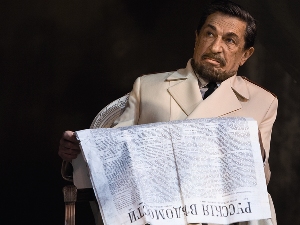 Elsewhere, the optimism, pessimism or cynicism to which the characters stuck in provincial society constantly, and sometimes repetitively, give way are less sympathetically bedded down in believable humanity. I had no faith in the growth of Viktoria Romanenko's Irina from infant phenomenon to manic despair, though her final quiet acquiescence is briefly moving. Others, including Olga Drozdova's wise big sister and Artur Smolyaninov's convincingly psychopathic Solyony, waver between clarity and impossibly muted tones. Igor Kvasha's ageing Chebutykin (pictured above left) seems note-perfect, even in his repellent drunk scene, until he succumbs in the last act to the inaudible soft tones which seem to be the bluntest but, alas, commonest weapons in the Sovremennik armoury.
By then you almost long for the hysterical banality of the neurotic terror married to the sisters' disillusioned male sibling to shatter the torpor, though it's a pity that Marina Alexandrova's Natalia plays theatrically out front, a false note in an otherwise unified company (or maybe that's the point). The heart beats a little faster when we come to Masha's painful parting with her Vershinin, but slows down with the generally timid pace and the mumbling, again, to which everyone succumbs in the bleakest of Chekhovian farewells. It sits awkwardly with the Grand Guignol of the whirling stage, the music and the final doomed tableau of the sisters on the bridge in a howling gale (cue the cameras of the hitherto quiet audience to flash). I prefer the quieter option, the play's true ending. If only the actors cared to share their sympathetic nuances with more than just each other and the front three rows of the auditorium.