There's commanding, and then there's Michael Sheen, who sweeps on to the Olivier stage 15 minutes or so into the new National Theatre revival of Under Milk Wood and scoops up the entire production with it. Inheriting a role made to order for this Welshman, Sheen takes to his fellow countryman Dylan Thomas's 1954 classic as if on a date with destiny. Lyndsey Turner's approach to the intrinsically piecemeal material may at times tilt towards the fussy, but Sheen comes at this portrait of small town life like a man possessed and holds the audience in his disheveled, gleaming-eyed grip from the actor's first galvanic appearance to his last.
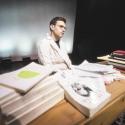
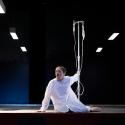
Prior to Sheen's entrance, audiences may wonder if they've arrived at the wrong address. Boasting additional material by Siân Owen, Turner's staging locates the action in a care home bustling with activity whose inhabitants include a now-addled former head teacher (Karl Johnson, pictured above with Sheen) battling dementia. Into this fretful environment comes the schoolmaster's son Owain (played by Sheen), the onetime First Voice of Thomas's "play for voices" here reconceived as an estranged child who uses Thomas's luxuriant text as a way of jolting his father into a renewed awareness. (There's the suggestion, too, of a kinship between Owain and his dad and Thomas's own personages.) Owain serves as an impassioned conductor whose task is to organise Thomas's abundant verbal polyphony into a therapeutically potent whole. Sheen has tackled this piece before on radio but never in the context afforded it here. 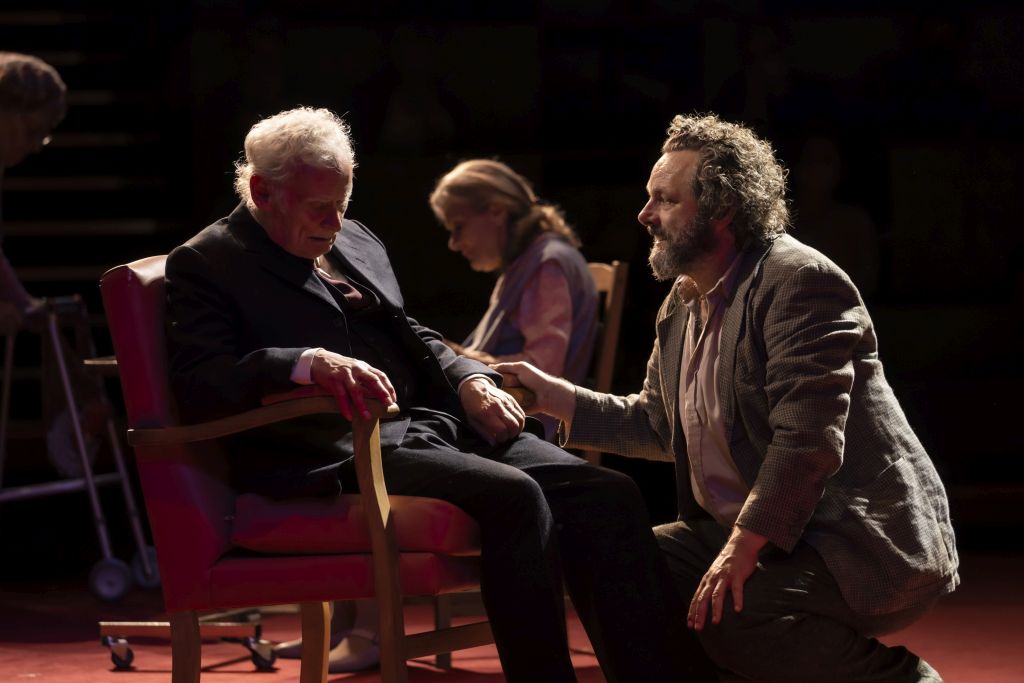 And so it is that we soon hear the vaunted "to begin at the beginning", and we're off into Thomas's capacious vision of the coastal Llareggub community of literary legend, as realised this time round by a 14-strong cast most of whom play multiple roles. Weaving his way amongst them, and often leaping on to the raised perimeter of Merle Hensel's set, is Sheen, who gives off an air of both conjurer and healer: a fevered master of ceremonies whose every word is intended to provoke his father into out of his daily fog and into the clarity allowed by memory. "Time passes, listen," Owain commands, and that we do, the actor using the circular playing space to further an intense connection with the socially distanced house. (Watching Sheen here, I couldn't help but think what an amazing Dysart he would make in Equus.)
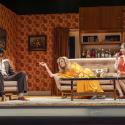
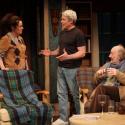
 Away from a leading man tailor-made for the task at hand, the evening unfolds via the bitty vignettes I dimly recall from the National's last go-round with this same piece, in 1995 and also in the Olivier. "The music of the spheres" is Thomas's terrain, as given shape this time out by Donato Wharton's resonant, Bach-inflected soundscape and, of course, by a lineup of characters who often look as if they could merit a play all their own. One can only imagine, for instance, what Alan Bennett might make theatrically of Mr and Mrs Pugh, conjoined in matrimonial discord over cottage pie and played to the hilt by a tetchy Alan David and Cleo Sylvestre. The glorious Sian Phillips (pictured right), not far off 90 and an alumna of the 1972 Under Milk Wood film with Richard Burton, brings instant authority (and undimmed vocal chops) to the besotted Polly Garter, while Anthony O'Donnell is the blind Captain Cat, his window "thrown open to [a] sun" that he cannot see.
Turner and her design team locate levity where they can, in moments that find the actors playing barnyard animals or via various lighting tricks (all credit there to Tim Lutkin) that quite literally illuminate anew Mrs Ogmore-Pritchard's two dead husbands. You're aware throughout of the sketchlike nature of proceedings, as nonetheless enveloped in the same sort of governing empathy brought by Brian Friel to his fictional Ballybeg or by James Joyce to the Dubliners who populate The Dead.
And yet, the eye can't help but return to the restless, ceaselessly vital presence of Sheen as he vaults this way and that in an attempt to use art to kickstart his father's ebbing brain into life. I'm not sure Under Milk Wood will ever resemble whatever it is that we mean by a proper play, but this wonderful actor ensures every minute of the way that it is an experience.