Even the mighty Almeida is allowed the occasional dud and it’s sure as hell got one at the moment with Vassa. Maxim Gorky’s 1910 play (rewritten in 1935) about a matriarch in extremis some years back proved a stonking West End star vehicle for Sheila Hancock. It offers a chance to go hell-for-leather that should set the pulse racing. That same role was to have been played this time out by Samantha Bond, who bowed out and has been replaced by a game if not ideally cast Siobhan Redmond: her breathy exhalations tire after a while, and one misses the whiplash authority required of a part that jack-knifes between florid emotion and high camp.
The larger problem is one of tone. Marking her Almeida debut, the fast-rising director Tinuke Craig – acclaimed for her work at Chichester and Leicester Curve – has trouble locating the elusive gallows humour necessary to sustain this pitch-black portrait of a moneyed family wallowing in its own often-gleeful mendacity. In theory this resembles nothing so much as Succession crossed with a dollop of Dynasty, the two given a satiric spin that ought to have been catnip to adapter Mike Bartlett returning to the venue where he premiered King Charles III and Albion.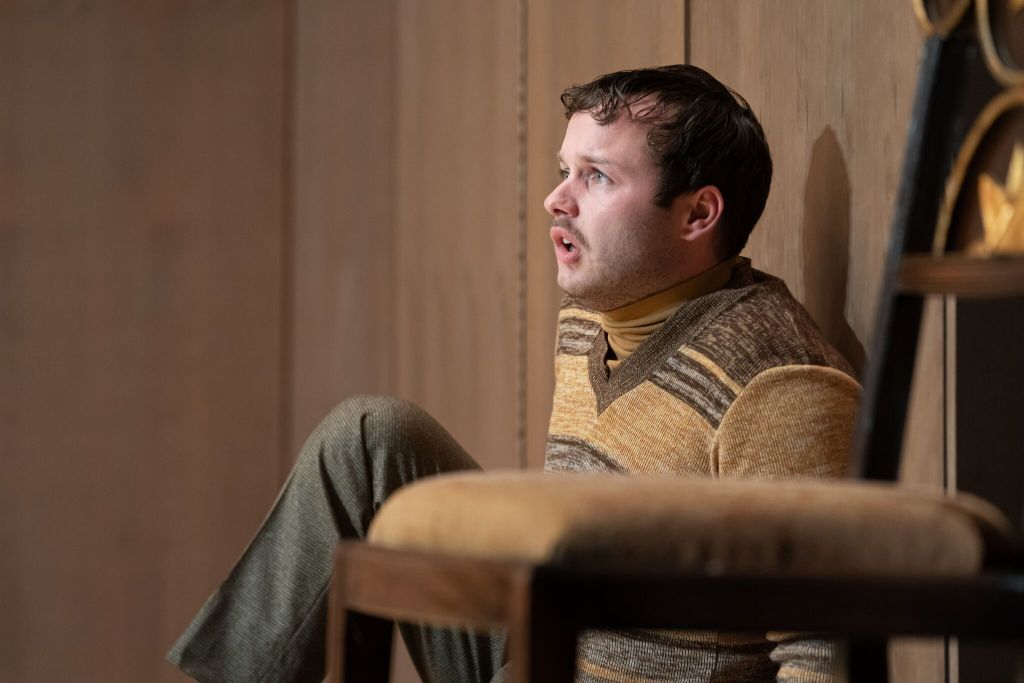 Instead, the language wallows in the wilfully anachronistic: much is made of the word “cock”, as perhaps befits a writer who once wrote a Royal Court play of that same name, and too many of the would-be signature lines (“I wear glasses, I see everything,” warns Vassa) merely induce a shrug. At the same time, even as a pre-show caption alerts us to the thematic prominence of capitalism and its corrosive effects, the play in fact lands best as a deliberately skewed look at familial infighting. That, in turn, demands a gift for the grand gesture that leaves too many of Craig’s actors visibly at sea. (One can only begin to imagine what the director Richard Jones might make of the same material.)
And while it's never easy stepping into the breach, I'm not sure Redmond would ever be a natural fit for a part that cries out for italicisation – even at the risk of being overripe: a younger Maggie Smith, say. By rights, it should be momentarily startling near the end when Vassa against expectation insists on the very humanity she has so wilfully denied to others. But sweeping about the stage in either snippy or patronising mode, Redmond on some level seems too sensible for the baroque goings-on that threaten to swallow her whole, unless she gets to her malefactors first.
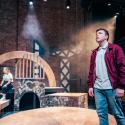
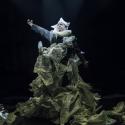
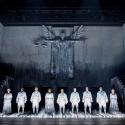
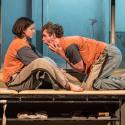
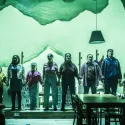
Fly Davis’s dreary-looking set, leavened after the interval by a sea of flowers, is notable for a series of doors suggesting further nods in the direction of farce. But among a very variable company, only Danny Kirrane and Arthur Hughes (pictured above), playing Vassa's mighty peculiar sons, seem intuitively to nail the necessary degree of posturing. Even then, it's a close-run thing: Kirrane's role, alas, devolves into ostensibly comic repetition of a single syllable that quickly wears out its welcome. As our anti-heroine's slimy, embittered brother-in-law Prokhor, Michael Gould early on fields a political jibe that is clearly intended to detonate in light of contemporary goings-on. Instead that, too, like so much else on view , is simply left to lie there for a bemused audience to make of proceedings what they will.