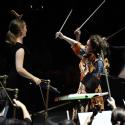
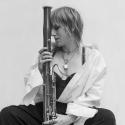
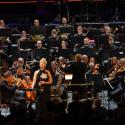
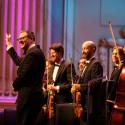
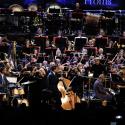
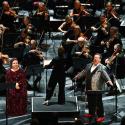
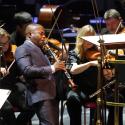
A new opera from Peter Eötvös is a major event. More than any other composer today, he has the ability to create sophisticated contemporary music that supports and enriches sung drama. This concert presented the UK premiere of his Senza sangue, a short, one-act work for just two singers and orchestra. It proved an ideal vehicle of the composer’s unique talents, and the work was given an excellent performance by conductor Simone Young and the BBC Symphony Orchestra.
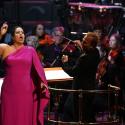
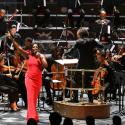
Eötvös himself is also a conductor, and Bartók’s Bluebeard’s Castle is central to his repertoire. Senza sangue is intended as a companion piece to Bartók’s opera, which it matches in scale and mood. Both composers explore a relationship between a woman and a violent older man, but Senza sangue takes a more reflective angle. The two characters, Pedro (baritone, both pictured below) meet many years after he was involved in the murder of her father. The repercussions of the event are explored, with Nina seeking resolution, but crucially without blood, "senza sangue". The title itself demonstrates the clearest distinction from Bartók’s narrative, which concludes with a great deal of blood. Eötvös, setting a libretto in Italian by Mari Mezei based on a novel by Alessandro Baricco, internalises the violence; it is recalled in recollections while the orchestral music demonstrates both the gravity of the crime and the distancing effect of the passing years.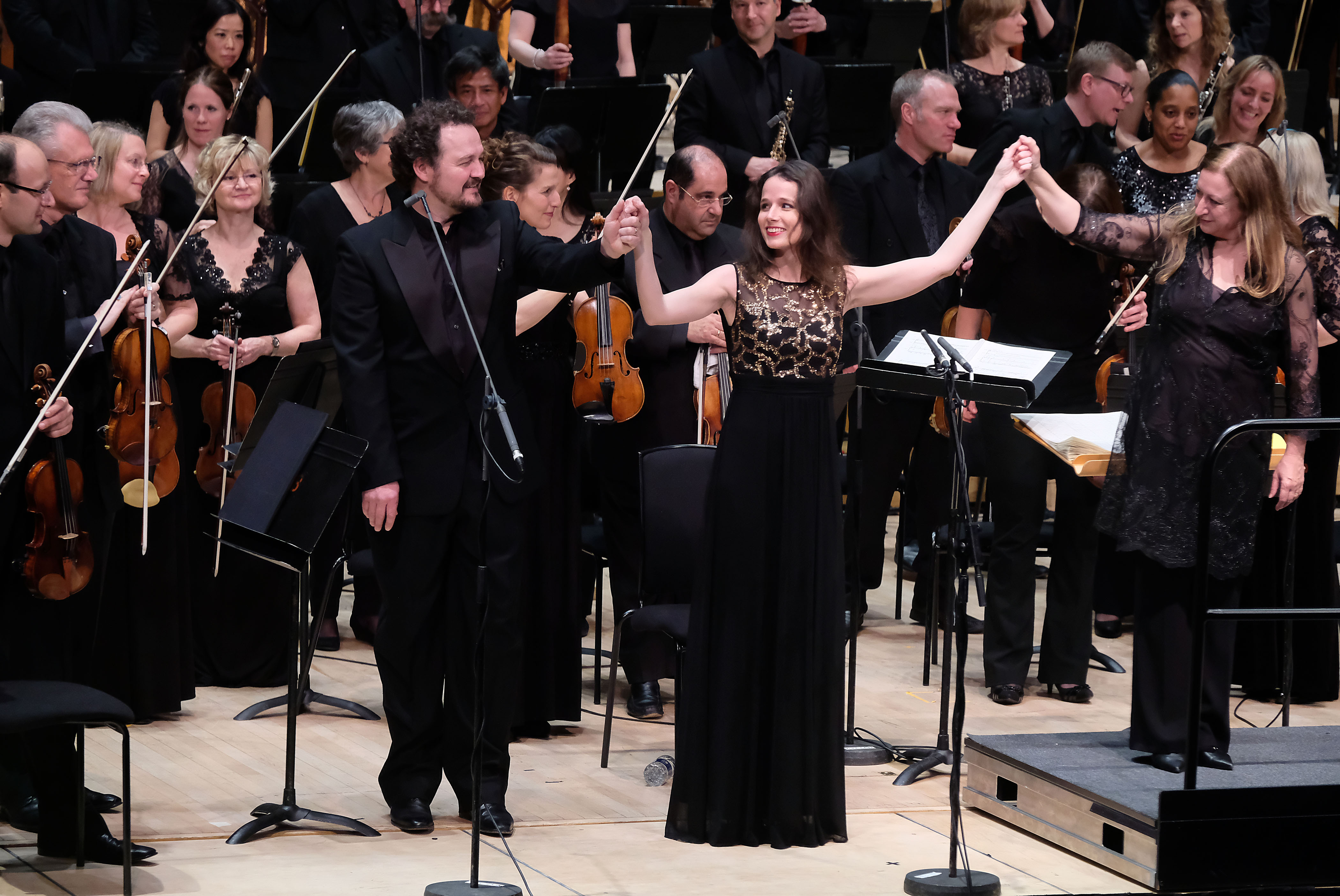 This was a concert performance, but little was lost in a work low on explicit drama and with a great deal of the emotion playing out in the orchestra. Eötvös employs a large ensemble, with heavy lower brass, celesta, two harps and two well-equipped percussionists in addition to the timpanist. Textures are often brittle, with astringent, uncompromising harmonies. The threat of musical violence is always present, adding to the impact of the sporadic outbursts. Although his soundworld is always innovative, the composer makes only sparing use of extended performing techniques, with a wide array of brass mutes and percussion sticks subtly altering the contributions from the back of the stage. The string writing shows the influence of his many years performing electro-acoustic music, with the ethereal glissandos and double-stopped harmonics in the cellos particularly evocative of electronica.
The performance here was excellent, with conductor, orchestra and singers all on the composer’s wavelength. Eötvös has a conductor’s sense for the practicalities of performance, and every part seemed ideally suited to the respective instrument or voice. Russell Braun has been performing the role of Pedro since the work’s 2015 premiere, and his voice is ideal. He is very young for the role’s supposed 73 years, but he does it convincingly, even in concert. Albane Carrère was a last-minute stand-in for the role of Nina, but she too was ideal, by turns tempestuous and subdued, but always the clear focus of the drama. Like Eötvös, Simone Young has extensive experience conducting modern opera, and her handling of this score was masterly, always emphasising clarity of line and texture, but never to the detriment of the unfolding drama.
By rights, the new opera should have been coupled with Bluebeard’s Castle, but thankfully we were spared the full immersive experience (the intention is that Senza sangue be performed first, with Bluebeard’s Castle following without a break). Instead, Young opened with Bartók in a lighter mood, his Concerto for Orchestra. Again, her focus on clarity of texture and line brought out all the details and unusual colour combinations in this vibrant score, and the orchestra was on top form throughout. The performance was a little lacking in drive, with the big orchestral climaxes, especially in the first movement, feeling underpowered and with a poorly defined rhythmic profile. But the middle movements were a delight, thanks to the darkly coloured brass chorales, graceful woodwind solos and folk rhythms, to which Young applied an infectious lilt every time they appeared.
- This concert was recorded by BBC Radio 3 for future broadcast on Afternoon on 3
- Read more classical reviews on theartsdesk