

JS Bach: St John Passion Pygmalion/Raphaël Pichon (Harmonia Mundi)
Handel: Messiah Irish Baroque Orchestra/Peter Whelan (Linn)
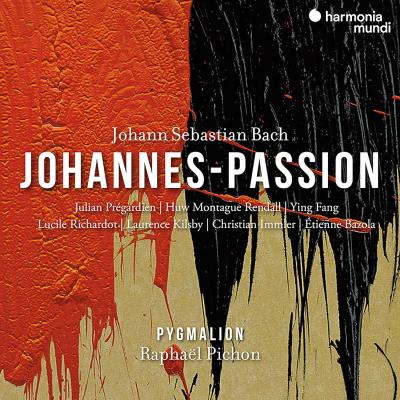
Here are brilliant additions to the discography of the two of the greatest choral masterpieces, both of which I have listened to repeatedly over this Easter period. The French choir and ensemble Pygmalion, under its founder and director Raphaël Pichon, has been working its way through the biggies of the repertoire in recent years: in addition to their Bach (brilliant versions of the St Matthew Passion and the Mass in B Minor) they have covered the Mozart Requiem, Monteverdi Vespers and, last year, a very good Brahms German Requiem. But Bach is their home turf and now comes an arresting and addictive St John Passion.
From its opening chorus there is a drama and urgency that makes listening an active process. Where the St Matthew Passion opening has a gravity and weight here we are thrust into the midst of the drama, teeming orchestral lines setting up the choral entry, which is genuinely spine-tingling. The instrumental playing throughout is lithe – the tempos are mostly fast, but there is more to it than that. This is music-making on the front foot, the chorus always on the front of the beat. The soloists are unimpeachable: evangelist Julian Prégardien makes even the busiest recitative sound spacious, tenor Laurence Kilsby is full of angst in “Ach, mein Sinn, wo willst du endlich hin” while soprano Ying Fang relaxes into the pastoral “Ich folge dir gleichfalls”. But for me perhaps the best aspect of the recording is the choral singing, by a choir of 19 singers (pitched midway between the extremes of one-to-a-part and massed choir) who lean into the dissonances, ratcheting up the tension, and then find a resolution in the final chorus and chorale, all fury spent, making way for resignation and grief.
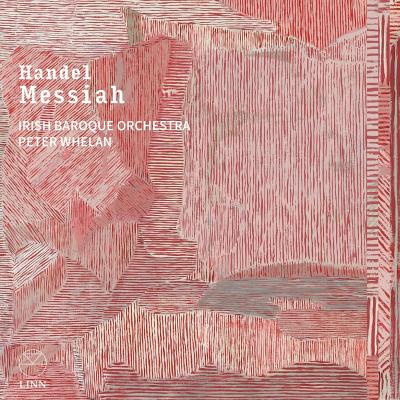
Where Bach is meditative, internally exploring the depths of his Christian faith, Handel is pure box-office, his Messiah a much sunnier and outward-looking business, pushing all the right buttons with unerring facility. This recording, by Peter Whelan and the Irish Baroque Orchestra and Choir, with a stellar line-up of soloists, has lots in common with Pichon and Pygmalion: fast tempos, a lightness of touch and beauty of sound. David Nice has reported enthusiastically over the last few years on Whelan’s Dublin performances of the St Matthew Passion, as well as his revelatory Wigmore Hall Messiah, and some of the soloists who have graced those live events are represented here. Hilary Cronin’s “Rejoice greatly” is frothy and fun, pin-sharp in its virtuosic runs; Helen Charlston’s “He was despised’ is a rare moment of inwardness, touching in its directness and simplicity; Alexander Chance and Nathan Mercieca contrast and intertwine intriguingly on “How beautiful are the feet”. But perhaps the pick of the bunch is Guy Cutting, whether in a thrilling “Ev’ry valley shall be exalted” that exudes joy, and, at the other emotion extreme, an edgy “Thou shalt break them”.
But as in the Bach, the choir is at the centre of the success of the enterprise, here being just 13 strong, and including all the soloists doubling as choristers. I enjoyed the suitably clean sound in “And he shall purify” and the athletic runs in “For unto us a child is born”, easier with smaller numbers than with a choral society. But there is still weight in “The Lord gave the word” and “Hallelujah” – and an operatic breadth to “Since by man came depth”. Whelan’s new recording, by a Dublin-based ensemble, aims to capture features of the Dublin premiere – its small forces and intimacy, and including numbers written for that occasion but subsequently supplanted. Whelan gets through this huge work in little over two hours thanks to some no-nonsense tempos, and the results are completely delightful. Bernard Hughes
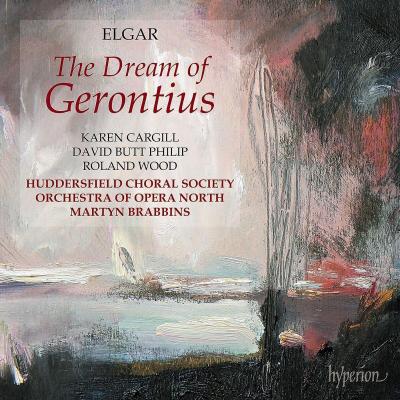
Elgar: The Dream of Gerontius David Butt Philip (tenor), Karen Cargill (soprano), Roland Wood (baritone), Huddersfield Choral Society, RNCM Chamber Choir, Orchestra of Opera North/Martyn Brabbins (Hyperion)
If you’re in the mood for sacred choral blockbusters after hefty doses of Bach and Handel, why not try this new recording of Elgar’s oratorio The Dream of Gerontius? I’m predisposed to liking Martyn Brabbins’ performance; it’s accompanied by local orchestra and features a famous Yorkshire chorus, recorded in one of my favourite concert venues. I’ve struggled with Gerontius in the past, my issues being more with its text and baggage than the actual music. John Pickard’s sleeve note usefully reminds us how Gerontius broke with the English oratorio tradition of setting biblical texts from an Anglican perspective, Elgar setting a Catholic text to music with a debt to Wagner that’s apparent in the first few bars of the prelude. Brabbins has excellent soloists: David Butt Philip’s Gerontius is suitably animated in the early stages (“Rouse me, my fainting soul, and play the man…”), becoming more introspective and thoughtful as the work progresses. Sample him at the start of Part II, Karen Cargill a warm and ever-patient Angel.
Roland Wood doubles as the Priest and the Angel of the Agony, magnificent in his “Jesu! by that shuddering dread which fell on Thee”, the prelude to a stinging fortissimo chord as Gerontius’ soul gets scrutinised. The Huddersfield Choral Society are impressive throughout, singing with a winning combination of warmth and clarity, and Brabbins draws excellent playing from the Orchestra of Opera North, Elgar’s scoring never seeming thick or stodgy. Taped last April in Huddersfield’s glorious Town Hall, it all sounds marvellous. Full texts are included, plus a bonus essay about the fortunes of the choir during World War 1 to tie in with the recent release of the Nicholas Hytner/Alan Bennett film The Choral.
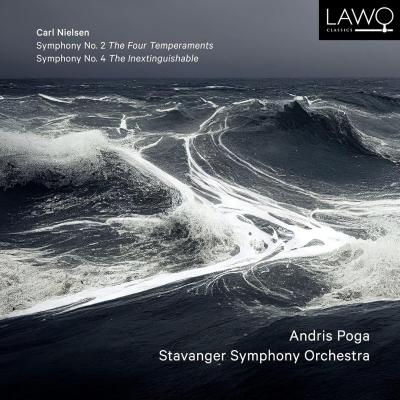
Nielsen: Symphonies 2 and 4 Stavanger Symphony Orchestra/Andris Poga (Lawo Classics)
Carl Nielsen’s symphonies give a useful overview of the great Dane’s compositional career, a journey from No. 1’s breezy energy to the spare, enigmatic world explored in No. 6. Each work occupies its own distinct space and it’s hard to find conductors on disc who succeed in nailing all six. Sakari Oramo managed it with aplomb, as did Alan Gilbert in an underrated set with the New York Philharmonic. This is the first volume in a new cycle from Andris Poga and the Stavanger Symphony Orchestra. Their Symphony No. 2 (The Four Temperaments) opens with a suitably choleric bang and a second subject that feels a bit too broad for my taste. Still, it does showcase some warm, expressive playing from the Stavanger strings, and the start of the development section three minutes in is suitably spiky. Poga’s woodwinds are always audible and he’s not afraid to let his lower brass off the leash, the music huffing and puffing its way to its gnarly close. Nielsen’s phlegmatic “Allegro comodo” sounds well here, and there’s a searching account of the melancholy slow movement, one of this composer’s greatest. Listen to Poga’s poignant handling of the finale’s minor key collapse, accentuating the jauntiness of the closing march.
Poga’s take on Nielsen’s volatile 4th Symphony is less competitive, its outer movements missing the sense of danger that the best interpreters bring. The finale’s duelling timpani in the finale are well done, though Poga is generally at his best in the symphony’s lonelier moments. Take the searing violin threnody which opens the “Poco adagio”, and how the tension builds before the ecstatic climax seven minutes in. It’s impressive, though Michael Schønwandt’s Dacapo version has more excitement and impact. Poga nails the symphony’s coda though, keeping the music moving and ignoring the unmarked ritardando which some conductors throw in. I’m nitpicking, of course; I’ve loved these two symphonies for decades and that new recordings continue to appear has to be a small cause for celebration. Lawo’s production values are as good as you’d expect, and Andrew Mellor’s booklet essay is an interesting read.
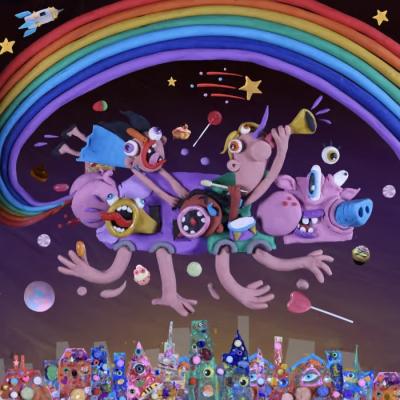
Alex Paxton: Candyfolk Space Drum Dreammusics Ensemble, Nouvel Ensemble Contemporain et al (New Amsterdam Records)
The highly productive Alex Paxton has another album out and if you like his previous hyperactive, whimsical, jazz-inspired parties-in-sound (which I do) you will like this new one. Variety remains the spice of his life, and Candyfolk Space Drum embraces performers from the contemporary classical groups the London Sinfonietta and Riot Ensemble, alongside Paxton himself on trombone, pianist Zubin Kanga – and some endearing singing primary school children. The opening sequence of tracks has grooves, but never allows them to settle. There are electric guitars, trombone and a range of electronic sounds, and it is all characterised by Paxton’s restless invention and cartoonish energy and wit.
As with his previous music, it commands committed listening – this is the polar opposite of background music – and also requires committed performing, in the case of these opening tracks by the brilliant Riot Ensemble. Track 9, "Pullback Hat Biome Dunk" (Paxton’s titles remind me of Frank Zappa, as does the music in some respects) uses a symphony orchestra, but in much the same way as he earlier uses electronics, and to similar effect. Jennifer Walshe gives an impassioned performance, both spoken, sung and shouted, which has an anarchic freedom. The last sequence of tracks, grouped as Candyfolk Space Drum, brings together the London Sinfonietta with the young voices of Belham Primary School, a nod to Paxton’s earlier career as a primary music teacher. Their charmingly untutored singing gives a down-to-earth element to music that can seem to flap about untethered, and they are the heroes of this album, for all the virtuosic playing going on around them. Bernard Hughes
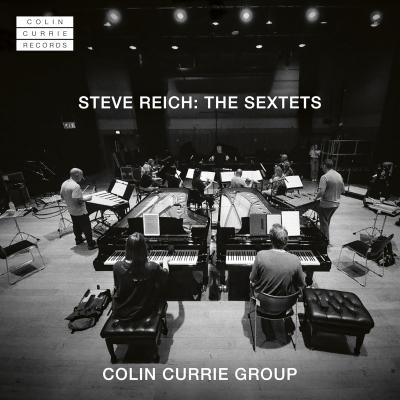
Steve Reich: Sextets Colin Currie Group (Colin Currie Records)
This album’s booklet has on its first page a recommendation from Steve Reich himself and quite right too: what composer wouldn’t want to celebrate their music being performed with such care, sympathy and skill? The four pieces presented here are varied in many respects, but united by the number six: we have the Sextet, the Double Sextet, Six Marimbas and Dance Patterns. Colin Currie and his eponymous Group are vastly experienced in this repertoire, but there is no treading water here. Minimalist music like this is very unforgiving of anything other than the keenest precision and Currie and his team are on the ball throughout. And if the music is not really open to “interpretation” in the traditional sense, they put their stamp on the music, not least in the engineering and editing (namechecks for Ian Dearden, Phil Jones, David Sheppard and Daniel Halford) who make the details that emerge from the busy textures sharply defined: the marimbas ping and the pianos ring and it’s an aural treat.
This fourth Colin Currie Group album of Reich’s music – also marking their 20th anniversary and Reich’s 90th birthday – starts with Sextet, from 1985, when Reich was in his pomp. It was originally a dance piece, and has a lithe energy in its outer movement – but also a slower middle movement that recalls the bells of Stravinsky’s Requiem Canticles. Canons abound, a Reich trademark, and the harmony is clean and muscular. The Double Sextet, written more than 20 years later, is knottier and funkier, more varied but still recognisably no one but Reich. Designed to be played live by a mixed sextet over playback of a track they’ve previously recorded, it loses, in this version with 12 players, that layered aspect, becoming denser – at one stage the instruments congregating to sound like an accordion – but still with an essential clarity.
Six Marimbas is the name given to the piece also known as Six Pianos, when it is played by marimbas. (I’m not sure which is more of logistical challenge: assembling six pianos or six marimbas.) It’s one of my favourite Reich pieces, and one of his most single-minded. Dating (in its piano iteration) from the early 70s, it has the one-idea focus of his music at the time, but where six piano playing incessant interlocking patterns for 22 minutes is a bit of an assault on the senses, the marimbas make the experience more akin to Javanese gamelan, rippling and pulsing and lulling. As the piece goes on, players bring out individual “resultant melodies” – tunes that emerge from the contrapuntal web – and it’s hypnotising and entirely wonderful. The shortest piece, and perhaps the least engaging, is Dance Patterns (2002) for pairs of xylophones, vibraphones and pianos, but this perhaps speaks to the attractiveness of the other pieces. It is again nicely recorded, the pianos not sounding as clangorous as they can in other Reich recordings, and the playing – as throughout the album – is exemplary. Bernard Hughes
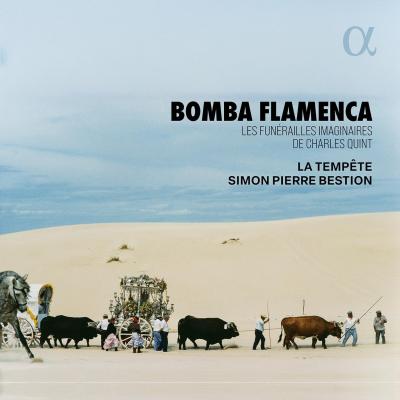
Bomba Flamenca: The Imaginary Funeral of Charles V La Tempête/Simon Pierre-Bestion (Alpha Classics)
French keyboardist/conductor Simon-Pierre Bestion has taken a temptingly poetic (if slightly wacky) historical idea... and supersized it. Legend has it that Holy Roman Emperor Charles V, after having abdicated in 1556 and retreated to a monastery in Spain, would take his place in a coffin and organise and supervise the choir (capilla flamenca) in rehearsals for his own funeral. Bestion has taken this story as his jumping-off point, and created a grandiose 80-minute sequence built around the form of the requiem mass, peppering it with Arabic and Sephardic music, to make the point that Spain was at the crossroads of different cultural influences, and at an inflexion between the end of the middle ages and the start of the renaissance.
For this mighty endeavour, Bestion directs the choral-plus- instrumental group La Tempête, which he founded in 2015. Their previous projects include a “Minimalist Bach” programme, and a sequence of polyphony from Machaut to the present day. He has said that he “like(s) the idea of disorienting the listener between different eras”. In doing this, Bestion situates himself in a specific compositional lineage in France, with composer Maurice Ohana as both its most significant theoretician and its creative fountainhead.
This is muscular, provocative, big-gesture, cross-cultural music-making. It’s the polar opposite of, say, Oxbridge-rooted choirs. A good example is the Cristobal de Morales “Parce mihi, Domine”, which, Bestion admits in his liner essay, is the only work on the album known definitely to have been performed at Charles V’s actual funeral. Whereas the UK group De Profundis with Eamon Dougan have recorded it a cappella, smooth, shaped, Bestion starts it with strings, briefly moves to unaccompanied voices, but very soon is bolstering, even armour-plating the choral texture with cornetts and fat and resonant lower brass.
That tendency to add heft is everywhere, as is the temptation to assume that anachronism will be the norm. In this post-Pluhar, post-Ensemble Resonanz world, the added colours of non-Western and non-period instruments can almost lose their element of surprise. They’re everywhere: a solo duduk at the start of the traditional Sephardic “Irme kero madre a Yerushalayim”, a klezmer clarinet solo at the end of Yerushalayim”, and even a Hans Zimmer Lion King-ish humming chorus at end of the Lamentations by Marbriano de Orto.
I find myself trying to come to terms with the all-encompassing scale of the ambition: Bestion is evidently consumed by a Berlioz-ian desire to create structures which justify themselves through their grandeur and sheer vastness. There is no denying the energy and momentum, but with the solistic pushiness of a lot of the voices, it can all start to feel a bit unrelenting. Sebastian Scotney
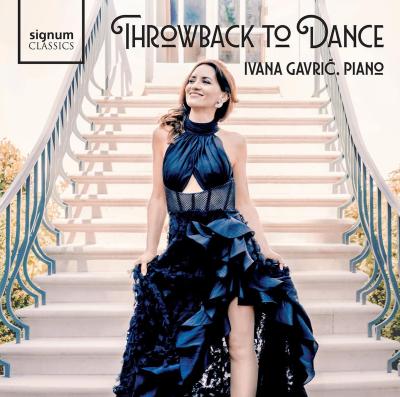
Throwback to Dance Ivana Gavric (piano) (Signum)
Hot on the heels of Alexander Ullman’s excellent Grieg anthology (see review) comes Ivana Gavric’s Throwback to Dance. Her compilation isn’t 100% Grieg but includes the piano version of the Holberg Suite and one of the Op.35 Norwegian Dances, a work which she suggests Ravel might have performed to Grieg when the two men met in 1894. The piano version of the Holbergs came first; look at the scores for both keyboard and string orchestra versions and you’ll notice the changes which Grieg made, like the right hand’s frenetic arpeggios at the start of the “Praeludium” replaced with chugging string chords. I like Gavric's exuberance in the faster dances, the “Rigaudon” really sparkling, though she’s equally persuasive in the sublime “Air” which precedes it.
Ravel’s Le Tombeau de Couperin could be a Holberg sequel in Gavric's hands, another suite looking back at 18th century dance music. Try her in the austere “Fugue”, the individual lines nicely delineated, and the “Toccata” is exciting without ever becoming breathless. Cheryl Frances-Hoad’s Dance Suite dates from 2024, its five short movements inspired by Handel’s keyboard suites. It’s deliciously disorientating, the baroque rhythms largely intact but filtered through a very 21st century sensibility, with an exquisitely melancholy “Sarabande” and a hectic closing “Gigue”. Additional items include Croatian composer Dora Pejacevic’s gorgeous, nostalgic “Remembrance”, composed in 1911 and two of Cécile Chaminade’s delectable Pièces humoristiques. Her 6/8 “Norwegienne” seems to quote from Ravel’s “Forlane”, though it was composed nearly 20 years previously. This is an engrossing, well-played collection, Signum’s recorded sound rich and full of impact – play this at high volume when your neighbours are out.
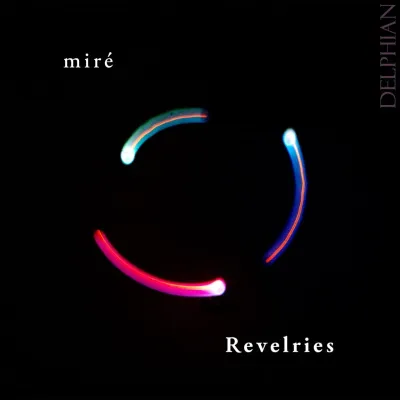
miré: Revelries Héloïse Werner (voice), Kit Downes (organ) and Colin Alexander (cello) (Delphian)
The opening track on this disc popped up while my trusty iPod Classic was on shuffle, Héloïse Werner’s vocal flourish, a mixture of shriek, hiccup and giggle, compelling enough to make me stop hanging washing out and instead spend the next 25 minutes listening to the entire EP. Billed as “the meeting of three fearless musical minds”, mire features Werner as vocalist alongside two fellow composers: cellist Colin Alexander and keyboard player Kit Downes. Part of Revelries’ appeal is the range of sonorities on display, the pitch gap between voice and cello filled by Downes’ organ. How these pieces were created isn’t revealed, the group’s three members sharing compositional credits on three of the five tracks.
I was beguiled by “Moonrise”, where cello and organ are joined by ecstatic vocal birdcalls, and Jasmin Kent Rodman’s “LaGo” is a tour-de-force for Werner, dispatching a frenzied stream of syllables over ecstatic organ swirls. Jonathan Cole’s title track is a delectable piece of night music, and the closer, “Searching Sleep” has a gorgeous, otherworldly opening, an angular line spoken by the three voices in unison as if they’re performing a baroque sacred work. Revelries is invigorating and entertaining – do investigate.

Comments
Messiah review
Guy Cutting
The change has been made, with thanks. Did wonder about 'Ev'ry Valley' being reallocated to a counterteno.
Mea culpa
My apologies for the typo. (And nb it's Hughes, not Huhes...)