This week there's another new Mahler symphony recording, along with some disquieting British piano music and an enjoyable disc of originals and transcriptions played by a young Baltic accordionist.
Frank Bridge – Piano Music Vol 3 Mark Bebbington (Somm)
The bolder, more challenging pieces are the stand-outs in Mark Bebbington’s handsomely played and produced Frank Bridge recital – yet they’re sometimes curiously reticent to lodge in the memory. Bridge, still best remembered as the young Britten’s most influential teacher, possessed an acute sense of economy and scale – few of the miniatures on this disc last more than four minutes. I’m still struggling to get a firm grip on Bridge’s musical personality – there’s an emotional coolness which makes some of these pieces easier to admire than to love. But they impress – notably as Bridge’s musical language became more chromatic and adventurous, lending even salon pieces like 1915’s Three Poems a delicious, chilly strangeness. What must amateur pianists have made of 1921’s Three Lyrics – the first, Heart’s Ease, languid and approachable, succeeded by two brief, baffling fragments? And there are moments in the quirky third set of Miniature Pastorals which seem deliberately designed to frighten away the young players which they were aimed at.
Composed for a pianist who’d lost an arm in the Great War, Bridge’s Three Improvisations do sound like the work of a major talent – Bebbington’s ability to sustain the tension whilst playing really slowly and quietly inspires awe. He saves the best until last – placing the aphoristic, late A Dedication before 1901’s limpid, wistful Berceuse. It's followed by the Canzonetta, an effective melding of Bridge’s early and late styles. Finally there’s the posthumously published Gargoyle from 1928 – raw, violent and virtuosic in its early stages before vanishing into the spookiest of mists.

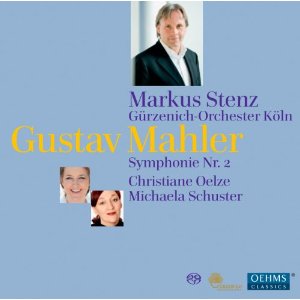 Mahler Symphony No 2 Gürzenich-Orchester Köln/Stenz, with Christiane Oelze (soprano) and Michaela Schuster (mezzo) (Oehms Classics)
New recordings of Mahler’s music in the composer’s centenary year are still being released in alarming numbers. Decent ones, though, are always welcome, and this new Resurrection Symphony is a very good one. I’ve a love/hate relationship with the work, and after some performances and recordings I swear that I never want to hear it again. But give me a few seconds of those opening string tremolandi and I’m invariably hooked, unable to switch off the radio or CD player. Markus Stenz’s reading stresses the sadness, the pathos underlying the symphony’s stark, funereal opening – the bombast is always lurking, but the moments of pathos feel more touching and human than usual, leading to a devastating coda – you really do need to observe Mahler’s five-minute pause before continuing. The sound of the Cologne Gürzenich-Orchester is a plus – not as plush as some better-known European orchestras, but incredibly responsive and characterful; Stenz making so much of Mahler’s cheeky, witty woodwind writing and exploiting some of the most sonorous brass sounds I’ve heard on disc.
Stenz’s Andante moderato is warm and nostalgic, and he matches Jurowski’s recent recording in the third movement, with the Cologne trumpets heart-rending in the trio. Michaela Schuster’s mezzo soprano is effortless in Urlicht. She’s joined by soprano Christiane Oelze and five combined choirs in a 34-minute finale which is as impressive as any I’ve heard. Offstage brass effects are suitably distant but spectacular. A strength of Stenz’s performance is that despite the coda’s glorious racket you don’t forget what’s gone before. It doesn’t plumb the depths of Tennstedt’s live recording, but it’s definitely one for repeated listening, and the sound is stunning. Will this be the last significant Mahler release this year? Probably not.
Ksenija Sidorova: Classical Accordion (Champs Hill Records)
Hearing this life-enhancing CD got me thinking about why some organ music gives me the heebie-jeebies and accordion music generally doesn’t; it’s to do with the way that a good accordionist can make the instrument vocalise and sing, whereas an organ chord played by insensitive fingers can be just a solid, stark parp – the sound of the funeral parlour. In short, an accordion can speak as if it’s alive. The young Latvian player Ksenija Sidorova’s debut disc succeeds triumphantly through a mixture of imaginative programming and staggering technique. There’s a mixture of fun transcriptions and tougher, ear-stretching contemporary works written for the instrument. Norwegian composer Arne Nordheim’s Flashing, written in 1985, reuses material from an accordion concerto composed 10 years earlier. It’s a brilliant display piece for the instrument’s extremes – dense, dissonant low chords set against thin, wheezy high notes, with striking cadenza-like writing. It feels improvisatory in a way that Berio’s Sequenza XIII doesn’t – here, the musical processes are easier to follow, helped by Berio's throwing in a few nods to the accordion’s populist prehistory.
Of the transcriptions, the four movements of Schnittke’s ballet-derived Revis Fairy Tale are the funniest – raucous miniatures channelling the ghosts of Haydn, Tchaikovsky and Shostakovich. The two Scarlatti keyboard sonatas are transformed; the K77 D minor into a café-style smooch, the K33 D major piece a giddy, exultant dance. Bach’s Overture in the French Style is another treat, with the contrapuntal writing in the central section voiced with incredible dexterity. Invariably, there’s a bit of Astor Piazzola thrown in; the first of his Five Tango Sensations. It’s soft, brooding and ends the recital on a pleasingly downbeat note, with the Sacconi Quartet offering percussive backing. Brilliant.