The first notes of the first night of the Proms weren’t the ones expected. Instead of either “God Save the Queen” or simply the start of the Tchaikovsky, the “Marseillaise” rang out into the Royal Albert Hall, the Tricouleur projected in coloured light across the organ. Everyone stood. A fervent tribute to the tragedy of Nice, it set the tone for a strange and startlingly appropriate season opening.
In one of those supreme ironies, given that it was planned ages ago, the programme couldn’t have been better for the occasion. Even if the Tchaikovsky Fantasy-Overture “Romeo and Juliet” was selected for Shakespearean anniversary relevance, and the Elgar Cello Concerto perhaps for its elegiac post-First World War associations, they added up to a first half with something almost congregational about it: this audience joined forces to listen to the tale of a tragedy resulting from senseless family enmities, and then a dark, personal lament for a vanishing world.
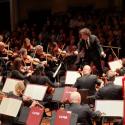
Sakari Oramo, principal conductor of the BBC Symphony Orchestra, has been growing in artistic stature from season to season, and though he wears his maestro-ship modestly, his elegant, authoritative and collegial style proved its worth at once in the shaping of the Tchaikovsky overture. The pacing was both subtle and splendid: the contrast of the two love-theme episodes fulsomely explored, the first muted moonlit, the second giving passion and anguish full rein; the Friar Lawrence theme seared through the fight music so that one could almost see Romeo getting in Mercutio’s way and dooming him to Tybalt’s sword. Oramo handled gear changes and smoothed out slight ensemble insecurities with unflappable assurance. And there seemed more genuine Shakespearean character in these 20 minutes than in the whole of a tooth-grindingly awful West End production of the original that I sat through recently.
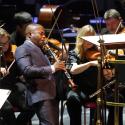
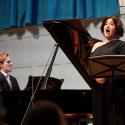
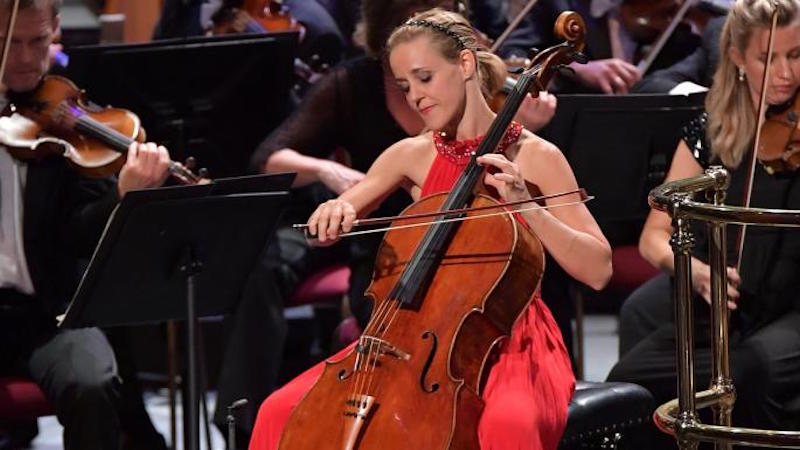 The cellist Sol Gabetta (pictured above), making her Proms debut, seemed pleased to find herself welcomed by a solitary Argentinian flag in the arena. Her Elgar proved charismatic, personal and happily free of histrionics, placing all the intensity where it belonged: in the sound itself. Rounded of tone, with spot-on intonation, Gabetta was alive to Elgar’s strength and vivacity as well as his anguish. In the opening and the slow movement her eloquence proved focused and mesmerising. The transition to the scherzo seemed briefly to shudder with the suppressed force of tectonic plates moving beneath a tranquil surface – but the scherzo itself had the lightness and poise of a hummingbird.
Virtually crowned Prom Queen on the spot, Gabetta then treated us to her speciality encore: the “Dolcissima” movement from Peteris Vasks’s exquisite Gramata cellam, which requires her to sing while she plays. It’s only a shame that the RAH acoustics do nobody any favours and a solo cello perhaps fewest of all; Gabetta tended to be submerged by its muddy cavern.
So to Russia, where in 1938 Prokofiev provided the score for Eisenstein’s first sound film, Alexander Nevsky. Transformed into a concert cantata, this is Prokofiev in full Soviet jacket, ‘socialist realism’ (which of course was anything but realistic) in garish technicolour; it’s pure propaganda, though an enjoyable enough work if you can forget about what Stalin was doing to his own people at the time.
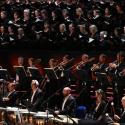
Olga Borodina's noble performance acknowledged the hollow tragedy of warIn Eisenstein and Prokofiev, Russia is under the Mongolian yoke; there’s a huge battle scene, on ice, and finally celebration of liberty as the people happily declare that in Russia no enemy shall survive. The combined forces of the BBC Symphony Chorus and the BBC National Chorus of Wales gave the choral writing plenty of welly, and Oramo led a broad, lyrical account of the score, homing in on its humane elements whenever the music allowed.
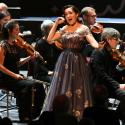
The Battle on the Ice was expertly structured, the tension ratcheting up in stages to full-on conflict, eventually subsiding into the haunting, skittering patterns in the strings that close a scene of horror. Olga Borodina was the mezzo-soprano for arguably the work’s finest moment, “The Field of the Dead”, as a woman searches amid the slaughtered youths for her betrothed: a noble performance acknowledging the hollow tragedy of war. Finally, the closing chorus goes into roof-raising anthem mode, the hefty percussion section working hell-for-leather in the evocation of Russian bells. Oramo’s finely judged balance stopped the piece from turning into pure Soviet kitsch.
After relishing the seamless joint efforts of English and Welsh choruses, a British orchestra incorporating many nationalities, a Russian opera star, an Argentinian cellist, a Finnish conductor and a tribute to our nearest neighbours in a time of trouble – which meant that the first post-Brexit-vote Prom opened not with the British national anthem but the French one – we emerged only to hear that a military coup was underway in Turkey.
If only we could take the unifying force of this Prom out into the real world.