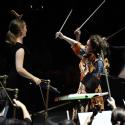
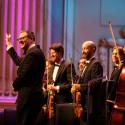
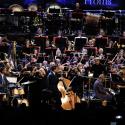
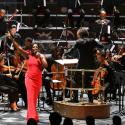
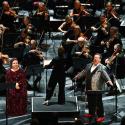
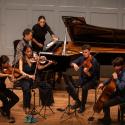
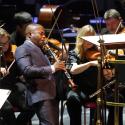
Anna Clyne’s engaging First Person here led me to two of her works in a Philharmonia rainbow. She curated a woodwind-based gem of a 6pm programme of works by four women composers, herself included, and her Clarinet Concerto could only gain from two other live wires, soloist Martin Fröst and conductor Pekka Kuusisto, the first time I've encountered the violinist in that role. Ultimately it was his way with two masterpieces by Tchaikovsky and Bernstein that stole the show.
The main Philharmonia programme looked odd in prospect. There was no connection at all between the concerto, Weathered, and the Romeo and Juliet theme in the rest of the concert. And does anyone feel anything but the vaguest jollity after having heard Bellini's Sinfonia to I Capuleti e i Montecchi, a generic curtain-raiser without the slightest hint of its subject's romantic pathos that could be slapped on to any old work? Kuusisto's perfect mix of charisma, excitement and technique came to the fore first in Tchaikovsky's Fantasy Overture (for which read symphonic poem) Romeo and Juliet. 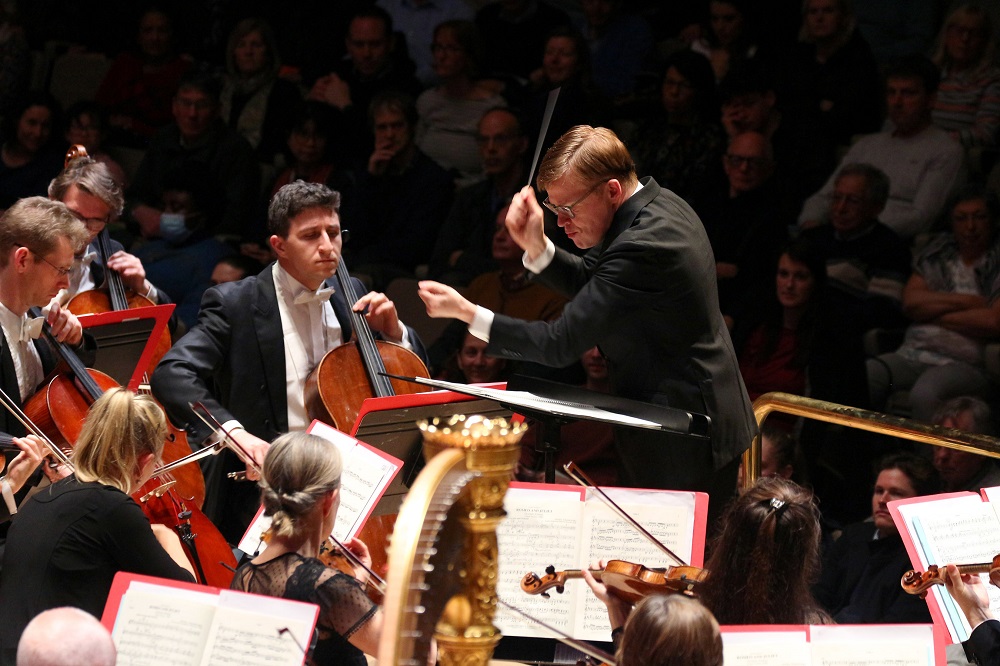 That the work as we know it - originally the composer had a rather bland theme for Friar Laurence - tells so much of the tragic tale in perfect musical terms is a given. But it needs focus and a certain objectivity if the inspired love theme isn't to become too swoony. Kuusisto made it glide in at a perfect tempo, atmosphere present in the oscillating muted strings and later the harp spangles (Heidi Krutzen, as the earlier concert had already told us, is a consummate artist). The conficts of Capulets and Montagues were spring-heeled, not too brash at first, the four (!) trumpets at the development's searing climax given just the right space to peal the tocsin.
If only school parties had been here for this concert (there were plenty of young people in the audience, some apparently newcomers, clearly riveted and held in silence by Kuusisto at the end). For what can engage all ages better than Bernstein's Symphonic Dances from West Side Story? Not only do you get a rhythm section but also finger-clicking players, and Kuusisto made sure it was we in the audience who shouted "Mambo!" with perfect timing. He (I assume it was) even whistled the film's introductory tritone before the orchestra took it up in the concert work. Again, the spring and exhilaration of the hectic sequences were perfect, the chamber-musical effects at the beginning of "Somewhere", the love-at-first-sight in the gym and the eerie start of "Cool" all magical. I'd be interested to know where Kuusisto studied as conductor; the Finnish school, of course, led by Jorma Panula, is the best in the world. A perfect entertainment perfectly executed.
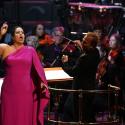
As was the performance of Weatherd, in which Clyne has incorporated so many of Frost's specialities, including his invention of, as he puts it in the programme interview, "the three-step breathing technique, which relaxes your vocal chords so that you can sing with your normal voice while playing. A technique that invented by accident". Genius. Resist reading the programme note first, and what do you hear? A noisy first movement starting with a bell chant, punctuated by clarinet reflections and capped by its soaring and swooping (perverse if original to score for such a big orchestra versus such a soloist; Nielsen's masterly Clarinet Concerto, which I'd been excerpting in Fröst's recording - and Benny Goodman's - for a Zoom class yesterday afternoon, sticks to strings, double woodwind and a significant side drum). 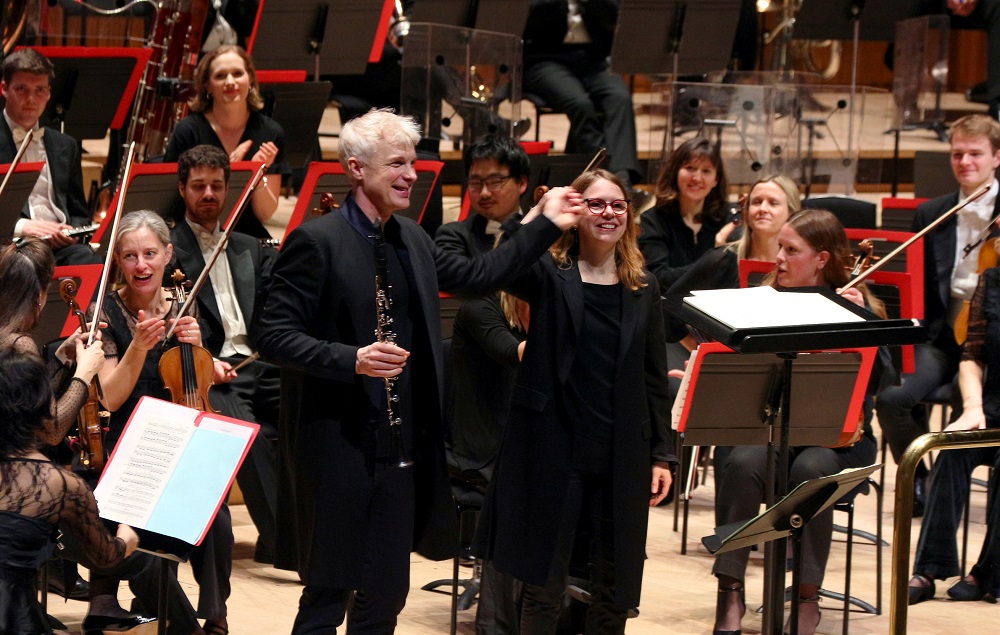 Then two dreamy movements, sounding much the same if not derivative and finely orchestrated, around the centrepiece that's the ony one that actualy sounds like a proper clarinet concerto, chameleonic with a dazzling cadenza - its variety could have been found elsewhere, but the finale, attempting to draw the strands together, didn't work for me. And the actual programme, when I read it, didn't chime much with what I'd heard. Interesting, never dull, but I've heard better-shaped, more concise works from Clyne.
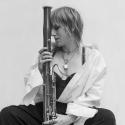
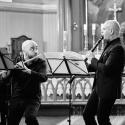
That very much goes for her Overflow for wind decet at the heart of the earlier, Music for Today, programme in the Purcell Room: a fine balance between two melodic "hooks" and the rushing, chromatic figures around them - and no doubt here that lines about the ocean from Emily Dickinson and Rumi had evoked the right, original response. Clyne had also programmed to perfection, with oboist Alison Alty energising us at the start in Thea Musgrave's very short Dawn summons before Delyana Lazarova took up the baton for the rest of the event. 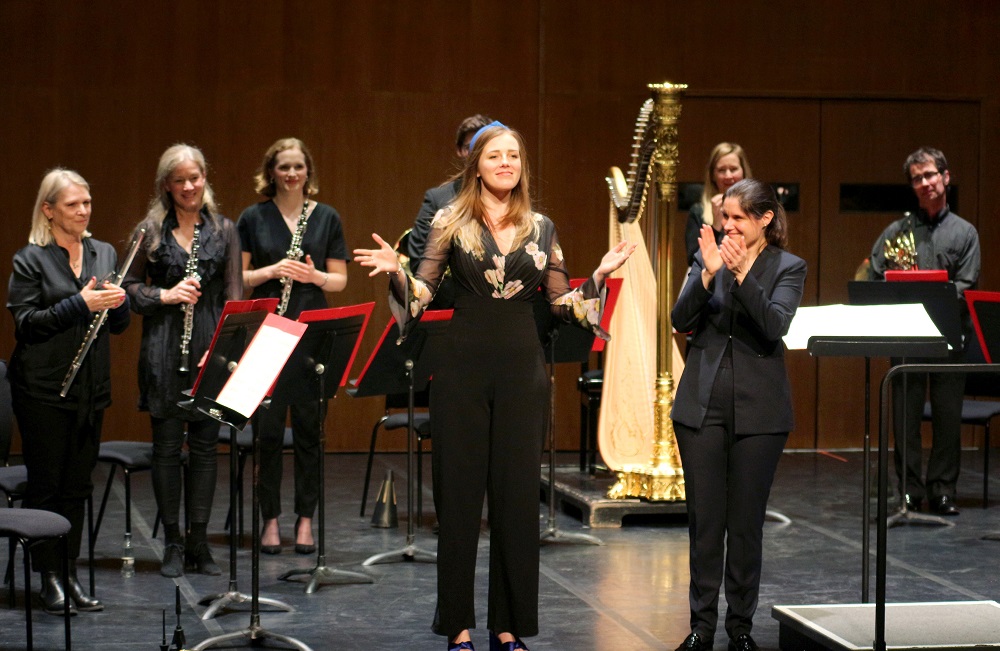 Nathalie Joachim's five portraits in Seen, in which she was inspired by Whitfield Lovell's Kin drawings of unknown African Americans with everyday objects to ask the players of Imani Winds to choose their own objects she could represent in sound. These are gifts for the individual members of a wind quintet (horns Carsten Williams and Alexei Watkins shared their role). The big delight was so bright and sunny a second movement, spotlighting bassoonist Luke Whitehead; the rest wasa tad bland, perhaps, but sonorites of the excellent Philharmonia players always heldthe attention.
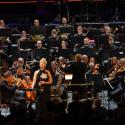
The world premiere justified its position at the end of a happy hour: Grace Evangeline Mason's The Water Garden, inspired by Amy Lowell's poem Chinoiseries and, like Clyne's piece, perfect at translating water-poetry into music (pictured above: Mason and Lazarova with some of the players). This was Kutzen's centre-stage moment, beautiful writing for the harp perfectly realised. A surprisingly mellifluous programme to complement the Festival Hall concert, no mere curtain-raiser.