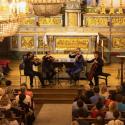
It’s an ill heatwave that brings nobody any good, and Buxton International Festival’s decision to move its highlight concert, by Manchester Camerata with Jess Gillam and the Brodsky Quartet as their guests, from the Buxton Octagon to St John’s Church meant not only that it was heard in probably the only coolish venue in town yesterday afternoon, but also that it benefitted from an acoustic that’s excellent for instrumental music.
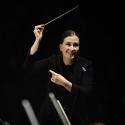
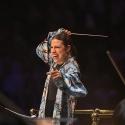
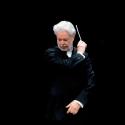
The Camerata is celebrating its 50th anniversary in different places this year, and while the personnel seen yesterday may not overlap entirely with the band we are familiar with in Manchester itself, its leader and director was the Camerata’s Caroline Pether, and the 21-strong Pether String Orchestra was a pretty impressive ensemble.
They made sure the programme explored fresh ground, with two newish short works for strings to open the concert: Shiva Feshareki’s Venus/Zoreh and Caroline Shawe’s Entr’acte. The two have some things in common, as they both employ aspects of string technique that may not be familiar ground in the traditional repertoire, or at least they’re used in novel ways. The former was written for a science and music project four years ago called "The Planets" – Zoreh being the Persian name for Venus, the morning star. It seems to glow imperceptibly in the twilight sky, as the music starts ultra-soft for one violin only, and then ever brighter, as texture and volume increase in patterns of string-crossing harmonics: a vivid sensation to hear. Entr’acte includes a variety of textures and devices (more harmonics, more string-crossing), among them a sequence of asymmetric pizzicato rhythms played with precision and impact.
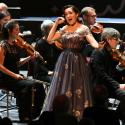
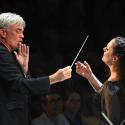
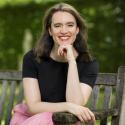
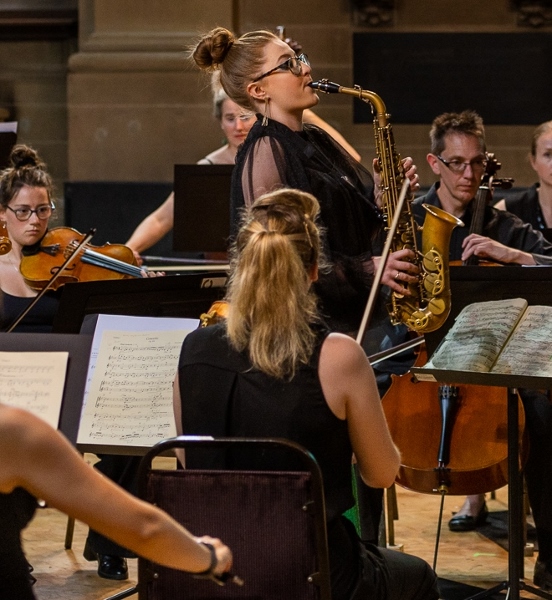 Jess Gillam (pictured left) appeared as the first guest for this Camerata celebration, bringing the Glazunov concerto she’s made her calling card in recent months (filming it with the Hallé in 2021 and performing it with the Camerata at the Wigmore Hall and elsewhere this year). The Concerto in E flat for alto saxophone and string orchestra, written in 1934, is a tuneful and in parts almost Elgarian piece – as Gillam has said herself, it treats the sax rather like a violin – and she plays it with all the resources of varied tone and power that are at her fingertips: in the first section holding back the biggest sound until near the end; in the second entering with a whispered pianissimo and bringing a glorious range of colours to the solo; making the most of the church’s warm acoustic in the solo cadenza, and bobbing and weaving through the final pages with virtuosic brilliance.
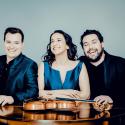
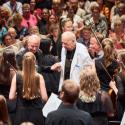
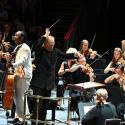
The Brodsky Quartet, celebrating their own anniversary this year (apparently the 40th of their professional existence, but also claimed as a 50th by the two continuing members who first got together), were like concerto soloists themselves in this concert, as their performance of Elgar’s Introduction and Allegro for Strings brought their sound to the fore in a way that’s rarely heard.  So often an orchestra’s front desk players take the string quartet element in the score and to a greater or lesser extent produce a blend of tone with their colleagues. This was excitingly different: the Brodskys (pictured above) were front and centre, not just visually but in audible terms soon: I don’t think I’ve ever heard the piece played with such transparency, variety of tone, and beautifully clear lines in the counterpoint. The “Welsh tune” that contains its emotional heart was introduced with love and affection that ultimately pervaded the whole, and it became a classic performance of the familiar work.
Caroline Pether and the Camerata finished the concert with Tchaikovsky’s Souvenir de Florence. There was passion and soul, and unflagging energy, here despite the heat of the afternoon, and if intonation became a tiny bit slithery as time passed you could hardly wonder at it; the performance never failed in vigour and enthusiasm, right through to the final – spot-on – pizzicato.