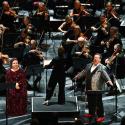
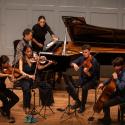
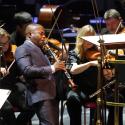
The joint enterprise of soloist Jean-Efflam Bavouzet and conductor Gábor Takács-Nagy, with Manchester Camerata, in recording publicly all Mozart’s piano concertos alongside his opera overtures – with the project theme “Mozart, made in Manchester” – was rudely interrupted after 2019 by you-know-what.
Last night they were all back together at Chetham’s School of Music, and it was just like they’d never been gone. The concertos on the order paper were Nos. 22 and 23: the latter in A major a great favourite for its sunny, optimistic beginning and end, the former, in C minor, possibly a greater work all round and certainly tinged with a depth of misery in its slow movement that became the peak of emotional intensity of the whole concert.
The project includes opera overtures because, in Gábor Takács-Nagy’s words, the concertos “are also mini-operas”, and this time they began with that to Der Schauspieldirektor. Not often seen and heard on stage, the opera’s warm-up is lightweight enough, but Takács-Nagy drew big tone from the Camerata in its portentous opening and let the music then morph into bonhomie.
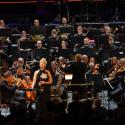
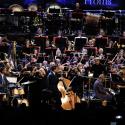
With around 20 strings, it was a relatively rich chamber orchestra sound, particularly in this acoustic – to be counterbalanced by the clear and powerful tone that Bavouzet obtains from his Yamaha grand.
Concerto No. 22 is a virtuosic one, but he didn’t play to the gallery (except in a physical sense, as he acknowledged their presence in every call when the applause came), taking the piano’s role into the background when it was better for the wind soloists to star. The tempo of the first movement was a well-judged relaxed allegro, allowing for gracefulness as well as pointed phrasing and energetic emphases (which Takács-Nagy likes to have – as he’s said before, recordings need them, I guess because the process tends to smooth our dynamic variation).
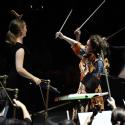
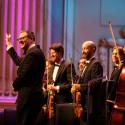
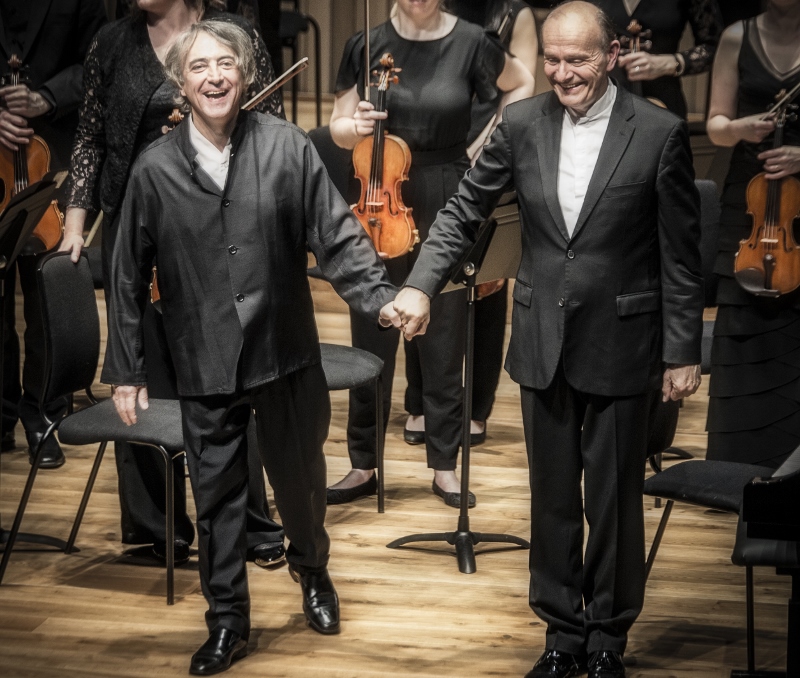 In fact there is always a fascinating meeting of minds when this conductor and soloist (pictured above, acknowledging applause) work together on Mozart, and their approach to the slow movement (with the muted strings, led by Caroline Pether, playing their part) created an atmosphere of foreboding, almost that of mourning. The winds’ episode became a kind of benighted serenade.
The finale begins as a rustic jig, but Bavouzet brought invention and embellishment in bucketloads to it, especially in its Andante cantabile interlude. His cadenzas, d’après Hummel, in both opening and finale added a sprinkling of harmonic spice to the fire in his fingers.
One thing I like about Takács-Nagy’s readings (using his own characteristically colour-coded scores) is his attention to the flavours of Mozart’s closing themes. No two are ever alike, and that was true of Concerto No. 23 as much as No. 22. The piece is full of tunes, but there’s much more to it than that, as Bavouzet’s extrovert playing of the first movement cadenza (echt-Mozart) and its final tutti, showed, and the dialogue effect that followed the central movement’s gorgeous solo opening, with its Neapolitan-inflected harmony, was a thing of real beauty. The Allegro assai finale was a romp, with fun had by all and Bavouzet tapping his feet into it by the final reprise.
The same fast finish was found in the last movement (another Allegro assai) of the Symphony No. 40, which completed the concert programme. Most of the orchestra stood throughout to play it, and far from being just another run-through it touched depths of emotional agony rarely attained by interpreters. Takács-Nagy sees the minuet as a dance of grim determination but with a vivid burst of sunlight in its trio, and the finale’s fury also had its spasms of melancholy and regret.