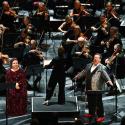
Poor old Stephen Hough. The Liszt double. Again! Was he not at all Liszted out after last year's epic bicentenary? Were we not Liszted out by last year's epic bicentenary? Hough has been living, breathing and eating these two pieces for the past year and a half. The familiarity might have bred contempt. Amazingly it hasn't. In fact, all the prep work of last year appeared to make this performance of the first two piano concertos one of the most satisfying I've heard.
The works are well known to us today. The rhetorical gestures, the reveries, the roulades are pure Liszt, the epitome of pianistic fluorescence and fantasy. But the trick is to make what have become the stock statements of camp Romanticism into something strange and unfamiliar. One must reduce these ideas - boil off the watery accretions - and return to essences. Few pianists can do this better than Hough. Few can refashion what can appear to some to have become irredeemable clichés into moments of aural wonder.
And that's why all the prep helps. Because to have all the technical challenges so securely under your fingers is vital to be able to start doing anything interesting with the music and colour that they help evoke. That's not to say this was a safe performance. We saw fear in Hough's eyes at the trampolining start of the E flat. Rightly. Risks were taken. But much of the interest of the first three movements was in the rubato, in the pedalling and in several pregnant hiatuses, so gaping that they temporarily ruptured the storytelling surface and made you very aware of the musical edifice. Mysterious and discombobulating but fantastic.
And then there was the change of gear in the Allegro marziale: an eye-popping act of fearlessness. The A major couldn't really match up to this. The lithe brilliance of the E flat will always outdo the slightly plodding quality of the latter part of the Second Piano Concerto. Still, there was one electricity-down-the-back moment, another shift in speed from the languorous opening Adagio to the guttural eruptions of the Allegro, Hough pushing the activity along with a mercenary swiftness.
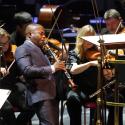
Marin Alsop's London Philharmonic mostly kept pace. The energy flagged a little during the two bookend symphonies. Martinů's Sixth needed more shaping, Dvořák’s Eighth a little more of Hough's fearlessness. There was some lovely section playing from the first violins and the woodwind, especially in the delicate burbling in the Martinů. And the many solo contributions were extremely fine. Lead violin Lisa Schatzman made you sit up and listen every time she took control and chief flautist Jaime Martin was as winning as ever.