The mini-festival of György Ligeti’s music this weekend at the Queen Elizabeth Hall kicked off with a concert of chamber music that moved from a monumental first half to a second that was a delightful unbroken sequence of miniatures. Curated by the pianist Pierre-Laurent Aimard, champion of the composer and his friend, this concert showed several sides to Ligeti, but above all focused on his relationship with minimalism.
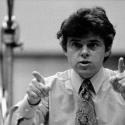
The two halves started with perhaps the two most archetypal minimalist pieces of all, Steve Reich’s Clapping Music and Ligeti’s Poème Symphonique. Reich’s piece is for two musicians alone (here Aimard himself with percussionist Daniel Ciampolini, pictured below), clapping a single rhythm that gets progressively further out of sync until it laps itself and gets back to unity. It is the most stripped-down expression of the technique Reich called "phasing", that has been a feature of his work for over 50 years.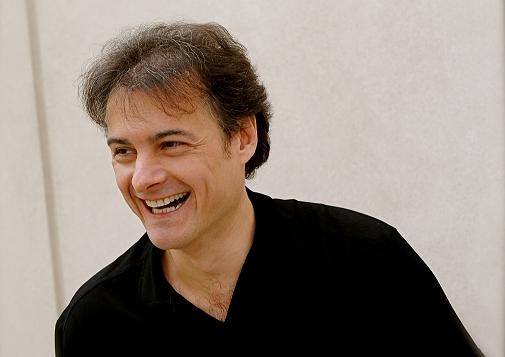 Ligeti’s ironically-named Poème Symphonique of 1962 (composed 10 years earlier than Clapping Music) takes the brilliantly simple idea of setting off 100 mechanical metronomes at the same time, all set to different tempos, to click away independently till they have all wound down. This creates a massive polyrhythm that moves in stages from the insistent rattle of all 100 playing together, through the gradual thinning out of the sound, to the final moments when the last two or three metronomes vie to outlast each other. It works both as a metaphor for society – every individual doing their own thing at the own speed, some burning out quickly, some doggedly keeping on – and as a sonic experience of the utmost complexity, from the simplest of materials. I was, as I always am, transfixed.
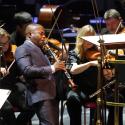
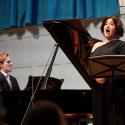
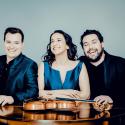
Aside from the Poème Symphonique, Ligeti’s response to minimalism was to play up its complexities – such as polyrhythm and layered processes – while avoiding the comforting consonances of Reich and Glass. The Three Pieces for Two Pianos are bracing and stern, although not without wit, in their unrelenting pursuit of single ideas. For these Aimard was joined by his regular duo partner Tamara Stefanovich, and they were well matched in their bright, precise sound. The second piece, “Self-portrait”, namechecks Reich and Terry Riley in its subtitle (as well as the hard-to-discern Chopin), but where the Americans are mellifluous and regular, Ligeti’s just-about-controlled chaos has a jerky, runaway quality. (I remember his music being described, I think by his biographer Richard Steinitz, as being like a car with square wheels careering downhill.) The heart of the concert, in two senses, was Ligeti’s Trio for Horn, Violin and Piano of 1982, which he himself said was the piece that opened the way to his late style. Described as a homage to Brahms (again, it is difficult to hear any connection), the trio has perhaps more humanity than other Ligeti: it is more alive to nuance and melody, and flirts with (although never gets into bed with) traditional tonality. It was sensitively played by Aimard, with exquisitely controlled horn player Marie-Luise Neunecker (pictured above) and mercurial, energetic violinist Patricia Kopatchinskaja. But for all its beguiling qualities, it is less exciting, less thrilling, safer than, say, the Chamber Concerto.
After the interval, Aimard came into his own as programmer. Running 25 minutes of music together without pause, he took us from Clapping Music to an improvisation on one of Ligeti’s late Études, for piano and percussion, via Conlon Nancarrow, the eccentric American whose works were first championed by Ligeti in the 1970s. Most fascinating was an improvisation on Poème Symphonique, involving both pianists, percussionist and both page-turners in improvising rhythmic pulses on the high end of two pianos, like living, breathing metronomes.
In the final improvisation, Aimard worked his way through Ligeti’s wonderful Étude No. 4 (Fanfares) accompanied by the charismatic Daniel Ciampolini first on congas, picking out cross-rhythms and canons, then on vibraphone, his sticks flying in a free cadenza of jaw-dropping speed. I am sure Ligeti would have approved.