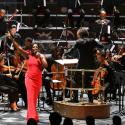
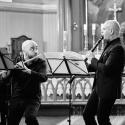
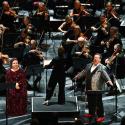
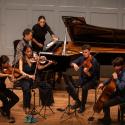
Crazy-faced space-hopper, playmobil fireman, marble run: toys from my own childhood, staring at me now from out of glass cases, alongside an 18th century marionette, thread-bare rocking horses and a headless Georgian doll. This concert in the Museum of Childhood could have been a wallow in nostalgia. Instead, with their usual brand of ingenuity, the Multi-Story Orchestra kindled musical artefacts into vibrant life.
It began with the trembling bow of Sally Pendlebury’s cello, open fifths sounding almost painfully vulnerable in the museum’s wide hangar. American composer Caroline Shaw’s In Manus Tuas explores "slices" of Thomas Tallis’s motet. It takes nerve to draw husky, dead whispers on an instrument designed to sing, but Pendlebury’s timorous opening made the flowering that followed all the more entrancing. Her own, quiet soprano joined plangent chord sequences, rising to rapid arpeggios beating with the airy ease of angels’ wings. After a tour de force of repetitions - New York underground meets Tudor chapel – Pendlebury came to rest on a simple G major broken chord, sweeping into harmonics – and silence.
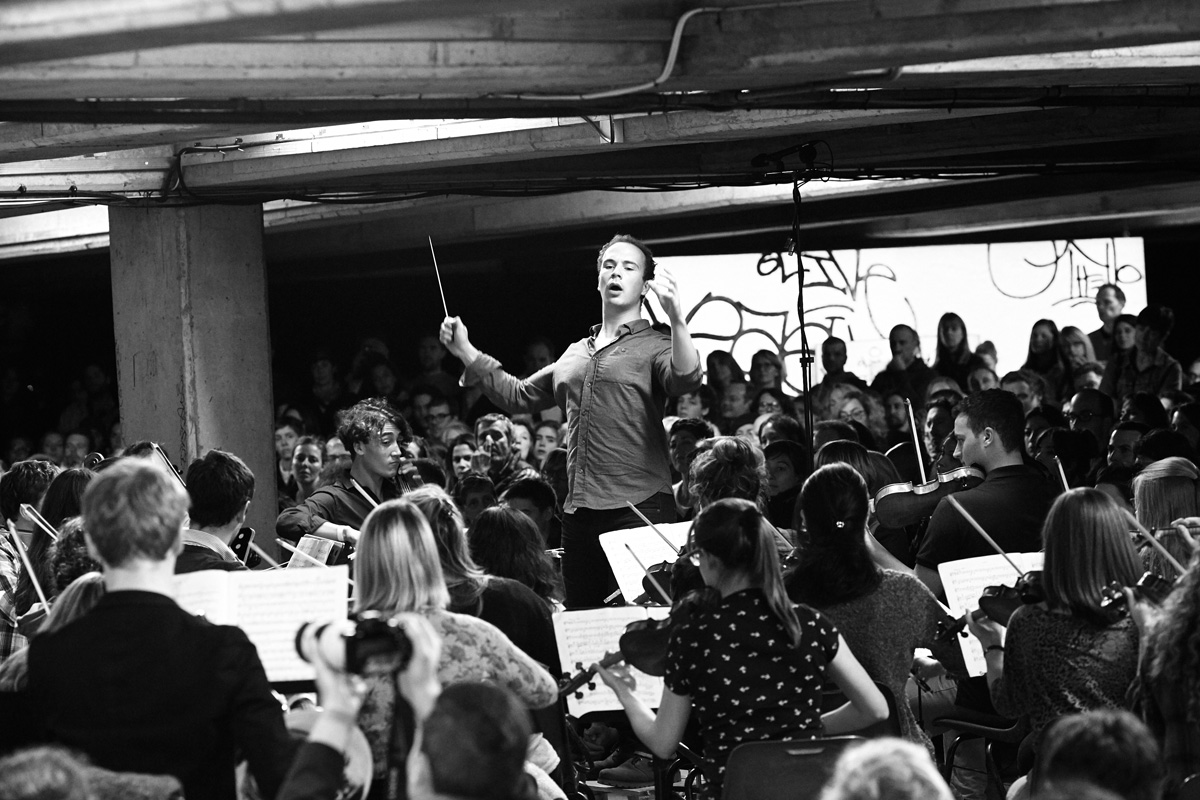
Our next artefact was Bach’s Fuga, Ricercata in 6 voices from The Musical Offering, one of his extraordinary inventions that seems to exist in constant motion. Conductor Christopher Stark had arranged it for viola, bass clarinet, horn, cello, flute and violin, allowing for maximum contrast and maximum richness. It developed inexorably, but ultimately became too loud in this acoustic for individual lines to shine through.
When Gavin Bryars recorded the worship song of a homeless man for a documentary in 1971, he was interested in its potential as a musical loop. It was only when he left the tape playing in Leicester Polytechnic’s art department and found students weeping, that he recognised its emotive power.
Jesus Blood Never Failed Me Yet taps into a vein of English melancholy that stretches back to Dowland and beyond. Whoever this elderly man was (and he died without knowing his song had been transformed into a Minimalist classic) he was a fine singer, each pitch is true. The emotional hook lies in the momentary faltering of rhythm, a slight slip forward, on to which Bryars pours the balm of quiet strings, gradually weaving in a brass chorale, marimba, accordion, all underpinned here by Siret Lust’s elastic double bass-line.
Quite why this man’s meek assertion of faith in the face of failure, repeated over 40 minutes, should be so affecting is hard to fathom: the harmonies are comforting, almost banal, but, cleverly, not quite. In the end, the voice fades and all that is left is music, the clothes he stood up in. Magic.