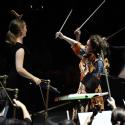
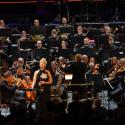
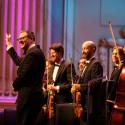
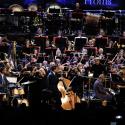
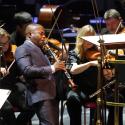
Goodness the BBC Philharmonic plays well for John Storgårds. The orchestra’s chief guest conductor has a lovely easy manner on the podium – all curved gestures and loose arms, and the result is a partnership that brings the absolute best out of the BBC’s Manchester-based orchestra. Here, in a programme dominated by the Nordic music in which he excels, they carved glossy, oaken shapes out of Grieg and Sibelius, bringing some sophisticated rusticity to the gilded Royal Albert Hall.
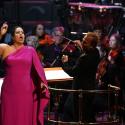
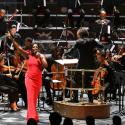
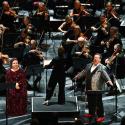
It was the solo viola that set the tone, thrusting its way through the orchestra at the start of their sequence of excerpts from Peer Gynt for a rough-hewn folk tune. The spirit of this ebullient dance, amplified across the entire orchestra, was joyous, light-footed, swaying gently even through the more meditative passages. Solo woodwind added their sheen to “Morning Mood”, but it was soprano Lise Davidsen – making her Proms debut – who caught the dome of the hall and set it ringing as soloist in “Solveig’s Song”.
This is a voice with huge peaks, but much more than blandly big
Davidsen’s is an iceberg of a voice; as yet we’re only seeing a hint of what this thrilling singer has in reserve. Still very young though, her nerves are as yet audible, and it took a while for intonation and tone to settle here. But once they did, Luonnoatar – Sibelius’s glorious creation-myth for soprano and orchestra – had new passion and assurance. This is a voice with huge peaks, but the delicate shading of the valleys – the low register, the pianissimo upper reaches – is equally striking, showing the grain of a voice that is much more than blandly big.
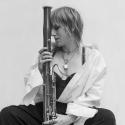
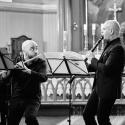
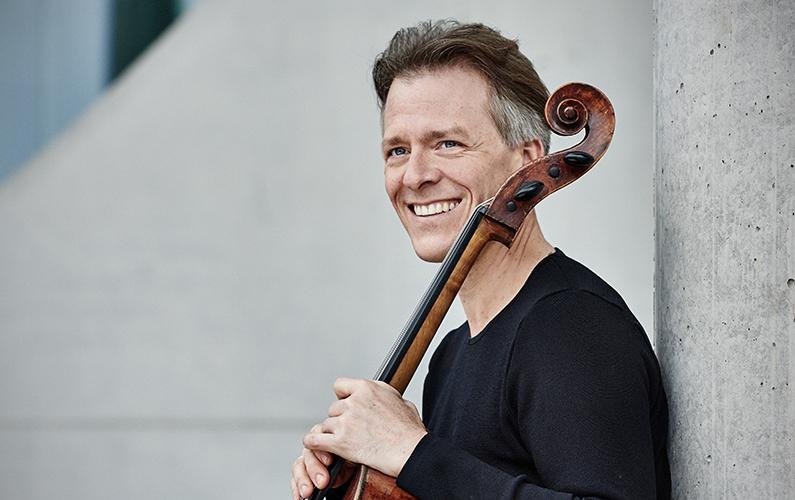
If Peer Gynt belonged to the woodwind, then the Karelia Suite was all about the brass – refined and gleaming, warming the texture pleasantly in the “Alla Marcia”. It was warmth that persisted through the Schumann Cello Concerto – a softly golden foil to the more silvery, tenorial tone of soloist Alban Gerhadt (pictured below right). Not one to round the work’s musical corners, Gerhardt gave us an opening movement that emphasised the disjunction, the angularity, rather than the through-line. The effect of these jagged edges melting in the slow movement was beautifully managed, and the quiet kinship of the duet between soloist and orchestral cello devastating. This was an interior sort of performance for an interior sort of concerto, mulling obsessively over themes, and only at the final second feeling able to fling wide its arms and invite us in.
 According to David Gutman’s note on Proms history, Hindemith’s Mathis der Maler Symphony has only received seven performances through the festival’s history. It’s a situation that mirrors the fate of Hindemith more generally (and the opera itself, more specifically), but doesn’t seem any the less sad, especially when you hear an account like this that pierces the dense textures and heavy swathes of development, and finds the beauty and delicacy at the heart of this work.
Inspired by the Isenheim Altarpiece, the symphony shares its chiaroscuro colouring, its contrasts. The Angel Concert here balanced radiance with an earthiness, a sense of being anchored in the world of man, even while gazing beyond. But it was the final movement that saw Storgårds and his orchestra in full spate, pouring out the magnificent fugue with a force and assurance that would convince even the staunchest unbeliever of the inevitability of deliverance and resurrection.