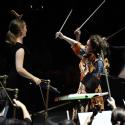
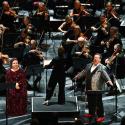
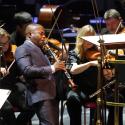
There have already been many musical tributes to Sir Colin Davis, whose death in April left us all so much the poorer, but last night’s from the London Symphony Orchestra was particularly and wonderfully poignant. Davis himself was originally scheduled to conduct the London Symphony Orchestra – an ensemble whose relationship with him extended back over 50 years – but was replaced, fittingly, by his protégé Daniel Harding. A planned Sibelius Second Symphony was exchanged for Elgar’s Symphony No. 2 – a work of valediction, whose funeral march can rarely have paced with such delicate gravity.
There really isn’t a better orchestra for Elgar in London than the LSO, and this is in large part thanks to Davis. Hearing the ensemble under Harding finding such a passionate vivace at the start in the composer’s unfashionably ardent “Spirit of Delight” theme was to be reminded just how well this music responds to sincerity. There wasn’t a whisper of doubt from the orchestra or Harding in a performance that took this late work at face value, matching Elgar’s sometimes mawkish sentiments and transforming them into something altogether more palatable to contemporary ears.
The small, divided forces offered the LSO the chance to show their soloistic mettle
Harding’s physical emphasis is often on tone colour rather than ensemble, and though this caused occasional problems here in Elgar’s constantly transitioning tempos, it also generated a sense of spontaneity and life through the orchestral phrases. The LSO’s strings found a muted glow for the Larghetto – restrained, but always pulsing with direction, while the Rondo grinned with macabre glee. Pacing throughout was on the slow side, but if ever there was an occasion for a more contemplative indulgence with this symphony this was probably it.
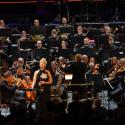
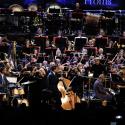
The evening opened with Tippett’s glorious Concerto for Double String Orchestra, the more muscular pastoral cousin of Vaughan Williams’ Fantasia on a Theme of Thomas Tallis or Howells’ Concerto for String Orchestra. The small, divided forces offered the LSO the chance to show their soloistic mettle, and once again the string sonority proved itself endlessly flexible, achieving exquisite fragility for the Adagio Cantabile before recalibrating this muted colouring as a highly energised pianissimo for the Allegro Molto. Harding refused to play out to the Royal Albert Hall, forcing a rather twitchy crowd to lean in and focus.
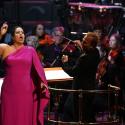
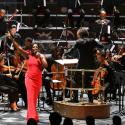
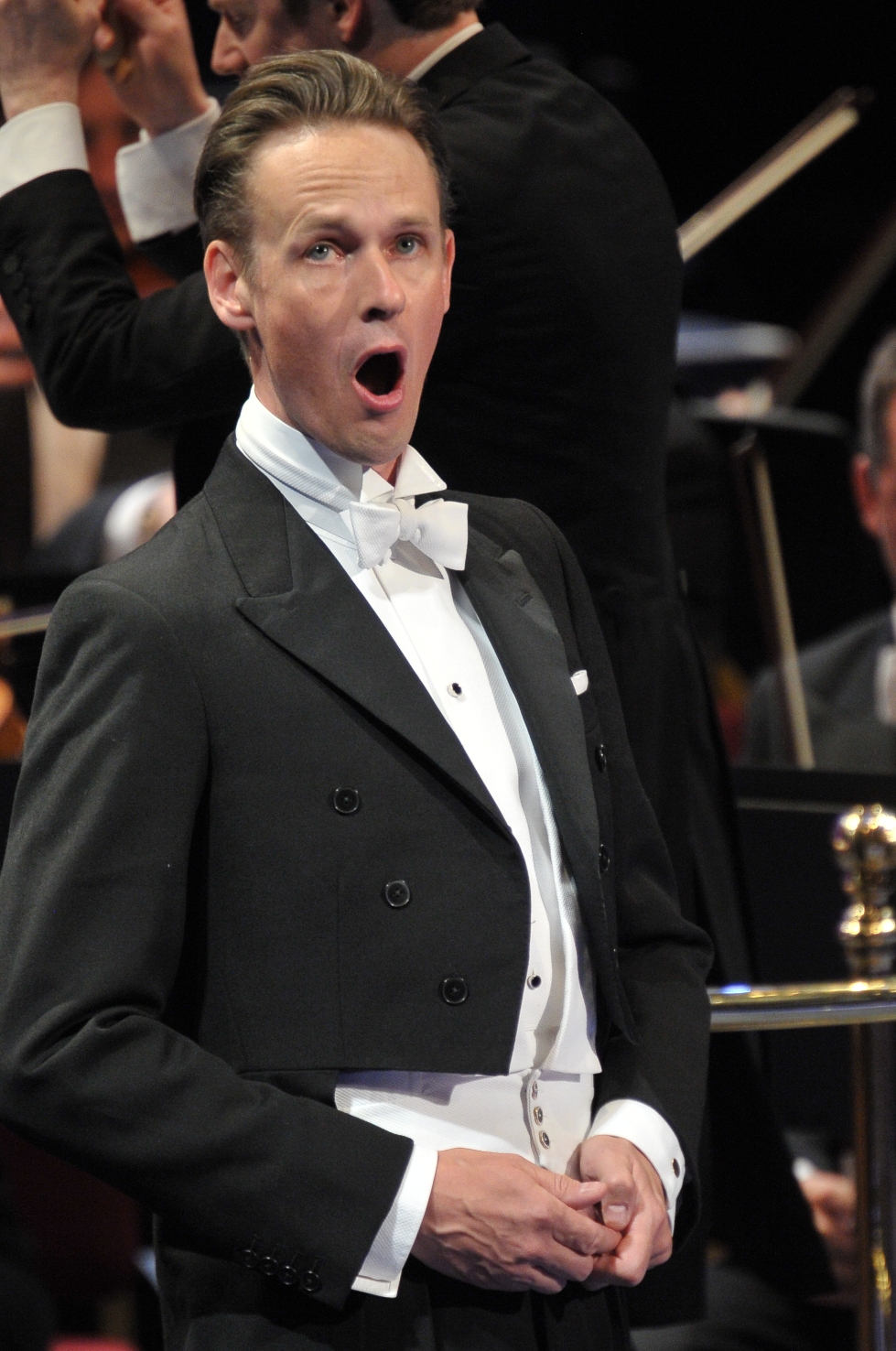 By contrast Ian Bostridge’s performance of Britten’s youthful cycle Les Illuminations was unusually extrovert. Ever the rhetorician in his delivery, Bostridge (pictured right) may have overcooked his language in an attempt to project it out into the hall (vowels were caricatured so far as to be almost unidentifiable at times) but the general effect was vivid and rejoiced in the composer’s virtuosic challenges.
It’s a big cycle and a big space, and if Marine did strain beyond the singer’s reach, overfacing him in terms of orchestral force and breadth of sound, it was the only moment that slipped out of his dramatic grip. Villes sustained impossible line through its melody despite its disjunct efforts to buck off the singer, and the Interlude reminded us that Bostridge still has the finest head-voice croon in the business, discovering magical and resonant spaces where none should exist.
It was a very English Prom and a natural tribute to Davis – one he surely would have heard with pleasure as well as approval.