This winter's evening spent at Wigmore Hall, completely immersed in performances of songs by Tchaikovsky, was a delight.
Mezzo-soprano Ekaterina Semenchuk and pianist Semyon Skigin know these songs profoundly well. They described the proposal thus: “From [Tchaikovsky’s] 104 songs we have chosen 24, focusing on the widest possible range, from joyful exultation to the depths of pain and melancholy.” The words of these great songs might speak of hesitancy and mistakes and regret, but the melodies just flow.
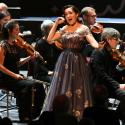
Semenchuk is one of the great mezzos of our time. She has performed no fewer than 30 roles at the Mariinsky Theatre and is especially in demand for her Verdi singing all over the world. In this Russian repertoire she is totally compelling. There is clearly vocal power in reserve, and yet in a song such as “At the Ball” from Op. 38 she can also sing deliciously quietly, taking on a detached air, allowing the voice to float with wonderful lightness. And she has a fascinatingly knowing way of expressing those moments where the words and the music seem to be telling different stories: if the words of “None But the Lonely Heart” don’t have a smile, the music does. And Semenchuk did.
The deeply idiomatic playing and subtle craft of pianist Semyon Skigin is a complete joy to hear. As one critic wrote of his playing on a complete set of Tchaikovsky songs on CD in the late 1990’s: “He has the idiom of these songs in his veins, and the skill to match his singers and respond to the best in them. There is no finer Russian song pianist performing today.” More than two decades on, there really is no doubt about that. Time and again, his subtle command of pacing, little holdings-back between stanzas gave Semenchuk the ideal launch-pad to set off into a new mood. And the his way of either setting a mood for a song, or of taking centre-stage for a reflective postlude was flawless. 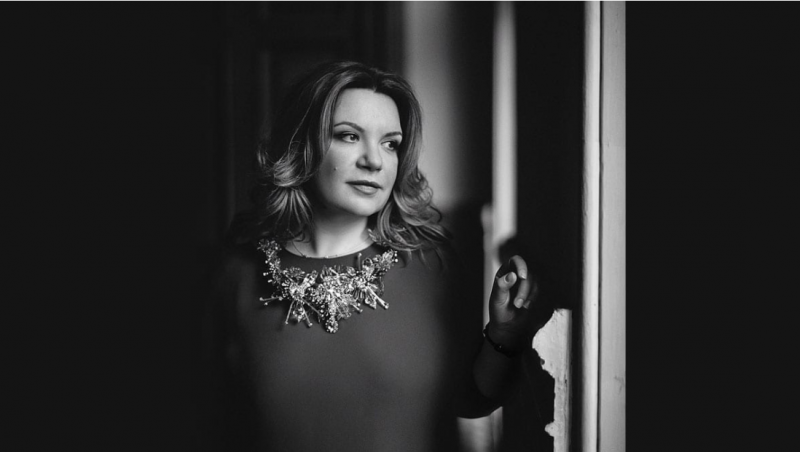 The songs were arranged chronologically, and yet the programme worked extremely well. The closing sequence of three songs from Tchaikovsky’s last published set Op. 73 was quite astonishing. “Night” is the darkest of settings, written in F minor, with words expressing weary sorrow, but the vocal part demanding that the sound of every slow syllable be savoured with the full. It brought out the vocal power, the control and the expressive clarity which Semenchuk has throughout her vocal register. “The Sun Has Set” is all about heady lightness, finding all joy in the words as the same rising melodic figure is repeated almost twenty times. And then the luminous stillness and ‘con dolore’ isolation of “Again as Before, Alone” asks to be cherished and cared for, and the ebbing of the pace towards the end and into the postlude to be handled with extreme care. These were totally masterful performances, every moment completely lived.
The first encore was a clever choice too. From Tchaikovsky’s last published song we went straight to the first: “My genius, my angel, my friend.”
Given such a cleverly constructed the programme... and the sheer quality of the artistry on offer... and the depth of understanding of the repertoire from both artists.... there was just one question: why wasn't the hall fuller? Maybe not enough has been done to make Semenchuk's name better known. For example, if only someone could sort out an elementary error which prevails with her superb recording of Russian songs released in 2006: it is generally listed with a different spelling of her surname: Sementchuk with a ‘t'.
The audience in the hall might have been lacking in numbers, but we were vociferous in our enthusiasm. This was a superb concert which will stay in the mind.