Some enchanted afternoon in Camden Town… the Proms returned to the Roundhouse after four decades with a dreamlike fusion of sound, space and light. Ron Arad’s Curtain Call – a 360° installation of 5,600 sillicon rods – encircled the London Sinfonietta and audience in its luminescent embrace, a haze of microtonal music slinking through a sequence of glimmering projections.
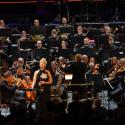
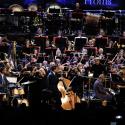
The programme built towards György Ligeti’s Ramifications, an indelible masterpiece of the gauziest microtonal weave, and part-inspiration for Georg Friedrich Haas’s Open Spaces II (2007). In this ravishing work Haas also pays homage to composer James Tenney, bright clouds of partials skittering off two sets of cymbals and gongs, recalling Tenney’s own gong tour de force, Having never written a note for percussion. Seething light projections chimed with the metallic percussion, just as fractal-like threads picked up the wandering line of spindly strings (pictured below). Where the writhing spaghetti belonged is harder to say.
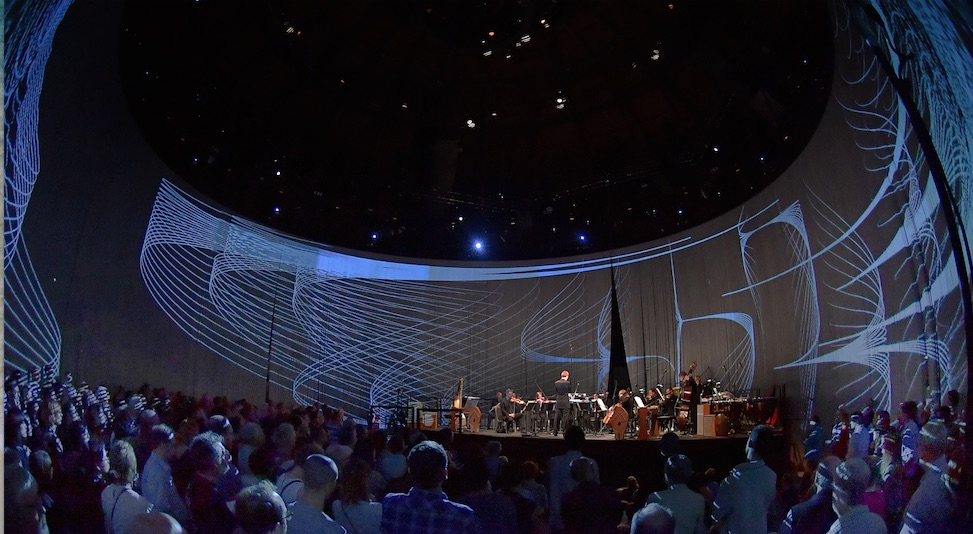
There’s an indefinable, almost tragic, grandeur to Haas’s music. Through subtly dissonant meshes, performed by two string groups in and outside the curtain playing a sixth of a tone apart, he channels a deep vein of Viennese Romanticism. Overtones of the bass’s sub-bass note generated surprisingly warm consonance, and only half-way through did I become completely aware of the friction between the two string groups, one slightly out of focus, as if at a distance. London Sinfonietta’s seasoned players realised this demanding score with exquisite skill, right up to the precise but manic trilling of its end.
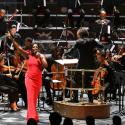
Besides this, works of the younger generation felt like junior exercises in developing a single strand of Ligeti’s thinking. Mica Levi’s new piece Signal before War (2016) enacted the slow, continuous ascent of pitch up the violin from bottom to top over a three minute span. Jonathan Morton rendered it with mesmerising control, breaking the tension in a flourish of vibrato. Jonny Greenwood’s Smear (2004) plays with the lithe glissandi of two ondes martenots, which slither snake-like through a shifting orchestral texture. It’s an appealing dreamscape, in no way enhanced by images of autumn trees.
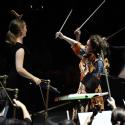
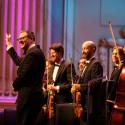
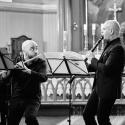
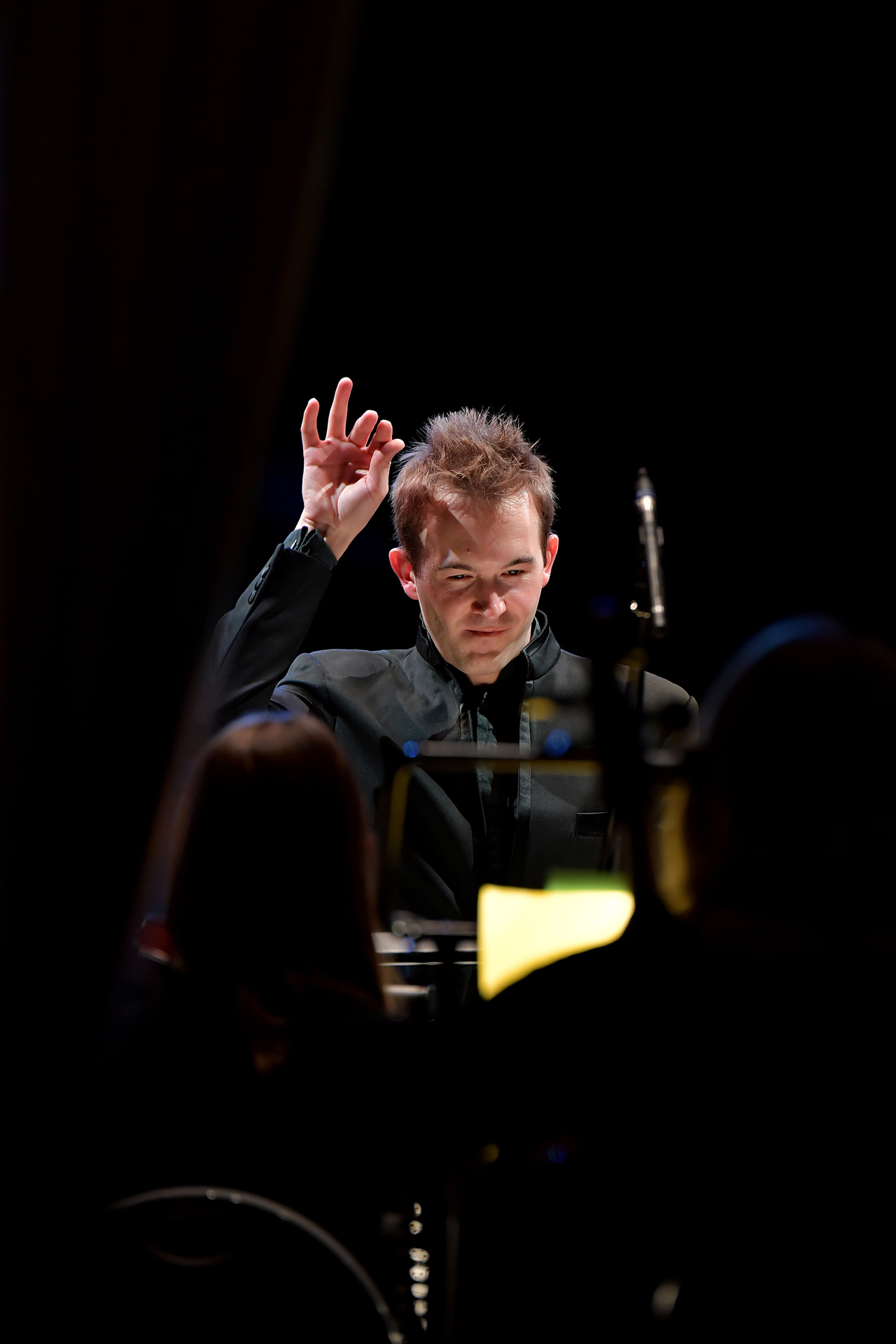 Amidst the microtones, Birtwistle’s The Message made an inspired opener, trumpet volleys exploding with glad urgency into the darkness outside the curtain, answered by more reflective clarinet and crisp side-drum. Similarly, with its detailed narrative and intricate counterpoint, David Sawer’s April\March (2014) felt freshly old-fashioned. Commissioned as a ballet, it dances nimbly through a tightly organised structure where silence is as vital as sound, and virtuosity called upon from every instrument in a kaleidoscopic scoring. Its curious disjunction can perhaps be explained by its title, a Borges novel which unfolds backwards. The ever-graceful Andrew Gourlay (pictured above) conducted with taut finesse.
And then came the Ligeti, smelling, as he memorably said, "high, the music is starting to decompose". Here, the tuning of one string group is a quarter-tone lower than the other, creating a quivering web of 24 pitches, moving through extremes of dynamic, pulsing with interference. This was a performance of extraordinary subtlety and precision. Visuals, by SDNA Ltd, had been effective when abstract; here we had the ludicrous introduction of giant spiders. Ligeti's crawling disintegration needs no arachnid assistance.